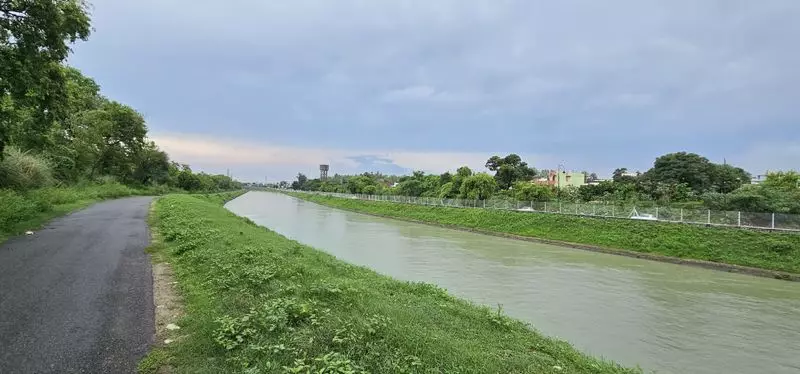
In a significant stride for India's renewable energy sector, the Bhakra Beas Management Board (BBMB) is gearing up to commission the nation's first megawatt-scale hydrokinetic power project. The pioneering initiative will be located in the Nangal canal, harnessing the kinetic energy of flowing water to generate clean electricity.
A Pioneering Project for Clean Energy
The project represents a novel approach to hydropower. Unlike conventional dams that rely on large reservoirs and significant water head, hydrokinetic technology generates power directly from the natural flow of water in canals or rivers. This method is considered more environmentally friendly as it has a minimal ecological footprint and does not require large-scale construction or displacement.
The BBMB, a pivotal organization overseeing the waters of the Sutlej and Beas rivers, has identified the Nangal canal as the ideal site for this first-of-its-kind venture. The canal's consistent water flow provides a reliable resource for the hydrokinetic turbines. This project is a testament to India's commitment to exploring diverse and innovative pathways within its renewable energy portfolio.

Technical Details and Strategic Importance
While the initial announcement confirms the megawatt-scale capacity, detailed technical specifications regarding the exact turbine technology and the precise generation capacity are expected as the project progresses. The move to a megawatt scale is crucial, marking a transition from smaller pilot projects to a commercially viable and grid-connected power generation unit.
The initiative aligns with broader national goals for energy security and sustainability. By tapping into the untapped kinetic energy of existing canal systems, India can add a new, decentralized layer to its power grid. This is particularly significant for a country with an extensive network of irrigation and water supply canals. If successful, the Nangal project could serve as a blueprint for replication across similar waterways nationwide, unlocking a substantial new source of green power.
Implications for Punjab and Renewable Energy Future
For Punjab, a state with a vast canal network, this project opens new avenues for sustainable development. It showcases how existing infrastructure can be leveraged for dual purposes—water conveyance and power generation—without the need for additional land acquisition or major environmental disruption.
The commissioning of this project by BBMB is poised to set a precedent. It demonstrates the role of public sector undertakings in driving innovation in the clean tech space. The success of this hydrokinetic power project could encourage other state and central agencies to invest in similar technologies, diversifying India's renewable energy mix beyond solar and wind.
This development is a clear indicator that India's clean energy journey is entering a more technologically advanced phase, exploring niche but promising avenues to meet its ambitious climate and energy targets.