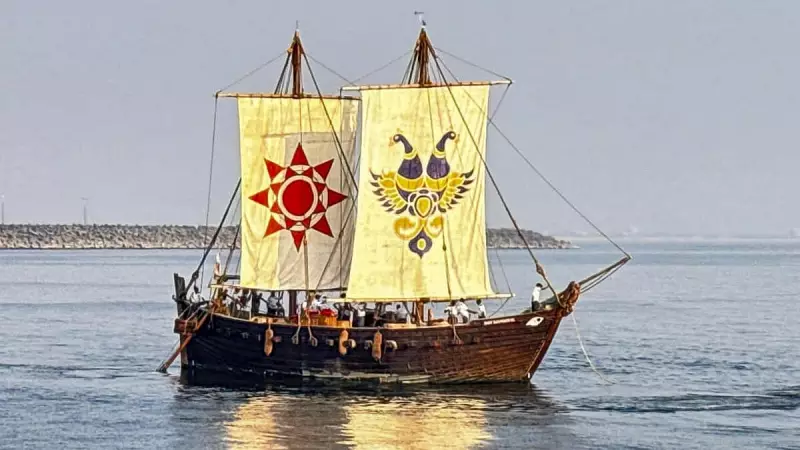
The Indian Navy has embarked on a unique voyage through time, launching a sailing vessel meticulously recreated from a 1,500-year-old visual reference. The vessel, named INSV Kaundinya, is a direct interpretation of a ship depicted in a mural within the renowned Ajanta Caves in Maharashtra.
From Cave Wall to Open Sea: The Inspiration
The project's genesis lies in a detailed painting from Cave No. 1 at the Ajanta Caves, a UNESCO World Heritage Site famed for its ancient Buddhist art. This particular artwork, dating back to the 5th century CE, portrays a vibrant, double-masted ocean-going ship. Naval designers and historians studied this ancient depiction to understand its construction, sail plan, and overall seaworthy design.
The initiative was spearheaded by Vice Admiral Suraj Berry (Retd), drawing upon his extensive maritime experience. The construction was undertaken by M/s Aquarius Shipyard Pvt Ltd in Goa, a firm with expertise in building traditional vessels. The entire endeavor was guided by the National Institute of Design (NID) in Ahmedabad, ensuring historical authenticity met modern engineering standards.

Building a Bridge Across Millennia
INSV Kaundinya is not merely a static museum piece but a fully functional sailing vessel. It measures 16.5 meters in length and has a displacement of approximately 18 tonnes. Staying true to its ancient inspiration, it is crafted primarily from wood, specifically Sal and Teak, and features a traditional lateen sail configuration.
However, subtle modern adaptations have been integrated for safety and functionality. These include a small auxiliary engine for maneuvering in ports, contemporary navigation and communication equipment, and enhanced safety gear. The vessel is designed to be operated by a crew of five, blending ancient sailing techniques with modern seamanship.
The name 'Kaundinya' holds deep historical significance. It refers to the legendary Indian sage who is believed to have sailed to Southeast Asia, playing a pivotal role in the spread of Indian culture and Hinduism across the region during the early centuries of the Common Era.
More Than a Ship: Symbolism and Future Voyages
The launch of INSV Kaundinya represents a powerful statement. It is a tangible link to India's rich and often overlooked maritime heritage, demonstrating sophisticated shipbuilding knowledge existed over a millennium ago. The project underscores the Indian Navy's role not just as a guardian of the seas but also as a curator of the nation's naval history.
The vessel's primary mission will be training and awareness. It will be used to expose Indian Naval personnel to traditional sailing methods, fostering a deeper connection with the sea. Furthermore, it is envisioned as a floating ambassador of India's maritime legacy, potentially participating in domestic and international events to showcase this unique historical reconstruction.
This project highlights several key themes:
- Historical Revival: Bringing an ancient design to life using modern techniques.
- Cultural Connect: Reclaiming a narrative of India's ancient maritime prowess and trade links.
- Educational Tool: Serving as a practical platform for training and public engagement.
By translating art into a seaworthy reality, the Indian Navy has created a unique symbol. INSV Kaundinya sails as a testament to the ingenuity of ancient Indian shipwrights and a bridge connecting the country's glorious past with its dynamic present on the world's oceans.