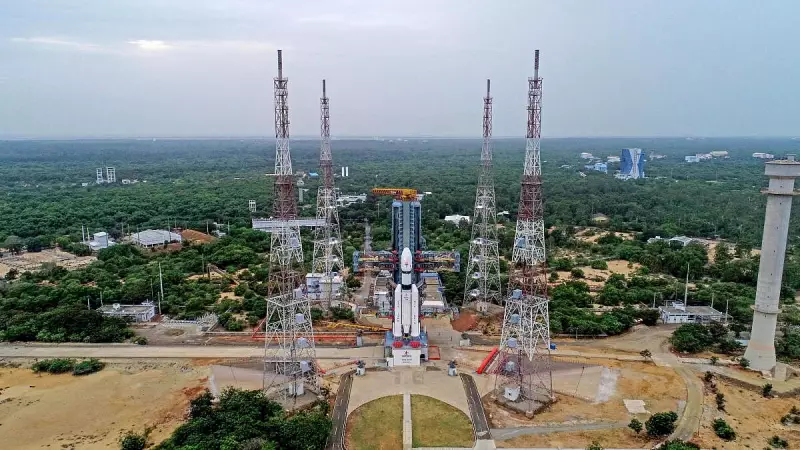
In a significant step forward for India's space program, the Indian Space Research Organisation (ISRO) has successfully conducted a crucial ground test for its new launch vehicle. The space agency carried out a static test of the third stage of the Small Satellite Launch Vehicle (SSLV) at its Satish Dhawan Space Centre in Sriharikota, Andhra Pradesh.
A Critical Milestone for the SSLV Program
The test, performed on a recent Saturday, focused on the vehicle's third stage propulsion system, known as the Apogee Motor. This motor is a vital component designed to place satellites into their precise final orbits after the initial launch phases. The successful firing of this solid rocket motor on a ground test stand validates its performance and reliability under controlled conditions before an actual flight.
This achievement marks a pivotal moment in the development of the SSLV, which is engineered to be a cost-effective and responsive launch solution for the growing small satellite market. The entire test operation was managed by scientists and engineers from ISRO's Vikram Sarabhai Space Centre (VSSC) in Thiruvananthapuram, with support from the Satish Dhawan Space Centre team.

Technical Details and Strategic Importance
The SSLV is a three-stage launch vehicle configured entirely with solid propulsion stages. Its design philosophy emphasizes simplicity, high reliability, and minimal launch infrastructure requirements. The vehicle has a quick turnaround capability, aiming for launch preparations within just 72 hours by a very small team. This makes it an ideal platform for launching mini, micro, and nano satellites (weighing up to 500 kg) into Low Earth Orbit (LEO).
The recent ground test is a standard but essential procedure in the lifecycle of any new launch system. By verifying the motor's performance—including its thrust, burn time, and structural integrity—on the ground, ISRO mitigates risks for future orbital missions. This methodical approach follows the successful maiden flight of the SSLV (SSLV-D1) in August 2022 and its subsequent fully successful commercial mission (SSLV-D2) in February 2023.
The SSLV represents a strategic asset for India, enabling dedicated launches for smaller satellites. It reduces dependency on larger vehicles like the PSLV for such payloads, freeing them for more complex missions. Furthermore, it positions India's commercial arm, NewSpace India Limited (NSIL), to aggressively compete in the global small satellite launch services sector, which is experiencing rapid growth.
Path Forward for India's Compact Launcher
The successful test at Sriharikota clears a major technical hurdle for the SSLV's continued development and operationalization. Each validated component brings the vehicle closer to achieving routine, on-demand launch services. ISRO's focus on developing the SSLV underscores its commitment to innovation and self-reliance in space technology, catering to both national strategic needs and international commercial demand.
With this milestone, ISRO demonstrates steady progress in refining its smallest launch vehicle. The agency is expected to integrate the findings from this test into the vehicle's design and operational protocols. The space community now anticipates the next developmental or commercial flight of the SSLV, which will carry the confidence of this successfully proven third stage motor, further solidifying India's position as a reliable and versatile launch service provider in the global arena.