ISRO Seeks Russian Collaboration for India's Ambitious Space Station Project
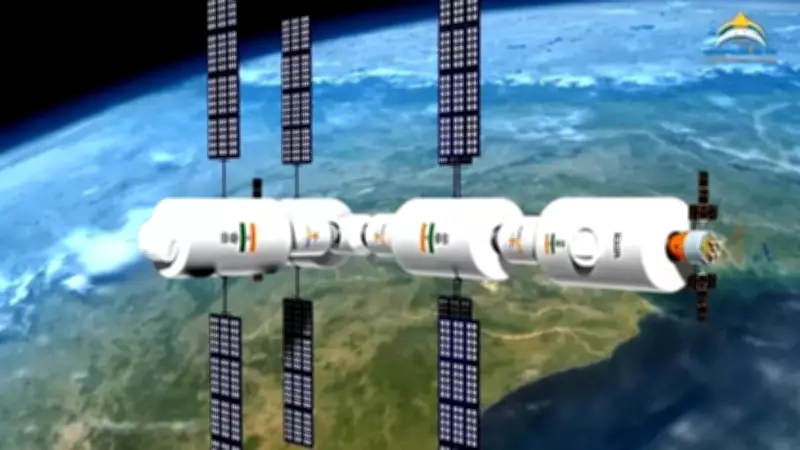
In a significant move to enhance Indo-Russian space cooperation, the Indian Space Research Organisation (ISRO) has announced its intention to partner with Russia for the construction of India's own space station, the Bharatiya Antariksh Space Station (BAS), targeted for completion by 2035. This initiative aims to leverage Russia's extensive experience in space station technology to accelerate India's capabilities in crewed space missions.
Strategic Partnership at Russian Space Forum
At the Russian Space Forum held in Moscow on April 9, Asir Packiaraj, director of the ISRO Propulsion Complex, represented the Indian space agency and emphasized the desire for collaboration. "With the rich experience of Russian colleagues, we would like to partner with them in the development of the Indian space station," Packiaraj stated. He highlighted that ISRO is seeking cooperation in common subsystems for control, powering, communication, and tracking to prepare for the BAS project.
Post-International Space Station Opportunities
The timing of this partnership is crucial, as the International Space Station (ISS), operated by agencies from the US, Russia, Europe, Japan, and Canada, is expected to be decommissioned by 2030-31. Currently, China operates the only other crewed space station, creating a gap in global space infrastructure. Indian and Russian space experts discussed the post-ISS future and potential collaborative opportunities at the forum, recognizing the need for new space labs.

Both India and Russia are independently planning their own space stations. Packiaraj revealed that India's proposed station will be positioned 450 km above Earth at an inclination of 51.6 degrees, matching the proposed Russian Orbital Station (ROS). This alignment could facilitate interoperability and shared missions. ISRO is also exploring partnerships with other space agencies to broaden its technological base.
Russian Expertise to Bolster Indian Capabilities
Russia can provide critical assistance to India in building the BAS by offering advanced technologies and expertise. Key areas include:
- Orbital Modules: Leveraging Russia's experience from the Mir space station (1986-2001) and its segment on the ISS.
- Life Support Systems (ECLSS): Essential for sustaining astronauts in long-duration missions.
- Docking Assemblies: Facilitating spacecraft connections and crew transfers.
Additionally, Russia can train Indian astronauts in long-term station habitation, spacewalks, and maintenance, enhancing India's human spaceflight program.
Historical Ties Strengthening Future Cooperation
The Indo-Russian space partnership has a storied history spanning over six decades, forming the cornerstone of their "special and privileged strategic partnership." Key milestones include:
- Sending Wing Commander Rakesh Sharma to space in 1984, making him the first Indian in space.
- Providing cryogenic engines to India in the early 1990s, defying US sanctions and boosting India's launch capabilities.
- Training four Gaganauts for India's Gaganyaan program during the COVID-19 pandemic.
- Launching India's first satellite, Aryabhata, on April 19, 1975, from Kapustin Yar in the Soviet Union, despite the satellite being designed and built entirely by ISRO.
This enduring collaboration has withstood geopolitical challenges and continues to provide a solid foundation for India's space ambitions. As ISRO moves forward with the BAS project, the partnership with Russia is poised to play a pivotal role in achieving India's goal of establishing a permanent presence in low Earth orbit by 2035.