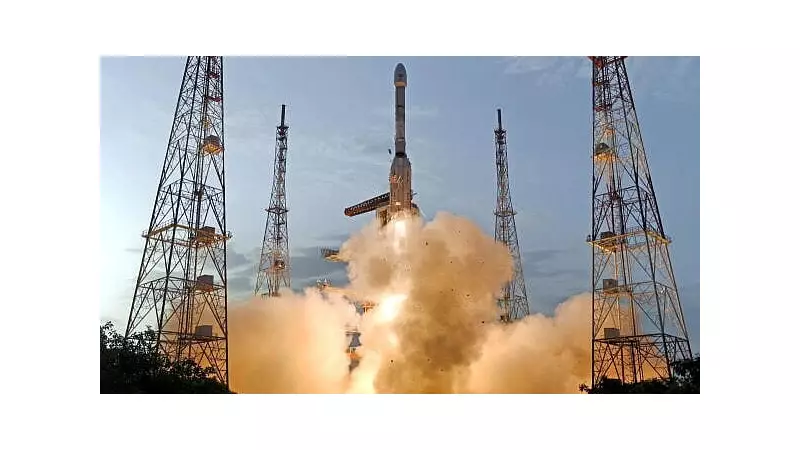
The Indian Space Research Organisation (ISRO) is gearing up for its first launch mission of 2024, a significant event that will place a dedicated scientific satellite and multiple auxiliary payloads into orbit. The launch is scheduled for January 12, 2024, from the Satish Dhawan Space Centre (SDSC) in Sriharikota, Andhra Pradesh.
Mission Profile and Primary Payload
The workhorse Polar Satellite Launch Vehicle (PSLV) will fly in its DL variant (with two strap-on motors) for this mission, designated PSLV-C58. The primary passenger is the X-ray Polarimeter Satellite (XPoSat), a landmark spacecraft for Indian astronomy. Weighing approximately 480 kg, XPoSat is India's first and only the world's second mission dedicated to studying X-ray polarization from cosmic sources.
This sophisticated observatory will carry two scientific payloads. The primary instrument, POLIX (Polarimeter Instrument in X-rays), was developed by the Raman Research Institute (RRI) in Bengaluru with support from ISRO's U R Rao Satellite Centre. The second payload, XSPECT (X-ray Spectroscopy and Timing), was built by the Space Astronomy Group of ISRO's URSC. Together, they will investigate the polarization and spectral properties of bright X-ray sources like pulsars and black hole systems, opening a new window into high-energy astrophysics.

A Multi-Payload Ride to Orbit
In a demonstration of the PSLV's versatility and capacity, the mission will also carry 10 other payloads as part of the PSLV Orbital Experimental Module (POEM) 3. After deploying XPoSat into its intended orbit of about 650 km, the fourth stage of the rocket will be lowered to a 350 km orbit. This spent stage will then be repurposed as a stable platform for in-space scientific experiments.
The payloads hosted on POEM-3 include contributions from various startups, research institutions, and the Indian Institute of Astrophysics (IIA). These experiments cover a range of technologies and studies, such as:
- Women Engineered Satellite (WESAT) developed by LBS Institute of Technology for Women.
- A radiation shielding experiment from TakeMe2Space.
- The BeliefSat-0 amateur radio satellite from Space Kidz India.
- An electric propulsion system test by Bellatrix Aerospace.
This approach significantly reduces the cost of access to space for smaller entities and promotes space technology development across the ecosystem.
Significance and Future Outlook
The XPoSat mission marks a major leap for India's space science capabilities. By measuring X-ray polarization, scientists can gain unprecedented insights into the geometry and inner workings of some of the universe's most energetic and enigmatic objects. This mission positions India at the forefront of a niche but critical area of astronomical research.
The successful execution of PSLV-C58 will set a confident tone for ISRO's ambitious 2024 launch calendar. It follows a spectacularly successful 2023, which was headlined by the Chandrayaan-3 Moon landing and the Aditya-L1 solar mission launch. This mission underscores ISRO's dual commitment to frontier scientific exploration and fostering a vibrant commercial and research ecosystem in the country.
As the countdown begins at Sriharikota, the Indian space community and the world's astronomers eagerly await the data that XPoSat will beam back, promising to unravel new cosmic mysteries from the depths of space.