

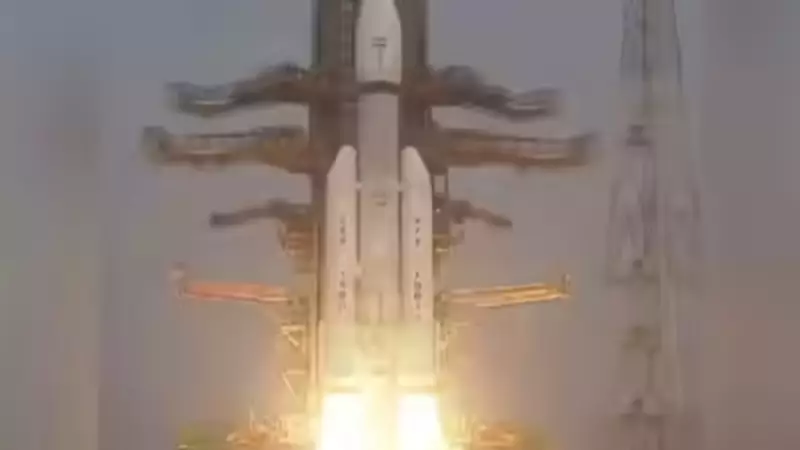
The Indian Space Research Organisation (ISRO) is set to begin its 2026 launch campaign with a significant mission from the Sriharikota spaceport. The PSLV C62 mission is scheduled for liftoff on Monday, January 12, at 10:17 am from the first launchpad.
Primary Payload: The Advanced Eye in the Sky
At the heart of this mission is the EOS-N1 satellite, codenamed 'Anvesha'. This is an advanced earth observation satellite developed primarily for the Defence Research and Development Organisation (DRDO). It represents a major leap in India's surveillance capabilities from space.
EOS-N1 is a hyperspectral imaging satellite. This sophisticated technology allows it to 'see' in hundreds of different wavelengths, far beyond the capability of the human eye or standard cameras. This unique ability enables it to precisely identify materials and objects on the ground, making it an invaluable, high-priority asset for national security and border surveillance.

Beyond defence applications, the data from Anvesha will also be utilized in crucial civilian sectors. These include agriculture monitoring, urban planning and mapping, and environmental observation, providing multi-dimensional benefits to the nation.
A Diverse Ride to Orbit: 18 Secondary Payloads
The PSLV rocket will not be carrying the EOS-N1 alone. It will also deploy 18 secondary payloads, showcasing the mission's diverse and collaborative nature.
The most notable among these is the Kestrel Initial Demonstrator (KID) from Europe. This mission will feature an experimental re-entry of a small capsule, developed in collaboration with a Spanish startup. The capsule is planned to splash down in the South Pacific Ocean after completing its atmospheric re-entry test.
The mission also provides a vital platform for Indian academia and the private space sector. The roster of co-passengers includes cubesats from several Indian startups and universities:
- CV Raman Global University's CGUSAT-1
- Dhruva Space's DA-1
- Space Kidz India's SR-2
- Assam Don Bosco University's Lachit-1
- Akshath Aerospace's Solaras-S4
- Dayanand Sagar University's DSAT-1
A Historic Step: India's First On-Orbit Refuelling Test
Adding a groundbreaking element to the mission, OrbitAID Aerospace is set to make history. The company's payload, AayulSAT, will be India's first on-orbit satellite refuelling experiment. This pioneering technology demonstrator could pave the way for extending the operational life of satellites in the future, a critical capability for sustainable space operations.
Significance of the PSLV C62 Mission
This launch underscores several key themes for India's space program. It highlights the growing synergy between ISRO, defence establishments, private Indian space companies, and international partners. The mission strengthens India's indigenous surveillance and earth observation network while simultaneously fostering innovation in the commercial space sector.
By carrying payloads for DRDO, European collaborators, and domestic startups, the PSLV C62 mission exemplifies ISRO's role as a reliable and versatile launch service provider, contributing to both strategic national objectives and global space technology development.






