

ISRO's Gaganyaan Mission Advances with Successful Air Drop Test
Following a series of setbacks with PSLV launch failures and a period of relative inactivity, the Indian Space Research Organisation (ISRO) appears to have achieved a significant success in a crucial test for the Gaganyaan program. While the space agency has not yet issued an official statement, Union Minister Jitendra Singh announced the accomplishment of the second Integrated Air Drop Test (IADT-02) through a congratulatory message on Friday.
Minister Singh Announces Milestone Achievement
In his post, Singh stated, "Congratulations ISRO for the successful accomplishment of Second Integrated Air Drop Test (IADT-02) for Gaganyaan, India’s first human space flight scheduled next year. The second Integrated Air Drop Test (IADT-02) was successfully conducted at Satish Dhawan Space Station Sriharikota. This marks an important milestone towards the readiness for the Gaganyaan mission." This test is a follow-up to IADT-01, which was conducted nearly eight months ago on August 24, 2025, and had been anticipated much earlier, reflecting the delays that have plagued the Gaganyaan initiative.
Details and Expectations of the IADT-02 Test
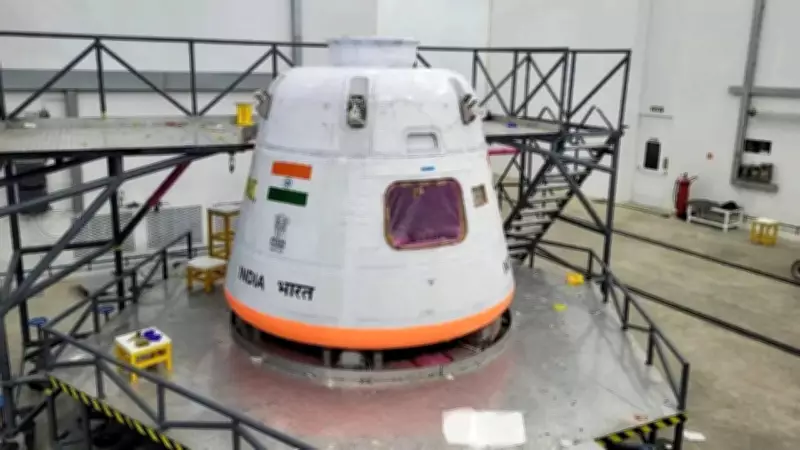
At the time of reporting, ISRO had not publicly disclosed the exact parameters of the test, and attempts to contact the agency went unanswered. However, it was expected that IADT-02 involved a simulated crew module weighing approximately 5 tonnes, designed to mimic the external configuration of the actual flight vehicle. The module was dropped from a specified altitude to validate the parachute system, which is critical for safely returning astronauts to Earth during the Gaganyaan mission. Originally, ISRO planned to conduct seven such tests, but multiple sources indicate that the number may be reduced.

Background on Previous Test and Collaborative Efforts
During IADT-01, the simulated crew module was dropped from an altitude of 3.1 kilometers using an Indian Air Force Chinook helicopter. This test was a collaborative effort involving ISRO, the IAF, the Defence Research and Development Organisation (DRDO), the Indian Navy, and the Indian Coast Guard. Conducted over the Bay of Bengal, the operation lasted about an hour from take-off to recovery, with the final parachute deployment sequence completed in just 2-3 minutes.
Challenges and Future Timeline for Gaganyaan
Despite Singh's announcement that the Gaganyaan mission is scheduled for next year, ISRO is unlikely to meet this timeline due to persistent delays. The agency faces several technological validations necessary before India can safely send humans into space. ISRO Chairman V Narayanan had previously been non-committal about specific dates for IADT or Gaganyaan, stating only that work was ongoing. This success comes as a positive development amid struggles with launch failures and mission postponements, highlighting the complex journey toward India's inaugural crewed spaceflight.






