

Japan Officially Concludes Akatsuki's Venus Mission
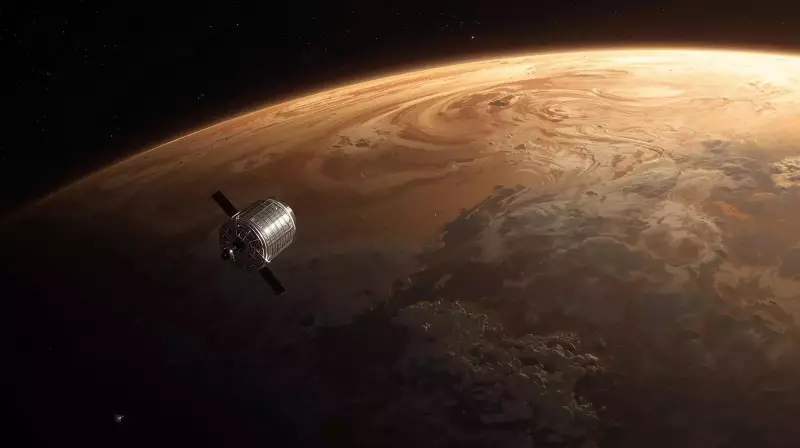
The Japan Aerospace Exploration Agency has officially closed the book on its Akatsuki spacecraft. Mission termination procedures began on September 18, 2025, after engineers failed to regain contact with the distant probe.
This decision marks the end of a remarkable journey that began fifteen years earlier. Akatsuki launched from Earth in May 2010 aboard an H-IIA rocket from Japan's Tanegashima Space Center.
A Rocky Start and Remarkable Recovery
The spacecraft's initial attempt to enter Venus orbit in 2010 failed completely. Instead of circling Venus, Akatsuki found itself drifting around the Sun. Many space missions would have ended right there.

Japanese engineers refused to give up. They spent five years searching for another opportunity. Their persistence paid off in December 2015 when Akatsuki finally achieved orbit around Venus.
The orbit wasn't what scientists originally planned. It was wider and more elliptical than intended. Still, it worked perfectly for the spacecraft's scientific objectives.
Focus on Venus's Mysterious Atmosphere
Unlike most planetary missions that map surfaces, Akatsuki studied Venus's thick atmosphere. The spacecraft carried specialized cameras and sensors designed for atmospheric observation.
For eight productive years, Akatsuki monitored cloud movements across Venus. It tracked temperature shifts and measured subtle changes in light and heat radiation. The data revealed atmospheric patterns both expected and surprising.
One particularly striking discovery involved a massive stationary gravity wave stretching across Venus's atmosphere. This feature was larger than anything previously observed on another planet.
Applying Earth Science to Venus
Scientists employed innovative techniques during the mission. They used data assimilation methods commonly applied in Earth weather forecasting. This approach helped create more accurate models of Venus's atmospheric behavior.
The spacecraft also provided crucial insights into Venus's extreme superrotation. This phenomenon involves atmospheric winds moving much faster than the planet itself rotates. Akatsuki's observations supported existing theories while raising new questions.
The Final Chapter
Communication with Akatsuki stopped abruptly in April 2024. The loss occurred during a period of reduced attitude control precision. Recovery teams worked for over a year to reestablish contact without success.
By that time, the spacecraft had already operated well beyond its design life. Systems were aging, and fuel supplies were limited. The decision to end the mission reflected practical realities rather than failure.
A Lasting Legacy
Akatsuki completed one orbit of Venus every 10.8 days. Its distance from the planet varied between 1,000 and 370,000 kilometers throughout each orbit.
The mission gathered a steady stream of data about one of our solar system's most challenging worlds. Venus remains Earth's closest planetary neighbor in size, yet its climate differs dramatically.
Akatsuki didn't answer every question about Venus, but it significantly narrowed knowledge gaps. For Japan's space program, the mission represents resilience and scientific achievement against considerable odds.
The spacecraft faltered early, recovered slowly, and ultimately operated long enough to make meaningful contributions to planetary science. Its observations will continue informing Venus research for years to come.






