Living Concrete: The Revolutionary Material That Grows, Breathes, and Heals Itself
For centuries, concrete has been the unchallenged foundation of global construction. Roads, bridges, skyscrapers, and countless structures rely on this hard, durable, and predictable inert material. However, a groundbreaking innovation is quietly challenging this long-established norm. Scientists have developed a living wall material that behaves more like a tiny ecosystem than a traditional building block, capable of growing, breathing, and even healing its own cracks.
The Canada Pavilion: A Glimpse into Living Architecture
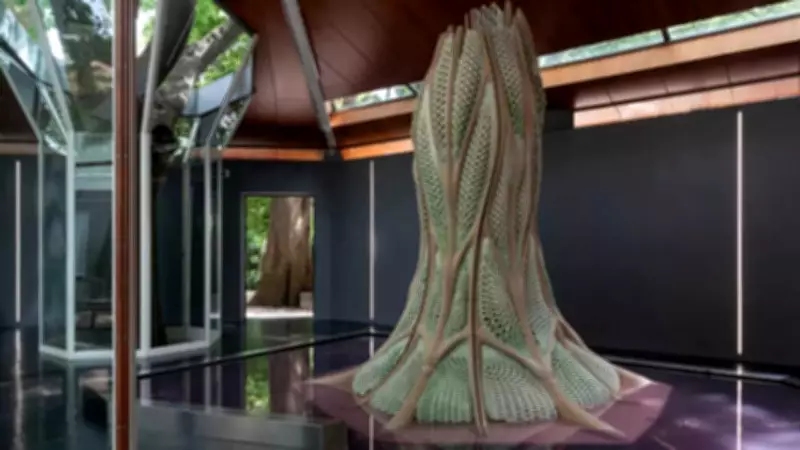
According to ArchDaily, visitors to the Canada Pavilion at the 2025 Venice Architecture Biennale witnessed something extraordinary. The walls were soft, textured, and almost organic in appearance. These structures, called Picoplanktonics, were not merely decorative but embedded with living cyanobacteria. This required daily maintenance, with precise control of light, temperature, and humidity. If the microbial colonies failed, the structural integrity would weaken, transforming the pavilion into something resembling a greenhouse more than a conventional building.
The concept of architecture that lives and breathes represents a fundamental shift in construction philosophy. While it might not replace traditional concrete immediately, it offers a compelling vision for a more dynamic and sustainable architectural future.

How Living Concrete Actually Works: Science Behind the Innovation
The technology centers on tiny cyanobacteria embedded within a printable hydrogel matrix. These microorganisms photosynthesize, converting sunlight and carbon dioxide into biomass. Over time, they grow and multiply, gradually altering the surrounding material. Remarkably, within one month, samples demonstrated approximately 36% greater mass compared to non-living control materials.
This mass increase results from two simultaneous biological processes:
- Direct Biological Growth: The natural proliferation of cyanobacteria within the hydrogel.
- Microbially Induced Carbonate Precipitation (MICP): The microbes create alkaline conditions that convert dissolved ions into solid mineral deposits.
These mineral deposits accumulate over time, reinforcing the structure from within. Essentially, the wall becomes progressively harder as it ages, offering a stark contrast to conventional materials that degrade.
Carbon Capture and the Critical Role of Design
Beyond self-repair, this living material actively captures atmospheric carbon. Research published in Nature under the title 'Dual carbon sequestration with photosynthetic living materials' revealed that early tests showed absorption of about 2.2 milligrams of CO₂ per gram of hydrogel in the initial month. While this may seem modest, the cumulative effect is significant. After over a year, the total stored carbon reached approximately 26 milligrams per gram, primarily in stable mineral form.
Unlike industrial carbon capture systems that demand substantial energy and chemicals, this living wall operates using only sunlight and air. This inherent simplicity could prove invaluable if the technology achieves scalability, enabling buildings to passively combat climate change while fulfilling their primary functions.
One surprising discovery is that physical design profoundly impacts performance. Traditional flat hydrogel blocks are inefficient, as they obstruct light, restrict airflow, and hinder bacterial activity. Consequently, researchers have experimented with lattice structures, porous forms, and textures inspired by coral reefs. These designs maximize volume while preserving surface area, ensuring the cyanobacteria remain active and healthy. The unconventional aesthetics of the Canada Pavilion were thus deeply functional; every curve and aperture served to provide the necessary space, light, and gas exchange for the living material to thrive.

The Future of Sustainable Construction
This innovation represents more than a novel material; it signifies a paradigm shift toward biologically integrated architecture. While challenges in scaling, durability, and maintenance protocols remain, the potential applications are vast. From urban buildings that reduce carbon footprints to resilient infrastructure in sensitive environments, living concrete opens new frontiers for sustainable development.
The journey from laboratory curiosity to the Venice Biennale demonstrates rapid progress. As research continues, we may soon witness the emergence of structures that are not merely built but grown, creating a harmonious synergy between human habitats and the natural world.