

Anand Mahindra Champions Indigenous AI-Powered Anti-Drone Technology
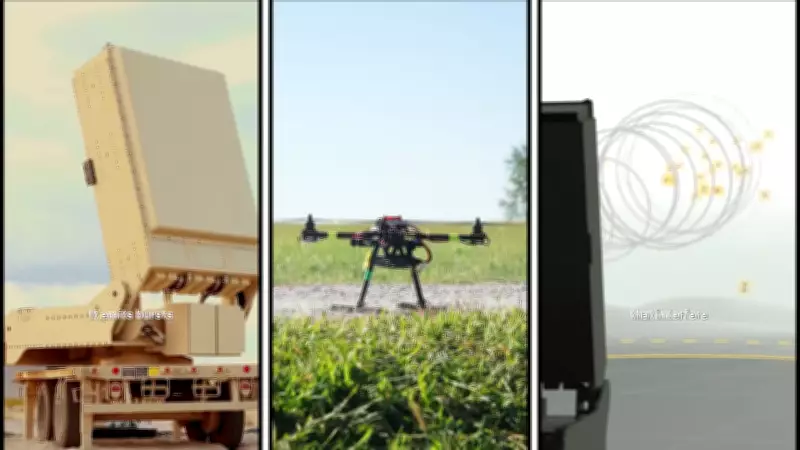
Industrialist Anand Mahindra has thrown his support behind advanced solutions to counter drone swarms more efficiently, emphasizing the critical need for India to develop indigenous capabilities. In a recent post on the social media platform X, Mahindra shared a compelling video showcasing a High-Power Microwave (HPM) system named Leonidas, which can disable multiple drones simultaneously with a single pulse.
The Game-Changing Leonidas HPM System
The video demonstration reveals the Leonidas system's remarkable ability to neutralize 49 drones with just one pulse, highlighting a significant shift in modern warfare tactics. Unlike traditional interceptors or even laser systems that engage only one target at a time, HPM technology can target multiple threats concurrently, covering a volume of space rather than a single point.
"49 drones. One pulse. All gone," Mahindra wrote in his post, underscoring the system's efficiency. He elaborated that this technology represents a paradigm where scale and economics are becoming as crucial as raw firepower in defense strategies.

The Economic Imbalance in Modern Conflicts
Mahindra pointed to recent global conflicts to illustrate a brutal reality: cheap kamikaze drones often cost only a fraction of the interceptors deployed to destroy them. "The aggressor doesn't need to win. He just needs to keep the math working in his favour," he stated, emphasizing how this cost imbalance can tilt conflicts.
While laser systems offer precision and lower costs, their limitation of engaging only one target at a time makes them vulnerable against drone swarms. HPM systems like Leonidas overcome this constraint, making them essential components of layered air defense architectures that complement rather than replace kinetic systems such as missiles and guns.
Call for Indigenous Development and Strategic Investment
Stressing the urgency for India to adapt, Mahindra declared that "importing solutions reactively isn't a strategy." Instead, he called for building indigenous, AI-enabled HPM and laser capabilities supported by three key pillars:
- Faster procurement processes to accelerate deployment
- Patient capital investment for long-term development
- Stronger deep-tech ecosystems to nurture innovation
"We have the talent," Mahindra asserted, highlighting India's potential in this domain. He revealed his recent appointment as Chairman of iCreate, a leading deep-tech incubator in Gujarat, which he envisions as a hub for exactly this kind of defense innovation.
The Future of Air Defense and India's Strategic Position
Mahindra's message underscores several critical insights about modern defense:
- The future of air defense will be layered, with different technologies filling specific niches
- AI integration will be crucial for enhancing the effectiveness of systems like HPM
- Economic considerations are becoming as important as technological capabilities in warfare
- India must move from reactive importing to proactive indigenous development
This advocacy comes at a time when drone technology is rapidly evolving, making effective countermeasures increasingly vital for national security. Mahindra's emphasis on building domestic capabilities aligns with broader efforts to strengthen India's defense manufacturing and technological self-reliance.






