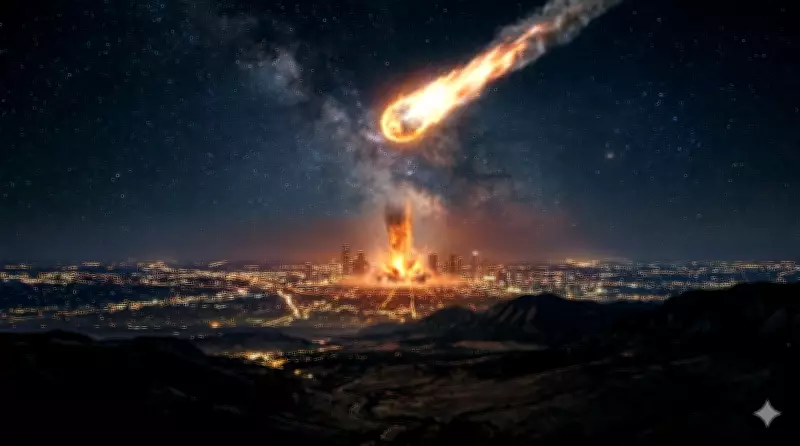
NASA Confirms Meteor Event Over Texas After Fireball and Loud Booms Startle Houston
On a Saturday afternoon in Texas, residents of the Houston area were startled by a sudden, dramatic event in the sky. A loud boom echoed across the region, followed by reports of a bright fireball streaking through the atmosphere. Witnesses described a flash of light and a thunderous noise, despite clear skies, sparking widespread curiosity and concern.
Eyewitness Accounts of the Cosmic Phenomenon
Residents shared their experiences with the Houston Chronicle, detailing a bizarre and frightening occurrence. Many observed what scientists identify as a fireball—a meteor so bright it's visible during daylight. One woman from the Cypress Station area reported an even more alarming incident: she claimed a rock crashed through her roof, creating holes in both the ceiling and floor. "It scared me to death," she recounted, emphasizing the terror of the object landing inside her home.
Initially, emergency responders speculated the debris might be from an aircraft, but the timing aligned with numerous meteor sightings, leading them to conclude a meteor was likely the cause. This prompted a deeper investigation into the event's origins and impacts.

NASA's Scientific Analysis and Confirmation
NASA quickly addressed the incident, confirming via an X post that a meteor had indeed entered Earth's atmosphere over southeast Texas. The space agency provided detailed data: the object was first detected approximately 49 miles above Stagecoach, traveling at an astonishing speed of about 35,000 miles per hour. It subsequently disintegrated in the air, breaking apart 29 miles above Bammel.
This disintegration generated a powerful pressure wave, responsible for the loud booms heard by residents on the ground. NASA noted that the meteor was significant in size, measuring three feet in diameter and weighing around a ton before its fragmentation. The event highlights the dynamic and sometimes unpredictable nature of cosmic interactions with our planet.
Investigating the Possibility of Meteorite Impacts
While NASA confirmed the meteor's atmospheric entry, the agency has not yet verified reports of a meteorite striking a home. However, radar data indicated fragments descending in areas such as Willowbrook and Northgate Crossing, suggesting pieces may have reached the ground. Scientists explain that only a small portion of a meteor typically survives the intense heat of atmospheric entry to become a meteorite.
If any fragments did land, it would represent a rare occurrence, but one that is scientifically plausible. NASA continues to investigate the woman's claim, analyzing evidence to determine if a cosmic rock indeed penetrated her roof. This process involves careful examination of radar signals and potential physical remnants.
A Rare Cosmic Encounter with Earth
The Texas meteor event serves as a vivid reminder of our connection to the broader universe. Such occurrences, while uncommon, demonstrate that space is not as distant from daily life as it might seem. The combination of visual fireballs, audible shockwaves, and potential ground impacts underscores the power and mystery of celestial bodies.
As NASA pursues its inquiry, the Houston community remains captivated by the possibility of a direct meteorite strike. Whether confirmed or not, this incident sparks wonder and highlights the importance of scientific vigilance in understanding cosmic phenomena. It's a testament to how even routine afternoons can be transformed by extraordinary events from beyond our atmosphere.