NASA Administrator Responds to 10-Year-Old's Viral Pluto Letter
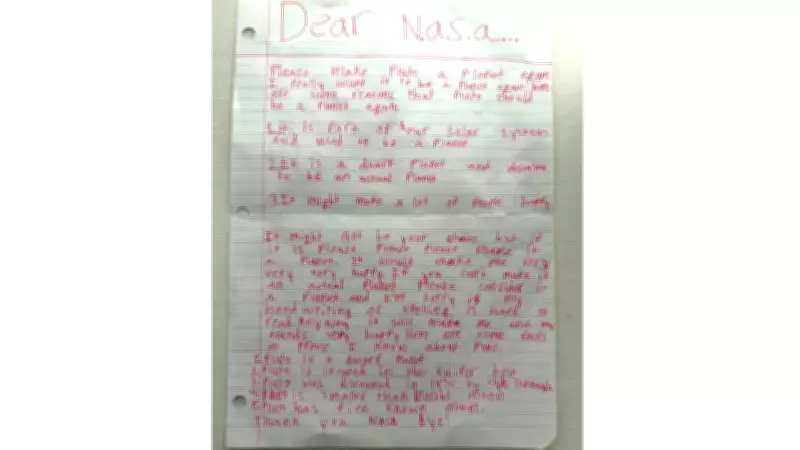
A handwritten letter from a 10-year-old girl named Kaela has ignited a surprisingly large conversation about Pluto's planetary status after reaching NASA and receiving a public reply. In her heartfelt note, Kaela passionately argued that Pluto deserves to be called a planet again, highlighting its significant role in our Solar System and the genuine joy it brings to people worldwide.
The Viral Appeal and NASA's Encouraging Response
The appeal quickly went viral across social media platforms after NASA administrator Jared Isaacman responded publicly, writing 'We are looking into this' in a widely shared post. This exchange has been celebrated as a particularly heartwarming moment in science communication, reflecting a child's authentic fascination with space exploration while demonstrating how official institutions can engage with public curiosity in meaningful ways.
Kaela's letter stood out for its remarkable sincerity and clarity. Written entirely by hand, it acknowledged Pluto's current classification as a dwarf planet while thoughtfully questioning why it could not regain full planetary status. She added an emotional dimension to her argument, suggesting that restoring Pluto's planetary designation would bring happiness to countless people who grew up learning about the nine-planet Solar System.

Understanding Pluto's Controversial Reclassification
Pluto was officially reclassified in 2006 by the International Astronomical Union, the organization responsible for setting criteria that define celestial objects throughout our universe. To qualify as a full planet under current definitions, an astronomical object must meet three specific conditions:
- It must orbit the Sun directly
- It must be spherical in shape due to its own gravity
- It must clear its orbital neighborhood of other debris and objects
While Pluto successfully meets the first two conditions, it fails to satisfy the third requirement because it shares its orbital region in the distant Kuiper Belt with numerous other celestial objects. This technical distinction led directly to its controversial designation as a dwarf planet, a decision that continues to spark debate among astronomers, educators, and space enthusiasts more than fifteen years later.
The Emotional Legacy of Pluto's Planetary Status
For millions of people worldwide, Pluto's demotion marked the definitive end of the familiar nine-planet Solar System model that had been taught in classrooms for generations. Kaela's letter powerfully taps into that lingering sentimental attachment, as the concept of Pluto as our Solar System's ninth planet continues to carry significant emotional weight and regularly inspires passionate discussion across multiple generations.
A Wholesome Moment in Modern Science Communication
While Pluto's official classification remains unlikely to change in the immediate future, this heartwarming exchange highlights the crucial importance of public engagement with scientific institutions and discoveries. By responding thoughtfully to a child's genuine curiosity, Jared Isaacman transformed a simple gesture into a widely shared positive interaction that reminds us why space exploration continues to inspire wonder across all age groups and backgrounds.
This viral moment demonstrates how even the most established scientific organizations can benefit from listening to public sentiment while encouraging the next generation of space enthusiasts through simple acts of acknowledgment and encouragement.