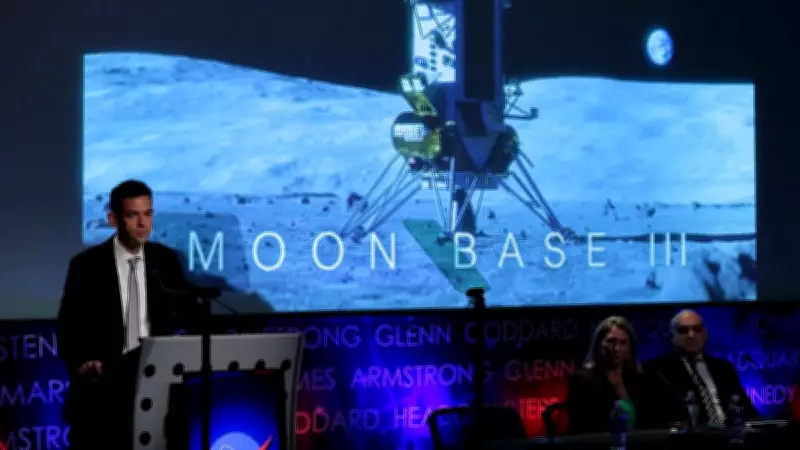
NASA has unveiled an ambitious three-phase plan to establish a permanent lunar base by 2032, with a projected cost of $20 billion. The plan, which builds on the success of the Artemis II mission, aims to create a sustained human presence on the Moon for scientific research and future exploration.
Three-phase approach
The project is divided into three distinct phases. The first phase, spanning 2025 to 2028, will involve robotic scouting missions to identify potential landing sites and resources. The second phase, from 2028 to 2032, will focus on assembling semi-permanent infrastructure, including habitats and power systems. The final phase, beyond 2032, will see sustained human presence and expanded scientific experiments.
$20 billion investment
The entire initiative requires a $20 billion budget, which NASA plans to allocate across the three phases. This investment will cover the development of landers, habitats, life support systems, and transportation. The base is intended to support long-duration missions and serve as a stepping stone for future Mars exploration.

Artemis II success
The plan follows the successful Artemis II mission in April, which marked a historic lunar flyby and provided critical data for future missions. Lessons learned from Artemis II, including navigation and communication systems, are being incorporated into the lunar base design.
Private sector collaboration
NASA is partnering with several private companies to achieve its goals. Blue Origin is developing a human landing system, while Astrolab and Lunar Outpost are designing lunar rovers. Firefly Aerospace is contributing drones for surface exploration. These collaborations are expected to accelerate development and reduce costs.
The lunar base will enable groundbreaking research, including studies of lunar geology, resource utilization, and the effects of low gravity on human health. It will also test technologies needed for longer space journeys, such as closed-loop life support and in-situ resource utilization.