

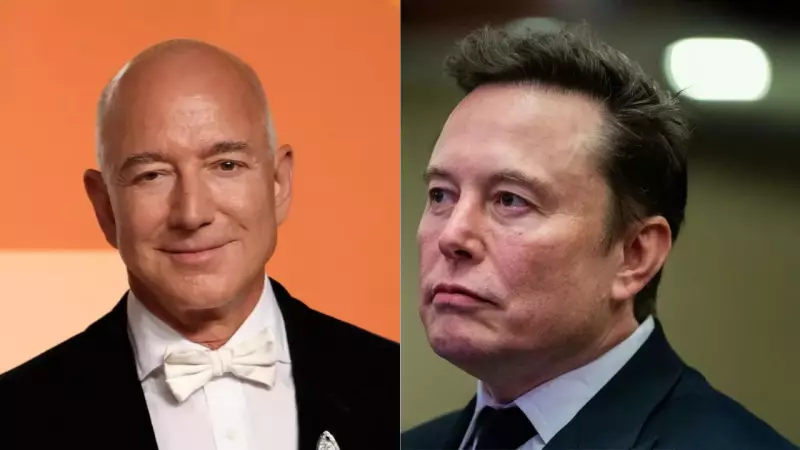
In a bold move on his very first day as the confirmed head of NASA, Jared Isaacman has thrown down the gauntlet to the billionaire-led space companies vying for the moon. The new administrator issued a clear ultimatum: the company that completes its lunar lander first will secure the coveted mission to return humans to the lunar surface.
The High-Stakes Lunar Sprint Begins
Speaking to Bloomberg TV just one day after his Senate confirmation, Isaacman left no room for ambiguity. He emphasised that America's "strategic objectives" on the moon are the top priority, taking precedence over any existing contract history or corporate loyalty. This statement directly impacts the two frontrunners in the private space race: Elon Musk's SpaceX and Jeff Bezos's Blue Origin.
"I don't think it was lost on either vendor that whichever lander was available first to ensure that America achieves its strategic objectives on the moon is the one we were going to go with," Isaacman stated. This effectively transforms NASA's ambitious Artemis program into a high-pressure sprint against the clock.

The Contenders: Starship vs Blue Moon
The race is now wide open. While SpaceX's Starship Human Landing System (HLS) was originally chosen for the Artemis III mission targeted for 2027, significant delays have altered the landscape. In October, then-acting NASA Administrator Sean Duffy officially reopened SpaceX's lunar contract, citing that the company was "behind schedule" on developing the modified Starship lander.
This delay has created a prime opportunity for Blue Origin's Blue Moon lander to potentially leap ahead. The competition now features two distinct designs:
- SpaceX Starship HLS: A massive, fully reusable spacecraft designed for vertical landing, derived from the Starship rocket system.
- Blue Origin Blue Moon: A multi-stage lander engineered for precise touchdown on the lunar surface.
Elon Musk publicly criticised the previous NASA assessment, taking to social media to label the official a "dummy" and confidently asserting that SpaceX would complete the moon mission independently.
Mounting Pressure and a 2030 Deadline
The urgency for NASA and its commercial partners has been dramatically intensified by a recent executive order from former President Donald Trump. The order mandates that the United States establish a permanent lunar outpost and operational nuclear reactors on the moon by the year 2030.
This aggressive timeline adds immense weight to Administrator Isaacman's pronouncement. The Artemis program is no longer just about returning astronauts to the moon after more than half a century; it is about establishing a sustained and powerful presence. The winning lander will be a cornerstone of this long-term strategy.
Isaacman's first-day directive sets the stage for an unprecedented corporate space race. With national prestige and a pivotal role in the next era of space exploration on the line, both SpaceX and Blue Origin are now under explicit orders to innovate, accelerate, and deliver. The world will be watching to see which billionaire's vision reaches the launchpad first.






