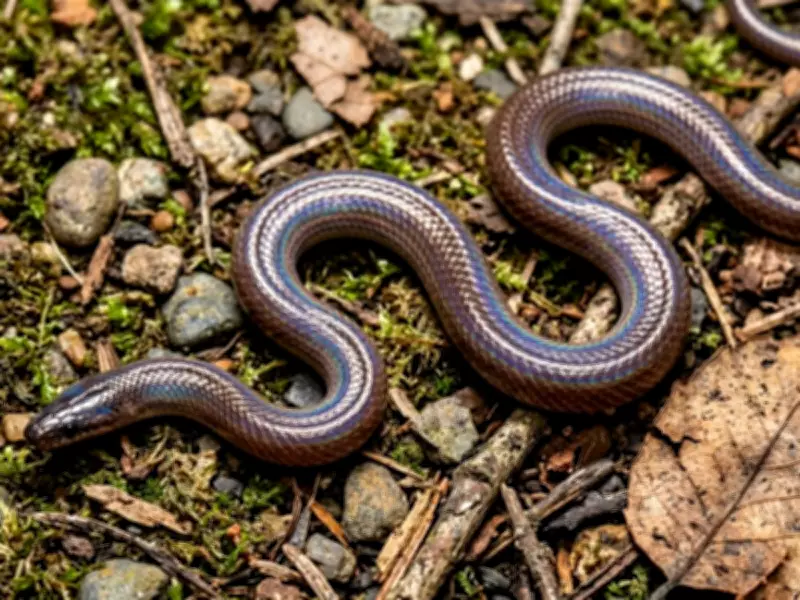
Scientists exploring the rainy forests of southern China have made an extraordinary discovery: a new snake species that employs a unique defense mechanism using head-tail mimicry. The snake, found in the Guangxi region, does not flee from predators but instead relies on an optical illusion to survive.
Head-Tail Mimicry: A Clever Defense
Predators typically target the head of a snake to neutralize the threat. The newly discovered Calamaria incredibilis, or the amazing reed snake, turns this logic against them. By curving its body into a figure-eight shape close to the ground and raising its blunt tail, the snake makes its tail resemble its head. This confuses attackers, who strike the tail instead of the vulnerable head. The head remains protected within the coil, allowing the snake to escape into the soil.
Physical Characteristics
Measuring just under 9 inches (22.5 cm) in length, this slim, non-venomous snake has smooth brown scales with faint stripes along its back. It belongs to the Calamaria genus, which includes about 70 species of nocturnal burrowers that feed on earthworms and insects in damp soil and decaying logs.

Genetic Uniqueness and Discovery
The research, led by herpetologist Shuo Qi from Sun Yat-sen University and published in Zoosystematics and Evolution, involved mitochondrial DNA analysis. The study revealed a 12.67% genetic difference from its closest relatives, confirming it as a distinct species. The Latin name incredibilis means "unbelievable," reflecting the researchers' amazement at its unique behavior.
Habitat and Conservation
The snake was discovered in the Huaping National Nature Reserve in Guangxi, a region known for its rich but understudied biodiversity. This finding highlights the importance of preserving southern China's old forests, which harbor many undocumented species. The reserve is also home to a newly described amphibian, underscoring its ecological significance.
Implications for Field Biology
The identification of Calamaria incredibilis opens new avenues for field biologists, encouraging further exploration of the cryptic brown snakes inhabiting China's forest floors. This discovery underscores the vast undocumented biodiversity in the region and the need for continued research.