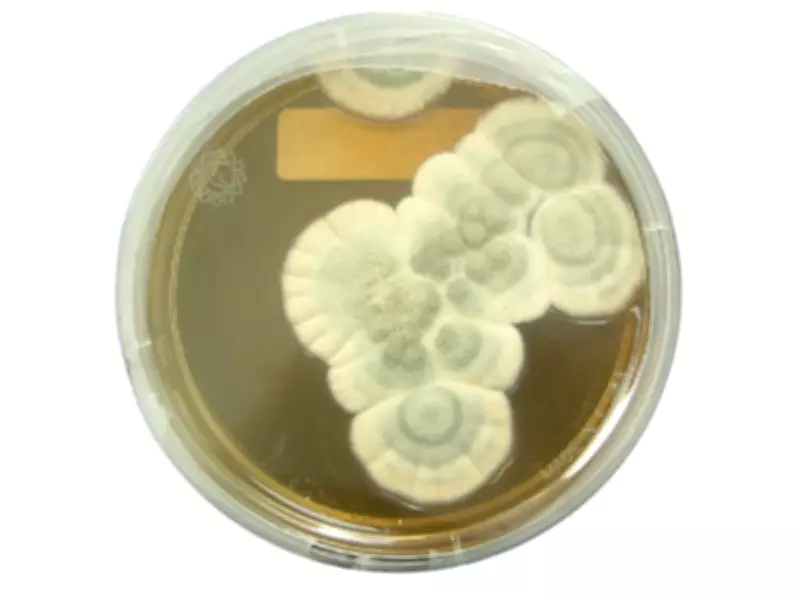
Penicillin has a history that many would call magical. In August 1928, Alexander Fleming, a Scotsman specializing in bacteriology, went on vacation. When he returned to the lab, he found something unexpected: mold had grown on his Petri dishes. Moreover, the bacteria Fleming had grown on the dish were dead because they could not survive near the mold. It may sound like a fairy tale, but penicillin emerged from years of scientific work and collaboration among researchers and industry.
The Accidental Discovery
When Alexander Fleming returned to his lab after vacation, there were messy Petri dishes on his table. The dish that caught his attention had not been washed with Lysol, unlike the others. According to a historical research article indexed in PubMed, it contained colonies of Staphylococcus bacteria, but a mold was growing around them. Numerous scientists would simply wash the soiled dish and forget about it. Nevertheless, Fleming had sufficient insight to notice something exceptional. He understood that the mold produced chemicals capable of stopping the growth of pathogenic bacteria. Fleming cultivated more of the mold and named the chemical it produced penicillin in 1929.
Delay in the Lab
Despite the greatness of Fleming's discovery, it took time for his research to result in a miracle drug. Historically, penicillin was highly unstable and almost impossible to isolate. As a result, it received little attention for nearly a decade. This example shows how scientific work often develops in practice.

Professor Alexander Fleming at work in his laboratory at St Mary's Hospital, London, during the Second World War. Image Credit: Wikimedia Commons
From Hint to Remedy
But there was still another chapter to the story. In 1939, a research team consisting of Howard Florey and Ernst Chain at Oxford University took up Fleming’s research once more. This time, the turning point came when Norman Heatley developed new methods to isolate and measure the substance. Thanks to their joint efforts, penicillin became the first widely used antibiotic. Before that, effective medicines for illnesses such as pneumonia and gonorrhea were limited. Even a minor injury could be fatal. The advent of penicillin marked a shift toward targeted treatment rather than simply easing suffering.
The Evolution of Penicillin in the UK Laboratory
Saving lives demanded large-scale production of penicillin. That happened in the 1940s during World War II. Large-scale production was made possible by wartime industrial mobilization. Factories started producing penicillin in enormous tanks. Once the medicine reached hospital pharmacies, public health began to change. It changed the message to patients from 'nothing we can do' to 'take this prescription.'
The Lesson for Today
The tale of the untidy laboratory desk becomes even more relevant nowadays. A historical overview indexed on PubMed traces the whole path starting with the initial discovery back in 1928 to the mass production required to save global public health. Looking back at 1928 shows that developing new treatments is difficult but important. Fleming's untidy desk was only the starting point for a journey that saved millions of lives. It shows that although luck can open the door to discovery, dedication and work are needed to bring it to the world.
About the Author
The TOI Science Desk stands as an inquisitive team of journalists, ceaselessly delving into the realms of discovery to curate a captivating collection of news, features, and articles from the vast and ever-evolving world of science for the readers of The Times of India. Consider us your scientific companion, delivering a daily dose of wonder and enlightenment. Whether it's the intricacies of genetic engineering, the marvels of space exploration, or the latest in artificial intelligence, the TOI Science Desk ensures you stay connected to the pulse of the scientific world. At the TOI Science Desk, we are not just reporters; we are storytellers of scientific narratives. We are committed to demystifying the intricacies of science, making it accessible and engaging for readers of all backgrounds. Join us as we craft knowledge with precision and passion, bringing you on a journey where the mysteries of the universe unfold with every word.