

India has once again demonstrated its growing prowess in space exploration with the successful launch of the Polar Satellite Launch Vehicle (PSLV), designated PSLV-C62. The mission, the 64th for the reliable PSLV rocket, lifted off at 10:18 am from the Satish Dhawan Space Centre in Sriharikota.
Mission Details and Payload
Developed by the Defence Research and Development Organisation (DRDO), the PSLV-C62 carried a significant payload of 15 satellites into orbit. The primary passengers included the earth observation satellite EOS-N1 and a key surveillance satellite named Anvesha. This launch underscores India's dual capabilities in both civilian space applications and strategic defence technology.
Inspiring the Next Generation of Space Explorers
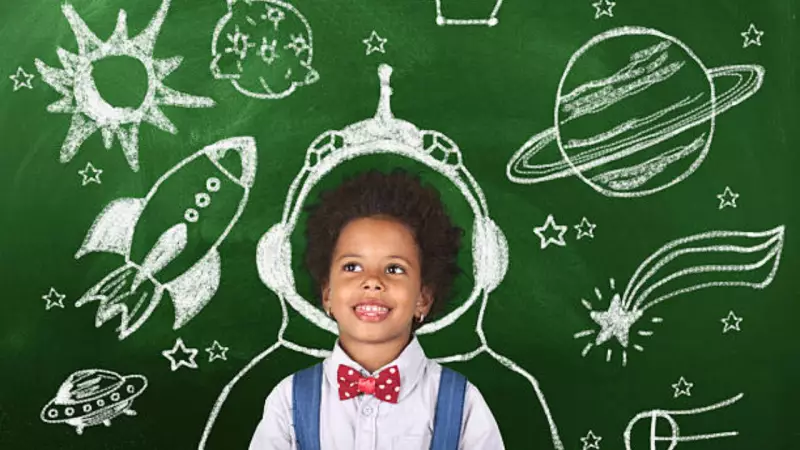
As India makes headlines with such advanced missions, it naturally sparks curiosity among young minds. Parents might find themselves fielding questions about rockets, planets, and the vastness of space. Explaining complex space science to children doesn't require a PhD; it's about connecting the cosmic to the familiar.

Begin with the celestial objects they already recognize: the Sun, the Moon, and the stars. Frame space not as a void but as a wonderous place full of stories. Instead of overwhelming them with distances, turn planets into characters. Describe Mercury as the scorching hot planet, Venus as the cloudy and mysterious one, Earth as our beautiful home, and Mars as the rusty red world that might have once hosted water.
Making the Cosmos Relatable
You can simplify the solar system by calling it a cosmic neighborhood. Explain that planets often have moons as constant companions, just like Earth has our Moon. Some planets, like Saturn, have dazzling rings, while others have dozens of moons. Introduce other space objects like comets—icy travelers that streak across the sky—and asteroids.
A key concept is gravity. Describe it as an invisible force, like a gentle string that keeps us grounded on Earth and holds the Moon in orbit around us. Kids often enjoy imagining what it would be like to experience zero gravity and float like astronauts do on the International Space Station.
When curiosity turns to how we reach space, talk about rockets. Explain them as incredibly powerful vehicles whose engines fight against Earth's gravity to soar into the sky. Share that astronauts live in space, conduct science experiments, and even grow food in special chambers.
To make it interactive, ask your child what they would pack for a space trip or how they think daily activities like sleeping or brushing teeth would work on Mars. These engaging questions transform abstract concepts into tangible, exciting ideas, fueling a lifelong interest in science and exploration.






