

The vibrant city of Pune played host to a groundbreaking automotive exhibition on Friday, where cutting-edge technologies ranging from intelligent driving systems for conventional cars to fully autonomous vehicles designed for logistics operations were prominently displayed. The event, known as the Symposium on International Automotive Technology 2026, was meticulously organized by the Automotive Research Association of India (ARAI), drawing significant attention from industry professionals and enthusiasts alike.
Innovative Smart Driving Assistant Steals the Spotlight
Among the myriad of exhibits, a particularly intriguing combination of hardware and software captured the curiosity of numerous visitors. This advanced technology stack functions as a sophisticated smart assistant for drivers, distinguishing itself from the more common Advanced Driver-Assistance Systems (ADAS). Unlike ADAS, which relies heavily on onboard sensors and cameras to alert drivers and occasionally take control to apply brakes, this novel system operates through vehicle-to-vehicle and vehicle-to-infrastructure communication.
Key features of this smart assistant include:

- The ability to send real-time alerts about obstacles on the road, enhancing situational awareness for drivers.
- An impressive operational range extending from 900 meters to 1 kilometer, providing ample coverage for urban and highway driving scenarios.
- Compatibility with older car models that lack built-in ADAS technology, making it a versatile upgrade option for existing vehicles.
A representative from the developing company elaborated to TOI, emphasizing that this technology offers a practical solution for retrofitting older vehicles with modern safety features, thereby extending their usability and safety standards.
Autonomous Robots Revolutionizing Logistics
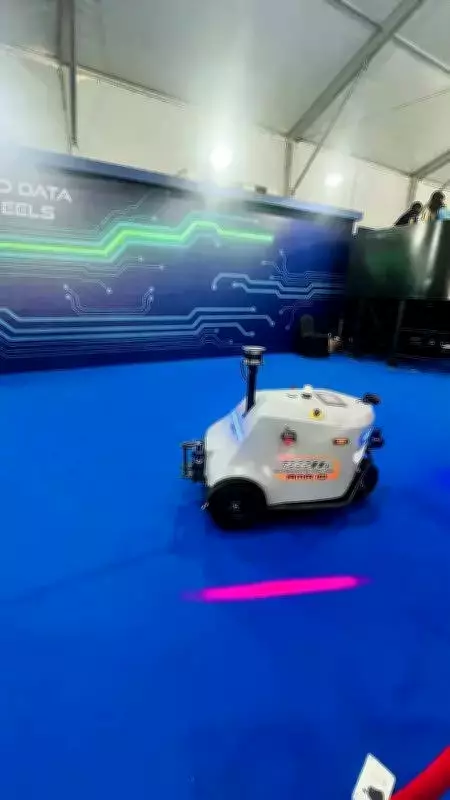
Further highlighting the expo's focus on automation, an autonomous mobile robot designed specifically for logistics and warehousing applications was showcased. This robotic marvel boasts the capability to tow payloads of up to 100 kilograms, operating at a maximum speed of 8 kilometers per hour. Such innovations promise to streamline operations in sectors reliant on material handling, reducing manual labor and increasing efficiency.
Breakthrough in Battery Technology: Sodium-Ion Alternatives
In a significant development for India's energy independence, the symposium also featured a sodium-ion battery developed by Vilas Shelke with support from the National Chemical Laboratory (NCL). This innovation presents a viable substitute for traditional lithium-ion batteries, addressing critical dependency issues.
Shelke explained the advantages:
- India currently depends on imports for key materials like cobalt, nickel, and lithium, whereas sodium is abundantly available domestically, including from seawater sources.
- The entire manufacturing process for these batteries will be conducted within India, fostering local production and reducing reliance on foreign supplies.
- Enhanced safety features, as these batteries do not catch fire, with ARAI testing confirming stability at temperatures up to 120 degrees Celsius.
The implementation plan for these sodium-ion batteries is set to unfold in phases. Initially, they will be integrated into two-wheelers within approximately nine months, followed by expansions to three- and four-wheelers. Shelke also revealed ambitious plans to establish manufacturing facilities in Pune, potentially boosting the local economy and positioning the city as a hub for advanced battery technology.
This symposium not only highlighted Pune's role as a center for automotive innovation but also underscored India's strides toward self-reliance in critical technologies, from smart driving solutions to sustainable energy storage.






