

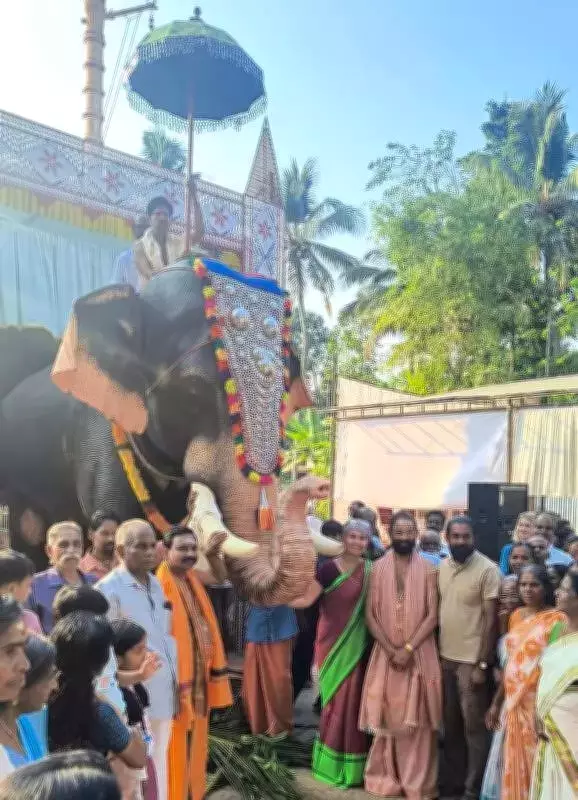
Robotic Elephants Make Historic Debut at Kerala Temples
In a groundbreaking move for animal welfare and cultural preservation, two temples in Cherthala, Alappuzha district, Kerala, have officially replaced live captive elephants with robotic counterparts during festivals and ceremonies. This initiative marks a significant shift in traditional practices, blending technology with age-old rituals.
Meet the Robotic Giants
The robotic elephants, named Neelamkulangara Vishnudasan and Omkareswaram Rama Senapathy, were inaugurated with great fanfare on Thursday. They entered their respective temples—Panavally Neelamkulangara Sree Narayana Vilasam Sree Maha Vishnu Kshethram and Omkareswaram Sree Rama Subrahmanya Temple—amid traditional music, vibrant celebrations, and sacred rituals, symbolizing a new era in temple ceremonies.
Standing an impressive 10 feet tall and weighing 500 kilograms each, these lifelike creations are meticulously crafted from fibre and rubber. Their design includes electronically moving eyes, ears, trunk, and tail, enhancing their realistic presence. Functionally, they can safely carry up to four people during processions and rituals, ensuring both tradition and safety are upheld.

Behind the Innovation
This humane initiative is sponsored by the Voices for Asian Elephants Society (VFAES), an organization dedicated to elephant conservation. The robotic elephants were designed by Four He-Arts Creations in Chalakudy, under the artistic direction of Prasanth Prakash. Notably, these are the third and fourth robotic elephants commissioned by VFAES, indicating a growing movement across south India to adopt ethical alternatives in temple traditions.
Sangita Iyer, founder and managing director of VFAES, emphasized the urgency of this reform. "Young elephants in the prime of their lives are dying, at an age when in the wild they would be mating, leading and strengthening family bonds," she stated. "The recent stampede involving Thechikkotu Ramachandran, along with the tragic death of a mahout in a separate incident, underscores the critical need for meaningful change to protect both elephants and public safety."
Temple Leaders Embrace Change
P R Purushan, president of the temple advisory committee at Panavally Neelamkulangara Sree Narayana Vilasam Sree Maha Vishnu Kshethram, expressed gratitude towards VFAES for their efforts. "Elephants and fireworks have long been cherished parts of our temple festivals. But we proudly chose to exclude both, prioritizing safety and ethics," he remarked, highlighting a conscious decision to modernize without losing cultural essence.
Similarly, N R Surendran, temple advisory committee president at Omkareswaram Sree Rama Subrahmanya Temple, shared his enthusiasm. "We are thrilled to see growing awareness among temples about the ethical issues and safety risks of using live elephants," he said, reflecting a broader trend towards compassionate practices in religious settings.
Impact and Future Prospects
The introduction of robotic elephants addresses multiple concerns:
- Animal Welfare: Eliminates the suffering, stress, and health risks faced by live elephants in captivity.
- Public Safety: Reduces dangers associated with elephant stampedes and accidents during crowded events.
- Cultural Continuity: Allows temples to maintain traditional ceremonies while embracing innovation.
This initiative not only sets a precedent for other temples in Kerala and beyond but also showcases how technology can be harnessed to foster ethical and sustainable practices. As more institutions consider similar adoptions, the movement towards robotic alternatives is poised to grow, potentially transforming festival landscapes across India.
By integrating robotic elephants, these temples are leading by example, demonstrating that tradition and compassion can coexist. This step forward is a win for animal rights, community safety, and cultural heritage, paving the way for a more humane future in religious celebrations.






