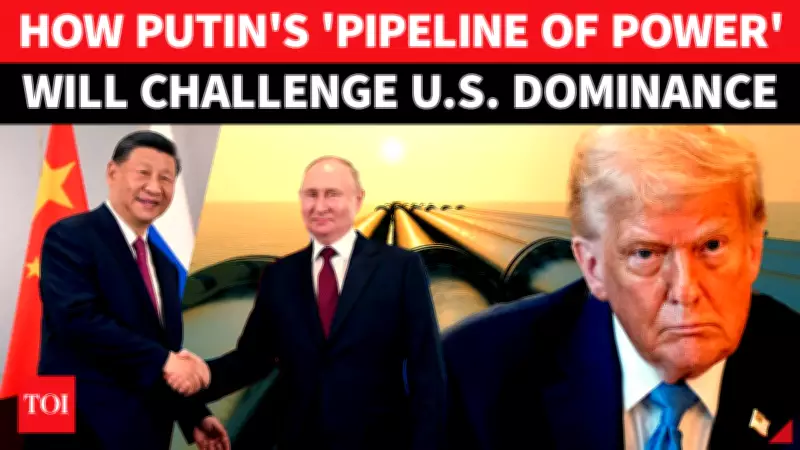
As Russian President Vladimir Putin prepares for crucial talks with Chinese President Xi Jinping in Beijing, global attention is turning toward the proposed Power of Siberia 2 pipeline — a massive energy project that could reshape Eurasian geopolitics. The 2,600-kilometre pipeline would transport up to 50 billion cubic metres of Russian natural gas annually from the Arctic Yamal region to China through Mongolia.
Strategic Lifeline for Moscow
Developed by Gazprom, the project is seen as a strategic lifeline for Moscow as it pivots away from European markets after Western sanctions linked to the Ukraine war. The pipeline would provide Russia with an alternative revenue stream and reduce its dependence on European buyers.
China's Cautious Approach
But while Russia pushes aggressively for the deal, China is carefully leveraging its position in pricing negotiations. Beijing is using its status as the primary customer to secure favorable terms, highlighting the growing geopolitical and economic significance of the pipeline.

The timing of the renewed push comes amid escalating tensions in the Hormuz Strait, a critical chokepoint for global energy shipments. The crisis has underscored the vulnerability of sea-based energy routes and strengthened the case for overland pipelines like Power of Siberia 2.
Geopolitical Implications
If completed, the pipeline would deepen the energy interdependence between Russia and China, potentially altering global energy dynamics. It would also bolster Mongolia's role as a transit nation, offering it economic benefits and geopolitical leverage.
However, challenges remain, including technical hurdles in permafrost regions, environmental concerns, and the need for long-term financing. The project's fate will likely depend on the outcome of the Putin-Xi summit and broader geopolitical developments.