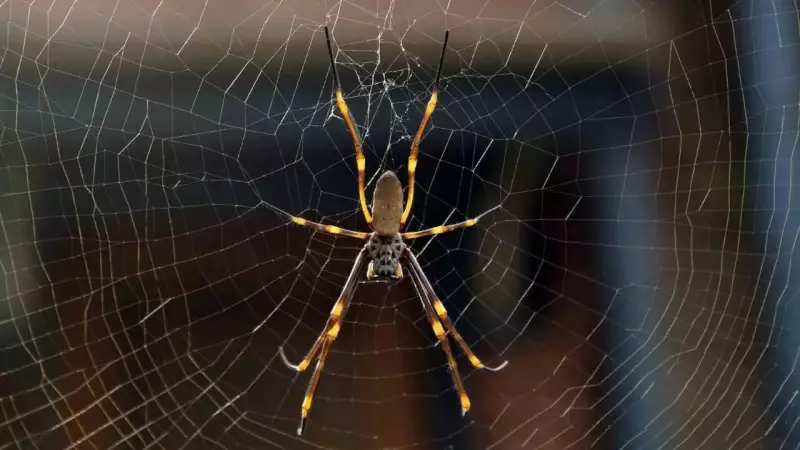
In the world of natural materials, spider silk stands out as a marvel of evolution. For hundreds of millions of years, spiders have perfected these protein fibres to perform critical tasks, from building intricate webs to ensuring their own safety. This unique combination of mechanical strength, toughness, and fineness has captivated scientists across biology, ecology, and materials research.
The Science Behind Spider Silk's Superpowers
Spider silk is not a single material but a family of natural protein fibres. They are produced in specialised glands within the spider's abdomen and extruded through spinnerets. Among the various types, dragline silk is particularly remarkable. Used for the structural frame of orb webs and as a safety line, it boasts exceptional tensile strength and resistance to breaking.
A study published in Biomolecules highlights that silk from orb-weaving species combines this strength with impressive extensibility. This allows the fibre to absorb huge amounts of energy before snapping. The secret lies in the proteins called spidroins. Their highly repetitive structure organises into a hierarchy where crystalline regions are embedded in an amorphous matrix, creating a material that is both strong and tough.

Beyond dragline silk, spiders produce specialised silks for capture spirals, egg sacs, and gluey coatings, each fine-tuned by its unique protein recipe. The famous golden orb-weaver spiders, for instance, produce a characteristically golden-hued silk prized for its blend of strength and elasticity.
From Liquid to Solid: The Spider's Spinning Secret
The transformation of spider silk from a liquid inside the gland to a solid fibre is an engineering feat. It begins with spidroin proteins stored as a concentrated liquid 'dope'. When needed, this dope travels down a narrowing duct. During this journey, changes in pH and ion concentration trigger a structural reorganisation.
The proteins align into strong, beta-sheet-rich regions while maintaining elastic amorphous domains. Crucially, this entire process happens at ambient temperature using water as a solvent—something human engineers struggle to replicate. As the spider pulls the fibre with its legs, the molecular chains align further, enhancing the silk's final strength and toughness at a macroscopic level.
Real-World Applications: From Medicine to High-Tech
The extraordinary properties of spider silk have sparked immense interest for practical applications. Its high tensile strength and toughness relative to its weight make it ideal for lightweight composites, advanced textiles, and protective gear.
In medicine, its biocompatibility and biodegradability are being tested for next-generation sutures, tissue engineering scaffolds, and drug delivery systems. The fine, hierarchical structure of the fibres also opens doors for use in optics and flexible electronics, such as in sensitive sensors.
Since farming spiders is impractical, scientists are turning to bioengineering. The main approaches involve using silkworms, bacteria, or other microbes genetically modified to produce spider silk proteins. Researchers are also developing artificial spinning methods to mimic the spider's natural process, aiming to create fibres that match or even surpass nature's design.
From the forests and gardens where orb-weavers like Trichonephila spin their golden webs to the cutting-edge labs trying to harness its power, spider silk continues to be a source of inspiration and innovation, proving that some of the best solutions are woven by nature itself.