

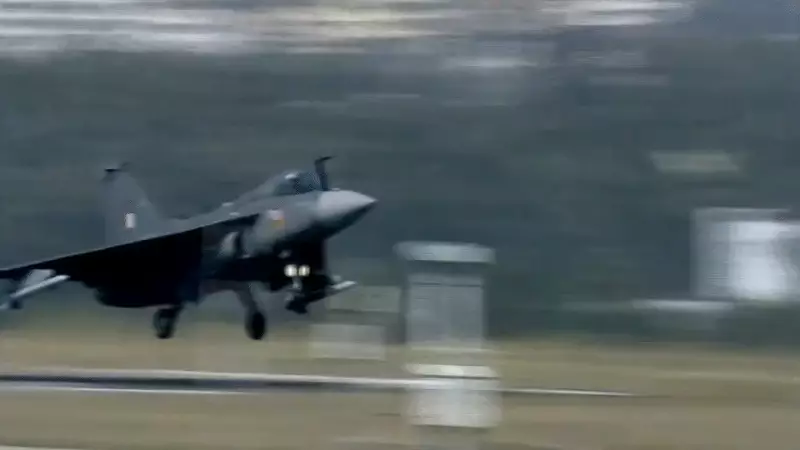
Twenty-five years ago, a moment in Indian aviation history unfolded over Bengaluru. On January 4, 2001, a compact, sleek fighter aircraft rolled down the runway and took to the skies, carrying with it the hopes of a nation's technological ambition. The Light Combat Aircraft (LCA) Tejas, in its first flight of 18 minutes, lifted a weight far greater than its own – decades of planning, perseverance, and a nation's dream of self-reliance in defence.
The Historic Morning at Bengaluru's Runway
That Thursday morning at HAL's airport in Bengaluru, the air was thick with anticipation. At the controls of the first technology demonstrator was IAF test pilot Wing Commander Rajiv Kothiyal, then 42 years old. As he taxied onto Runway 09 at the National Flight Test Centre, his mind was focused on the meticulously crafted procedures for a mission never attempted before. While confidence was high, there was an undeniable sense of unease; this was truly uncharted territory for India's aerospace sector.
A Journey of Grit and Innovation
The successful flight was not just an 18-minute event. It was the culmination of years of intense effort, marked by spirited debates, inevitable delays, and ingenious improvisation. The Tejas programme embodied a long and complex journey of learning, testing, and indigenisation. Today, a quarter-century later, the Tejas stands as the only indigenously developed fighter to have entered service with the Indian Air Force. It is a towering technological milestone, proving India's capability to design and build modern combat aircraft.

The Legacy and the Road Ahead
While the Tejas is a symbol of significant achievement, its story also serves as a reminder. It highlights that India's quest for complete self-sufficiency in combat aviation is an ongoing mission. The programme taught the country invaluable lessons about the intricate ecosystem required to build a modern fighter jet—from advanced materials and avionics to weapons integration and rigorous testing. The experience gained has become the foundation for future aerospace projects, steering India closer to its goal of 'Aatmanirbharta' (self-reliance) in defence.
The first flight of the Tejas was a defining moment. It demonstrated quiet resolve and technical prowess, setting the stage for the evolution of India's domestic defence manufacturing. As the Indian Air Force flies upgraded Tejas Mk-1A variants and looks toward future generations, the legacy of that January morning in 2001 continues to inspire the nation's aerospace engineers and strategists.






