

Two Simple Experiments Highlight Water's Fascinating Scientific Properties
In a recent demonstration of basic scientific principles, researchers have conducted two straightforward experiments using water to showcase its unique physical characteristics. These experiments, which require minimal equipment, serve as excellent educational tools for understanding fundamental concepts in physics and chemistry.
Experiment 1: Surface Tension Demonstration with a Paper Clip
The first experiment focuses on water's surface tension, a property that allows it to resist external forces due to cohesive forces between molecules. In this setup, a small paper clip is carefully placed on the surface of water in a bowl. Despite being denser than water, the paper clip floats due to the surface tension creating a "skin" on the water's surface.
This phenomenon occurs because water molecules at the surface are more strongly attracted to each other than to the air above, forming a thin elastic layer. When a drop of dish soap is added to the water, it disrupts this tension by reducing the cohesive forces, causing the paper clip to sink immediately. This experiment vividly illustrates how surfactants like soap affect water's behavior, with applications ranging from cleaning to industrial processes.

Experiment 2: Capillary Action in a Glass of Water
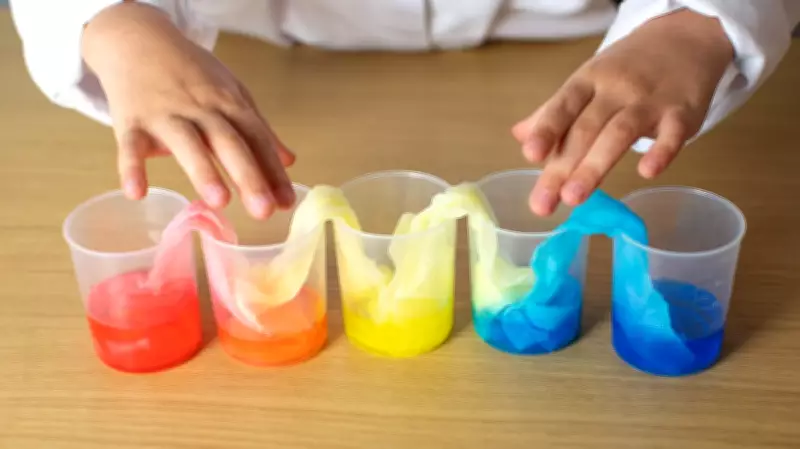
The second experiment explores capillary action, where water moves through narrow spaces against gravity due to adhesive and cohesive forces. A clear glass is filled with water, and a few drops of food coloring are added to make the movement visible. Then, a strip of paper towel or a thin cloth is partially submerged in the water.
Observers can see the colored water climbing up the material, demonstrating how water molecules adhere to the fibers and pull each other along. This principle is crucial in nature, such as in plants drawing water from roots to leaves, and in everyday items like sponges and towels. The experiment highlights water's ability to defy gravity in confined spaces, emphasizing its role in biological and engineering systems.
Educational and Practical Implications
These experiments are not only simple to perform but also highly informative, making them ideal for classrooms, science fairs, and home learning. They underscore water's essential properties that underpin many natural and technological processes. By using common household items, they democratize access to scientific education and inspire curiosity about the physical world.
Key takeaways from these demonstrations include:
- Water's surface tension enables lightweight objects to float, a principle exploited in water striders and certain industrial applications.
- Capillary action is vital for fluid transport in plants and materials, influencing fields from agriculture to material science.
- Simple experiments can effectively convey complex scientific ideas, fostering a deeper appreciation for everyday phenomena.
In summary, these two water-based experiments provide a hands-on way to explore fundamental scientific concepts, revealing the intricate behaviors of one of Earth's most vital substances. They serve as a reminder of how basic observations can lead to profound insights into the natural world.






