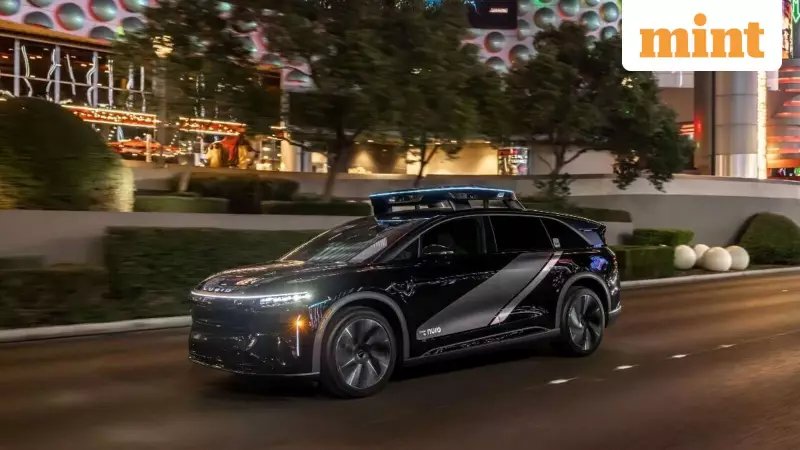
In a major leap for autonomous mobility, a powerful trio of tech and auto giants has pulled back the curtain on the future of ride-hailing. At the CES 2026 tech showcase in Las Vegas, Uber Technologies, Lucid Group, and autonomous vehicle specialist Nuro jointly revealed the production-intent vehicles for their upcoming global robotaxi service. The announcement also gave the world its first look at the Uber-designed in-cabin experience for passengers.
The Robotaxi Alliance: Who Does What?
The collaboration leverages the core strengths of each company. Lucid Group is providing the vehicle platform, which is based on its advanced Lucid Gravity SUV. This forms the physical foundation of the robotaxi. Nuro is taking charge of the critical autonomous driving system and is leading the comprehensive testing programme required to bring the service to public roads. Finally, Uber will operate the robotaxi service on its massive global platform and has designed the entire digital and physical rider experience inside the vehicle.
The companies confirmed that a crucial phase has already begun: autonomous on-road testing started last month in the San Francisco Bay Area. Nuro is conducting these initial trials using supervised engineering prototypes. Trained safety operators are present in these vehicles to monitor the system's performance. This real-world testing is described as a key step in the validation process ahead of a public launch.

Inside the Future of Ride-Hailing
The unveiled robotaxi is packed with technology aimed at safety, awareness, and passenger comfort. For navigation, it employs a sophisticated new sensor suite that includes cameras, solid-state lidar, and radar. This system is designed to give the vehicle a complete 360-degree view of its surroundings. The sensors are cleanly integrated into the vehicle's body and a distinctive roof-mounted "halo" module. This halo also features LED lights to help passengers identify their assigned vehicle and see real-time status updates about their trip.
Once inside, passengers are greeted by a cabin designed for convenience. Screens allow riders to:
- Control climate settings and heated seats.
- Select music for their journey.
- View the vehicle's planned route in real-time.
- Contact customer support directly.
- Request the vehicle to pull over if needed.
The spacious layout can accommodate up to six passengers and includes dedicated storage space for luggage. All this autonomous computing power is driven by the NVIDIA DRIVE AGX Thor platform.
Safety First and the Road to Production
Nuro emphasised that the on-road testing is part of a multi-layered safety and validation framework. This strategy also includes extensive closed-track testing and advanced simulation work. The programme is built to rigorously evaluate every aspect of the self-driving system, from how it perceives the world to how it plans routes and behaves in diverse traffic conditions.
Subject to the successful completion of this validation, production of the robotaxi is expected to begin later this year. The vehicles will be manufactured at Lucid's factory located in Arizona. While the companies have not shared an exact start date for manufacturing, the timeline points towards a service launch in the latter part of the year.
For tech enthusiasts at CES, the robotaxi is on public display at NVIDIA's showcase in the Fontainebleau Hotel. The vehicle will be exhibited from Monday, January 5 at 3:00 PM PT until Thursday, January 8, 2026.
This partnership marks a significant convergence of automotive excellence, autonomous technology, and ride-hailing network scale, setting the stage for a transformative shift in how people move around cities globally.