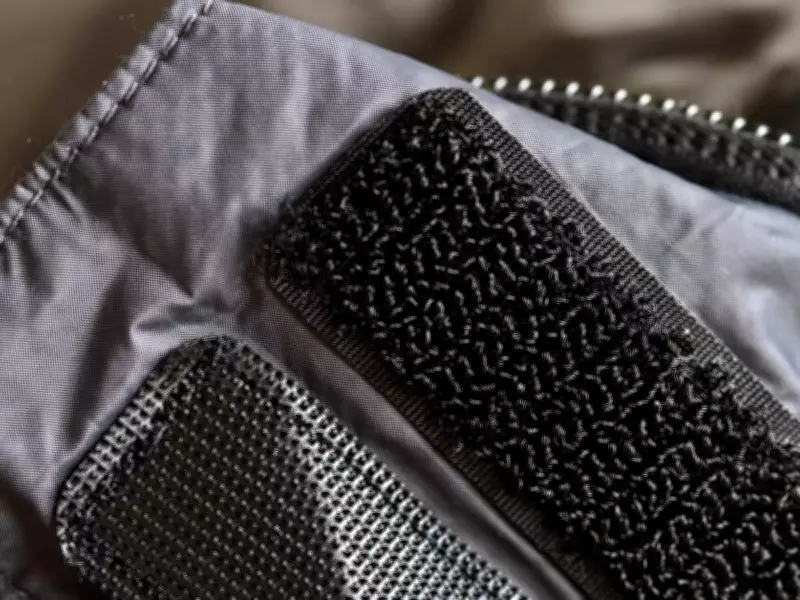
Velcro, the billion-dollar fastener used by NASA, has an unremarkable origin story. In 1941, Swiss engineer Georges de Mestral went out on a walk and observed that there were burrs caught on his dog's hair and his clothes. The average person probably would have disregarded this matter. De Mestral thought differently, however. He decided to explore further.
The Discovery of Burrs
When he examined the burrs more closely with a microscope, he discovered that they had hooks attached to them. These hooks were able to attach themselves to loops present in fabrics and animals' fur. This discovery formed the foundation of one of the most famous instances of biomimicry – imitating what nature has already created.
One peer-reviewed study published in Philosophical Transactions of the Royal Society B mentions Velcro as one of the most prominent biomimicry inventions of all time. The fundamental concept was rather straightforward yet quite impactful. As nature can create a reattachable fastener through hooks and loops, humans can also do the same through engineering and manufacturing.

What Made the Burr Design Work So Well?
It was all about the mechanics. No glue or adhesion had to occur between the hooks and soft loops to establish the connection. This made it easy to detach and reattach the two sides again and again without impairing their effectiveness.
As researchers published in an engineering review article, the key to Velcro's success was in converting the hook and loop structure that appeared in burrs to an efficient fastener. Such versatility made the invention extremely useful. Unlike buttons, zippers, or other mechanical fasteners, hook-and-loop connections were quick to secure and required minimal skill on the part of the user. Moreover, they worked regardless of the surface material.
As another study focused on biomaterials observed, the fastening systems based on burr structures continue to serve as prime examples of how biological structures can inspire durable engineering designs. This is why the tale of Velcro stuck around for decades. The invention was not about replicating the looks of a seed in a plant. It was about replicating its mechanics.
The Dog Walk Discovery Was Just the Start
For the idea to be brought to fruition, de Mestral needed much more time. It is stated by historical accounts that the inventor worked hard to develop suitable materials and techniques that would allow for recreating the hook and loop structure.
This effort was necessary since imitating the natural mechanism was challenging due to the need for durable but light fabrics that could withstand repeated uses. The final product would later be branded as Velcro, named from two French words – velours meaning velvet and crochet – hook. The long time that passed shows that the creation of an invention was far from an overnight job. De Mestral needed much time to get the idea to work out.
How NASA Made Velcro Popular
The hook and loop fastener was made even more popular after its adoption by NASA in the space missions within the Apollo era. NASA technical documentation mentions Velcro fasteners and loop tapes. It was highly suited for use in space since there were requirements to find new methods of securing items that could be easily detached during movement in zero-gravity conditions.
Since it is lightweight and reusable, it could be very helpful. While the burr's method of attaching itself to fur remained the same, astronauts used the system to organise tools in space. Despite NASA not creating Velcro, it contributed to making it one of the most recognisable symbols of innovation worldwide.
Why Velcro Is Relevant Today
This invention is relevant to us today because it highlights the importance of inventions that are developed based on observations in our daily life. Velcro was considered a hallmark biomimicry case study since it transformed a natural mechanism into an engineering solution.
Indeed, we need to remember that nature finds solutions to many structural and mechanical problems even before engineers think about them. The example of Velcro demonstrates that inventions do not usually result from one great idea. The burrs were just the starting point; what mattered was observing them and then developing them over the years.

A small seed attached to a dog's fur became a means of attachment that can be found in clothes, medical equipment, aerospace applications, and even in the home environment. This example is still impressive since the difference between the cause and effect seems too great for anyone to believe.