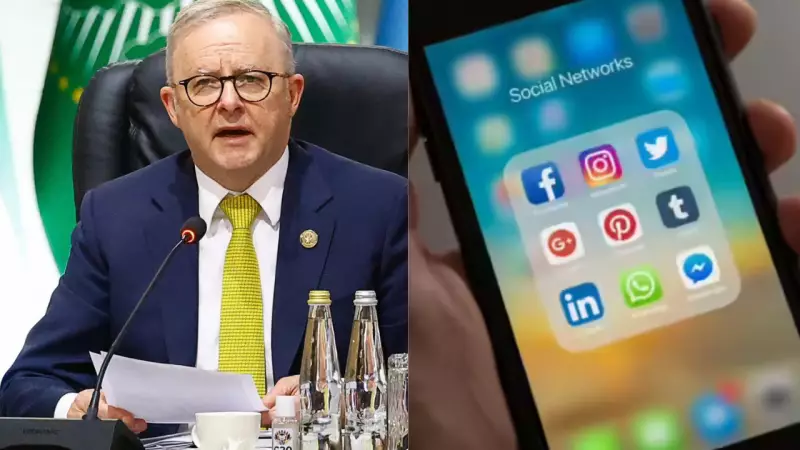
In a bold move to safeguard its youth, the Australian government has formally defended its decision to prohibit children under the age of 16 from accessing major social media platforms. The ban, set to take effect from December 10, targets giants like Facebook, Instagram, TikTok, and YouTube, framing the action as a necessary shield against the digital world's dangers.
The 'Purgatory' Rationale: Protecting Generation Alpha
Communications Minister Anika Wells offered a stark justification for the new law, arguing it aims to protect young Australians from being drawn into an online "purgatory." She invoked powerful imagery, stating the legislation would stop "Generation Alpha from being sucked into purgatory by the predatory algorithms" that have been likened to "behavioural cocaine." This sentiment was echoed by Prime Minister Anthony Albanese, who criticized social media as a source of peer pressure, anxiety, and a tool for online predators.
How the Ban Will Work: Fines and a Dynamic List
The onus of enforcement falls on the platforms themselves. The eSafety Commissioner must be convinced that social media companies have taken "reasonable steps" to prevent under-16s from holding accounts. Failure to comply could result in staggering fines of up to $49.5 million. The government has clarified that the list of affected platforms is not static. If young users migrate to other services like Lemon8, those too could be added to the ban, ensuring the net remains wide.

Platform Responses: From Criticism to Evasion Plans
Reactions from the tech giants have been mixed. Meta, parent company of Facebook and Instagram, remained tight-lipped on its exact age-verification methods, fearing that disclosure might help teens bypass the system. Snapchat plans to use a combination of account behavioural signals and user-provided birth dates. TikTok promised a "multi-layered approach to age assurance" using various technologies, with more details to come before the December deadline.
However, YouTube launched a strong critique, labelling the world-first legislation as "rushed" and unrealistic. Rachel Lord, YouTube's public policy manager, warned that the law might ironically make Australian children "less safe on YouTube." This criticism is notable as YouTube, initially exempted for its educational content, was included in the ban in July after the government emphasized the universal risk of "predatory algorithms."
The Global Precedent and Ongoing Challenges
Australia's move sets a significant global precedent in the debate over children's online safety. While the intent to shield minors from harmful content and addictive algorithms is clear, the practical challenges of accurate age verification and potential digital displacement remain. The world will be watching closely as December 10 approaches, marking a major test for government regulation of Big Tech in the name of protecting the young.