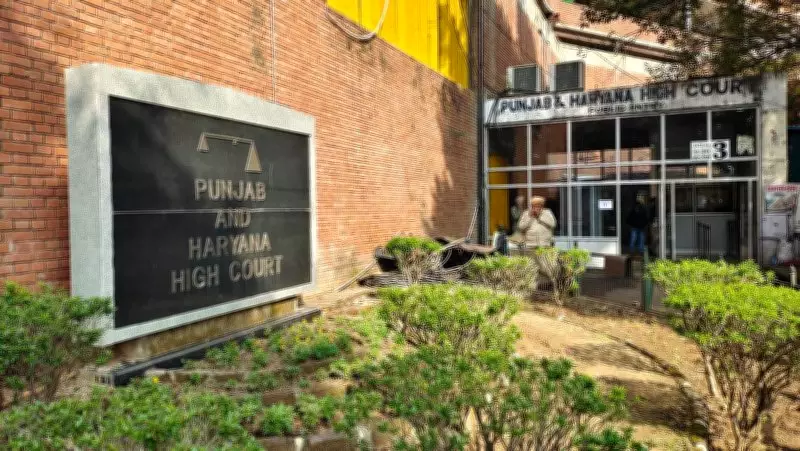
The Punjab and Haryana High Court has reaffirmed that videoconferencing facilities in courts are designed to eliminate barriers to justice, not create them. Emphasizing the need for meaningful use of technology, the court ruled that such tools must ensure the administration of justice remains accessible, efficient, and adaptable to practical challenges without causing undue hardship to litigants or witnesses.
Case Background
Justice Virender Aggarwal delivered the ruling while setting aside an order by a Chandigarh trial court that had refused permission to record the testimony of a key witness through videoconferencing. The case involved a succession and inheritance dispute concerning a Will registered over four decades ago.
The petitioner sought to examine an attesting witness whose testimony was deemed essential to prove the due execution and attestation of a Will dated December 21, 1979, which was registered on January 25, 1980.

Petitioner's Arguments
Representing the petitioner, advocates Jatin Bansal, Keerti Sandhu, and Prabhjot Kaur argued that the witness was material and indispensable. They informed the court that the witness, approximately 78 years old, resided in Gurugram and faced compelling personal circumstances. She had been caring for her husband, who suffered from stage-IV cancer, severe cardiac ailments, and diabetes, making travel to Chandigarh for deposition extremely difficult.
The trial court dismissed the application, prompting the petitioner to approach the high court.
High Court's Observations
Allowing the petition, Justice Aggarwal noted that the requisite technological infrastructure for videoconferencing has been made available to all courts to facilitate access to justice and ensure expeditious adjudication. Referring to the High Court's Videoconferencing Rules, the court observed that a provision permits the use of videoconferencing at all stages of judicial proceedings, conferring a wide procedural ambit for technology in the administration of justice. Rule 8 specifically addresses the recording of witness testimony through videoconferencing.
The court held that the request for examining the witness via videoconferencing could not be termed unreasonable or unjustified. The witness, of advanced age, had recently lost her husband after attending to his prolonged medical condition. These circumstances constituted valid and compelling grounds for invoking the procedural mechanism of recording evidence through virtual mode.
Trial Court's Oversight
The high court found that the trial court failed to adequately consider the Videoconferencing Rules and the technological infrastructure established for facilitating virtual judicial proceedings, including witness testimony.
Addressing concerns about identifying signatures and documents during virtual examination, the court clarified that no legal or procedural impediment exists. Copies of documents to be shown to the witness can be transmitted by the trial court in advance, enabling proper examination during videoconferencing.
Ruling
Allowing the revision petition, Justice Aggarwal set aside the impugned order and directed the trial court to proceed with recording the witness's testimony through videoconferencing in accordance with applicable rules and procedure.