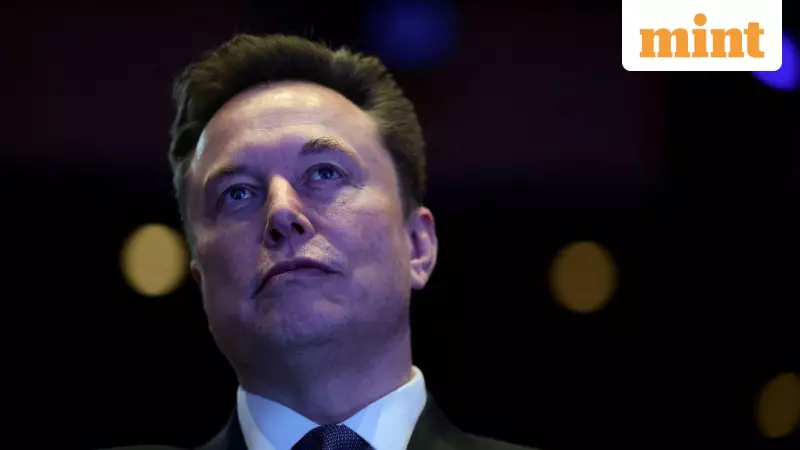
Elon Musk, the billionaire chief of SpaceX and Starlink, has once again made a controversial claim, stating that his satellite internet venture is being barred from operating in South Africa due to his race. The tech mogul reiterated his stance on Thursday, sparking a fresh debate on the country's empowerment policies and foreign investment climate.
Musk's Allegations of Racial Discrimination
In a series of posts on his social media platform X, Musk shared an excerpt from his 2025 interview at the Qatar Economic Forum. He asserted, "Starlink is not allowed to have an Internet provider license in South Africa for the sole reason that I am not Black." He elaborated that South Africa has approximately 140 laws which strongly favour Black South Africans, creating a barrier for his company. Musk, who was born in Pretoria during the apartheid era, expressed strong opposition to any racial discrimination, stating he is against laws targeting any community.
His comments did not stop there. In another post, he controversially claimed, "South Africa now has more anti-White laws than there were anti-Black laws under Apartheid!" He clarified his position by advocating for a "fair and even playing field" for all races.

The Regulatory Stance and Legal Hurdles
Despite Musk's pointed accusations, official records present a different narrative. A BBC report from April 2025 cited the Independent Communications Authority of South Africa (Icasa), which revealed that Starlink had not submitted a formal application for an operating license. The country's foreign ministry also clarified that any company, including Starlink, is welcome to operate provided it complies with local laws.
The core legal issue revolves around South Africa's Broad-Based Black Economic Empowerment (B-BBEE) policies. To obtain the necessary service and network licenses, a company must meet ownership criteria, which includes having at least 30% ownership by historically disadvantaged individuals, primarily referring to the Black population. Starlink had previously written to Icasa, arguing that this requirement excludes many foreign operators from the market.
Contrasting Views and Market Reality
South African officials have countered Musk's claims by pointing to the success of other international firms. Clayson Monyela, a spokesperson for the Department of International Relations and Cooperation, noted that around 600 US companies, including tech giant Microsoft, are operating and thriving in the country under the same regulatory framework.
The situation highlights the tension between South Africa's post-apartheid transformation agenda, designed to redress historical inequalities, and the expectations of global tech investors. While Musk frames the issue as one of personal racial exclusion, the South African government maintains it is a matter of regulatory compliance and equitable economic participation.