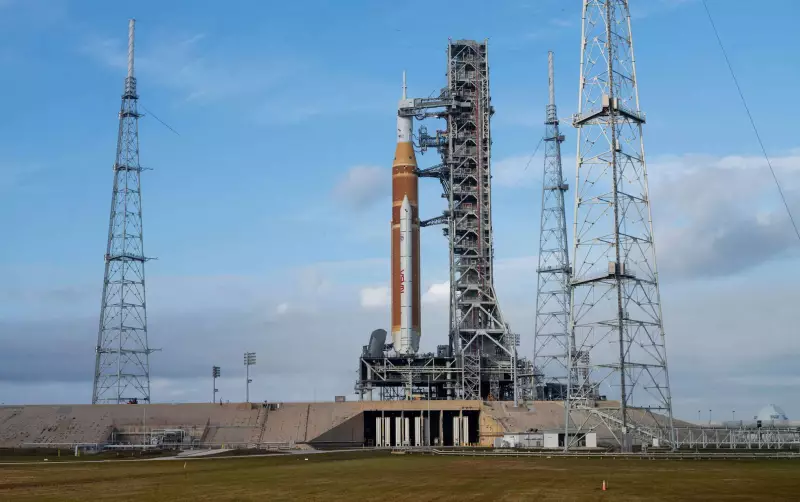
NASA teams in Florida are meticulously progressing through a crucial phase of preparations for the highly anticipated Artemis II mission. This mission represents the first crewed flight of the powerful Space Launch System (SLS) rocket and the advanced Orion spacecraft, marking a significant milestone in human space exploration.
Kennedy Space Centre: The Hub of Activity
Engineers at the Kennedy Space Centre are currently finalising numerous essential steps at the launch pad. Their work involves intricate coordination between ground systems, flight hardware, and various support teams to ensure every component functions seamlessly. The atmosphere is one of focused determination as technicians check, adjust, and rehearse each phase in a controlled yet realistic setting.
Approaching a Critical Milestone: The Wet Dress Rehearsal
A key milestone is now on the horizon with plans for a comprehensive wet dress rehearsal. This full-scale fuelling and countdown test is scheduled to take place as early as Saturday, January 31st. The exercise is designed to simulate launch conditions without astronauts on board, confirming that all systems can operate together effectively under the pressures of an actual launch.

This rehearsal will be the first time the SLS rocket is fully fuelled at the pad specifically for the Artemis II mission. During the test, teams will load more than 700,000 gallons of super-cold liquid hydrogen and liquid oxygen into the massive rocket. The countdown will proceed exactly as it would for a real launch, incorporating planned pauses, restarts, and meticulous checks during the final minutes. Engineers will also practice the critical step of safely draining the propellants after the test, a procedure just as vital as the loading process itself.
Countdown Testing: Precision Under Pressure
The countdown testing focuses intensely on timing and control. The first run of the rehearsal begins nearly two days before the simulated launch point. Teams will work through the countdown to just over a minute before the simulated liftoff, pause, and then resume. Later, control will be handed over to the rocket’s automatic launch sequencer, which manages the final seconds. A second run will follow, featuring another recycle of the countdown. These steps are crucial for confirming that software, hardware, and personnel can remain perfectly synchronized under the immense pressure of launch conditions.
Several runs are planned during the rehearsal to test how the launch team responds to holds and recycled countdowns during the final ten minutes, known as the terminal count. The simulated launch point is set for the evening, though the test window allows flexibility if additional time is required to address any issues.
Comprehensive Hardware Checks and System Servicing
Alongside the detailed rehearsal planning, technicians have completed several important servicing tasks across the launch system. The solid rocket boosters were recently loaded with hydrazine, a fuel used for their control systems. Inside the Orion spacecraft, teams are busy stowing essential equipment and carrying out planned pyrotechnic work on the launch abort system, a critical safety feature.
Engineers have also successfully tested the four RS-25 engines on the core stage and pressurised a key tank in Orion’s propulsion system. These checks, while routine, are absolutely critical as they aim to identify and resolve small issues before they can develop into larger, more complex problems.
Addressing Environmental and Safety Concerns
Unusually cold weather expected in Florida has added an extra layer of complexity to the preparations. Teams are diligently ensuring that environmental control systems can maintain the rocket and spacecraft within safe temperature limits despite the challenging conditions.
NASA is also proactively addressing items identified during earlier evaluations. Adjustments have been made to the emergency egress baskets at the launch pad to ensure they reach their full descent capability. Additional testing of Orion’s water system is currently underway after initial samples showed higher organic levels than originally planned.

Crew Readiness and the Path Forward
While the extensive hardware work continues in Florida, the Artemis II crew remains in quarantine in Houston. This precautionary period is designed to minimise health risks as launch preparations progress. For now, the focus remains firmly on steady checks and rehearsals, with progress measured not by speed, but by how well each individual piece fits into the overall mission puzzle.
If any significant issues appear during the wet dress rehearsal, NASA maintains the option to roll the rocket and spacecraft back to the Vehicle Assembly Building for further work before the actual launch. This flexibility underscores the agency’s commitment to safety and precision above all else.