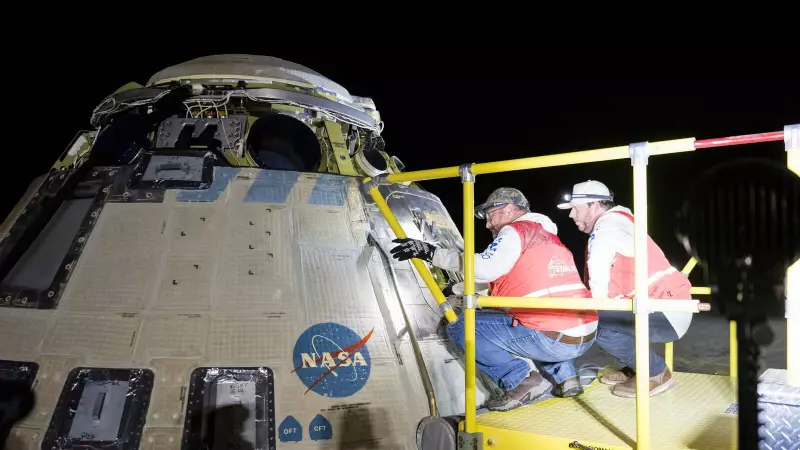
NASA and Boeing Revise Starliner Contract, Reduce Mission Count
The United States space agency, NASA, and aerospace giant Boeing have officially revised their commercial crew contract, reducing the number of planned astronaut missions using the Starliner spacecraft. The original agreement for six flights has been cut down to four confirmed missions.
This decision comes after a thorough review of the program's progress and the technical challenges faced during previous tests. The original $4.5 billion contract, awarded under NASA's Commercial Crew Program, has been amended. The final two flights of the initial six are now listed as optional, giving NASA future flexibility.
Safety Concerns and Technical Setbacks
The revision follows significant issues encountered during the spacecraft's first and only crewed test flight. That mission, which carried NASA astronauts Sunita Williams and Butch Wilmore, was prolonged due to multiple problems with the Starliner capsule.

The technical faults were severe enough that the astronauts could not return to Earth on the same spacecraft. After an extended stay, Williams and Wilmore had to make their journey back aboard a SpaceX Crew Dragon capsule, while the Starliner was ordered to return to Earth empty.
Since that mission, engineers from both Boeing and NASA have been intensely focused on resolving the identified problems. The primary areas of concern have been the Starliner's thrusters and its propulsion system, which malfunctioned during the critical flight phase.
The Road Ahead for Starliner
The path to redemption for the Boeing Starliner project involves a cautious, step-by-step approach. The next planned mission, named Starliner-1, is scheduled no earlier than April 2026.
Crucially, this upcoming flight will not carry a human crew. Instead, it will be an uncrewed cargo test run to the International Space Station (ISS). This mission is still pending the successful completion of additional ground tests and final certification.
NASA's commercial crew program manager, Steve Stich, emphasized the ongoing efforts, stating that the teams are "continuing to rigorously test the Starliner propulsion system in preparation for two potential flights next year."
If the 2026 cargo mission is successful, NASA will then plan for subsequent crewed flights with the Starliner. This timeline is critical as the agency aims to utilize the spacecraft before the planned decommissioning of the International Space Station in 2030.
The upcoming uncrewed test will be the third of its kind for Boeing. The development of the Starliner has been a costly endeavor, with the company absorbing over $2 billion in costs since 2016 due to these delays and tests.
This development highlights the different trajectories of NASA's two commercial crew partners. NASA signed contracts with both Boeing and Elon Musk's SpaceX back in 2014. While Boeing has struggled, SpaceX, with a contract worth $2.6 billion, completed its first NASA astronaut mission in 2020 and has successfully conducted 12 missions for the agency to date.