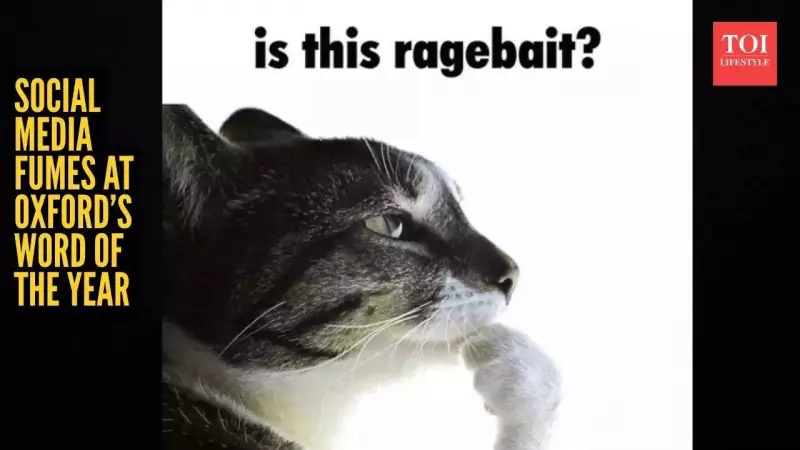
The annual reveal of the "Word of the Year" by major dictionaries typically sparks a wave of online chatter, a mix of curiosity and scepticism. However, the 2025 announcements from Oxford, Cambridge, and Collins triggered a particularly strong reaction, with many social media users wondering if the selections themselves were a form of clever trolling. The chosen words, born from the chaotic digital ecosystem, perfectly mirror the very online behaviours people love to critique.
The Reign of Rage Bait
Oxford University Press crowned "rage bait" as its Word of the Year for 2025. This term describes content deliberately crafted to provoke anger, annoyance, or outrage, all with the goal of driving high engagement and keeping users scrolling. The selection is no accident; it reflects a profound shift in how we interact online. Oxford's data shows that usage of the term has tripled in the past year, signalling a growing public awareness of how algorithms can trap us in cycles of heated debate and emotional reaction.
What qualifies as rage bait? The spectrum is wide. It can be relatively low-stakes, like an absurd cooking hack or a video designed purely to trigger comment wars. However, the phenomenon has evolved far beyond harmless pranks. It is now deeply embedded in political messaging, media strategies, and public discourse, where provoking anger is a calculated tool to amplify reach and control narratives.

Dictionary Deep Dive into Digital Life
Oxford was not alone in highlighting the digital age's influence on language. Other prestigious dictionaries also selected terms that define our modern, connected existence.
The Cambridge Dictionary chose "parasocial" as its Word of the Year. This concept describes the one-sided emotional relationships individuals develop with media figures, celebrities, or online creators they have never met in person. It captures the intimacy of fandom and viewership in the digital era.
Meanwhile, Collins Dictionary selected "vibe coding." This term refers to an emerging style of software development where programmers use artificial intelligence to convert natural language prompts or descriptions directly into functional code, streamlining the programming process.
Social Media Echoes the Irony
The online reaction to these dictionary picks was swift and meta, with users immediately applying the new vocabulary to the announcement itself. One user quipped, "This will rage bait a lot of people." Another offered a more pointed critique: "perfect. the dictionary finally admitted what the timeline has been doing for years: feeding us emotional fast-food and calling it discourse."
The sentiment was widely shared, with a fourth user simply stating, "Finally, a term that describes 90% of my timeline." Others sarcastically suggested expanding the genre, proposing terms like "sadness bait" or "empathy bait," highlighting how the concept of engineered emotional content could spiral.
Ultimately, the 2025 Words of the Year from these linguistic authorities point to an undeniable truth: our language is now evolving in real-time, hand-in-hand with the internet. The words we collectively elevate and debate are those that most accurately—and often uncomfortably—describe the digital landscape we navigate daily. For better or worse, they are the terms we can't stop talking about, even if that talk is fuelled by the very phenomena they name.