The Rise of Authentic Voices: How Small-Town Creators Are Conquering Instagram
"Basically, it's about how people in big cities have started watching reels of people in villages, right?" This simple yet profound question from Deeksha Choudhary, a 26-year-old screenwriter from Raisinghnagar in Rajasthan, captures the essence of a significant shift occurring on Indian social media platforms. Choudhary's observation cuts through the complex background of TikTok's rise and ban in India, Instagram's subsequent dominance in short videos, and the platform's evolving visual standards that have long dictated digital belonging.
Registani Ladkiyan: Wholesome Content from Rural Rajasthan
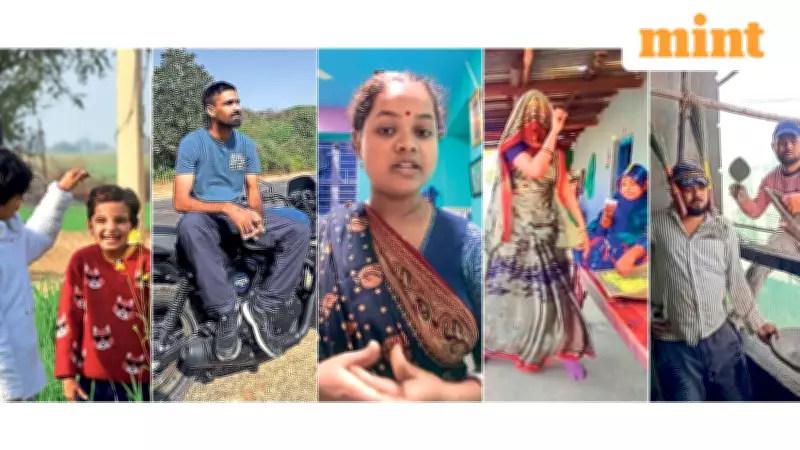
Choudhary manages Registani Ladkiyan (Desert Girls), an Instagram page featuring her younger sisters Aavya (10) and Ronak (11). Their carefully scripted videos deliver meaningful life lessons through the innocent perspectives of these tweens, all set against the authentic backdrop of everyday village life. One particularly impactful reel filmed in an open field shows one sister dressing the other as a scarecrow. During this playful interaction, Aavya asks, "What's your biggest fear?" Ronak responds thoughtfully: "That I might disappoint my people." When Aavya receives the same question, she reveals: "That I might spend all my time trying to make others happy." The exchange concludes with Ronak's signature "hmmm," leaving viewers with space for reflection.
What makes these videos remarkable is their raw authenticity. There are no cuts, no external audio tracks, and no artificial enhancements. In a single-take, 30-second reel, viewers experience a full 10 seconds of silent pause, allowing the emotional weight of the dialogue to settle. This approach has resonated deeply with audiences, with individual videos crossing 107,000 likes. Since launching in October 2024, Registani Ladkiyan has amassed nearly 850,000 followers. According to Instagram's analytics dashboard that Choudhary monitors, the majority of this audience originates from India's metropolitan centers: Mumbai, Delhi, and Bengaluru.

From TikTok's Demise to Instagram's Evolution
The journey of small-town creators has been anything but linear. TikTok's explosive growth in early 2020 initially promised a more democratic path to internet fame, bringing creators from non-urban, economically modest backgrounds into the spotlight. These creators built audiences of millions with content that urban India often dismissed as "cringe." However, TikTok's sudden ban later that year created a vacuum, and Instagram's quietly enforced "posh" aesthetic made many displaced creators feel unwelcome on the Meta-owned platform.
In recent years, a new generation of small-town creators has followed a different trajectory. Without conforming to Instagram's traditional visual ideals, they've found not just acceptance but growing admiration among urban, affluent audiences. Whether this represents a permanent shift remains uncertain, but the current moment invites important questions about how urban India consumes digital content and whether online belonging can ever be truly permanent.
The Economics of Authenticity
Choudhary observes this shift with professional insight: "High-budget, polished stuff with multiple edits was long considered engaging. But deep down, the human tendency is to connect with something raw. That's why people have got bored of Instagram's aesthetic." She poetically describes the previous era as a period where "we had stopped breathing in between" and notes that "now we're breathing again."
This transformation extends beyond semantics into tangible economics. Registani Ladkiyan has secured collaborations with prominent brands including Mother Dairy, Spinny, Swiggy Instamart, Wakefit, Shaadi.com, and Ixigo. Similarly, global brands like OpenAI are partnering with creators such as @Lifeofpujaa, whose content about remote village life in West Bengal exists far outside Instagram's dominant aesthetic yet commands significant algorithmic attention for her perspectives on rural existence, feminism, and cultural traditions.

Diverse Voices Finding Their Audience
The landscape now features creators from varied backgrounds who are redefining what constitutes valuable content. Dev, known as Baaghi Haryanvi, is a 30-year-old political science graduate who discusses sociopolitical issues in Haryanvi, attracting followers including celebrities like Saba Azad despite their limited understanding of the language. He now receives invitations to conferences and speaking engagements.
Bablu Khan, a construction worker from Maharashtra's Parbhani district, creates videos of himself dancing at construction sites with teammates—content that would have been dismissed as "cringe" just a few years ago. His account now boasts over a million followers. What was once dismissed as awkward or unsophisticated is being reevaluated as authentic, humbling, and genuinely eye-opening.
Algorithmic Shifts and Cultural Recognition
Sindhu Biswal, who runs a media company and growth advisory for creators in Bengaluru, clarifies that this shift isn't rooted in sudden moral enlightenment among urban audiences. "It's not because urban audiences suddenly became more inclusive," he explains. "It's because Instagram stopped rewarding polish and started rewarding relatability."
Biswal believes the algorithm has fundamentally evolved: "Today, the algorithm optimizes for watch time, shares, and emotional connection, not visual perfection. Urban audiences are also fatigued by hyper-curated lives and are gravitating towards familiarity and cultural truth."
Ankit Rihal, lead for global partnerships at Meta India, confirms that "Instagram's ongoing improvements to ranking systems and its focus on surfacing original content have been pivotal in enabling the discovery of smaller creators."
Breaking Intellectual Stereotypes
Mansi Singh, a 27-year-old writer from Pataudi village in Haryana who posts as @Gorraiya (sparrow in Hindi), has gained 141,000 followers by creating reels about gender discourse and literature in Hindi. She observes a significant cultural shift: "Creators like Puja are breaking stereotypes by speaking in English despite being from a small village in West Bengal. Baaghi Haryanvi talks about philosophy in Haryanvi. Their work reminds us that meaningful ideas come from many backgrounds and in many languages, often shaped by lived experience rather than elite spaces."
This challenges the persistent assumption that only urban, English-speaking individuals can produce intellectual content, opening doors for diverse voices to contribute to important conversations.
The Urban Perspective: From Novelty to Genuine Engagement
D. Ramakrishna (Ramki), a 61-year-old Mumbai-based advertising executive, consumes this content with both professional curiosity and personal fascination. "Some of these accounts are so refreshing that the cynical part of you starts wondering if it's all staged because the storytelling is that good," he admits. "It's a welcome interruption to doomscrolling. Beyond memes, this is what's actually happening in the country. It gives you a window into lives and ideas outside your echo chamber."
Ramki acknowledges that the initial lens through which urban audiences view this content remains somewhat elitist: "When content comes from small towns, we respond differently because it's unexpected." However, he notes that the appeal quickly transcends novelty: "Puja, for me, has gone beyond the village framing. I now want to know which films she likes and why. After a point, that elitist lens wears off."
Structural Challenges and Systemic Inequalities
Despite these positive developments, significant challenges persist within the creator ecosystem. Anurag Minus Verma, author and cultural critic, questions whether this moment represents genuine acceptance or temporary trendiness. He's observed brand managers discussing campaigns with small-town creators using language he finds disturbing: "It's like picking up cheap labour from a labour chowk, one-off campaigns, transactional thinking."
In his book The Great Indian Brain Rot (2025), Anurag documents how Instagram initially favored creators with "class privilege." When internet culture shifted from aspiration to irony, 'cringe' content suddenly became acceptable on the platform. However, he questions whether this represents real acceptance or merely ironic appreciation, citing the example of Puneet Superstar, a creator from east Delhi with over 9.8 million Instagram followers.
Puneet was initially dismissed as "cringe" for reels showing him rubbing pineapple cake on his face while riding a donkey in Delhi's Sadar Bazaar. Later, his catchphrases like 'nalle berojgar' (unemployed slacker) were appropriated by upper-caste and upper-class creators as shortcuts to virality. "First they mock you, then they appropriate you, then they call it a trend," Anurag writes, highlighting a pattern of cultural extraction that benefits established creators more than the originators.
Navigating Opportunities and Systemic Barriers
Nitya Kamble, a 22-year-old from Sagar, Madhya Pradesh, began posting dance reels to K-pop tracks six months ago after her husband upgraded his phone. She had been learning K-pop choreography since the pandemic but lacked adequate recording equipment until recently. Kamble now posts almost daily, dancing with her face covered on her mother-in-law's advice to avoid unwanted attention in their village.
With approximately 23,600 followers—mostly from South Korea, followed by Delhi, Mumbai, and Bengaluru—Kamble sees her reels as practice and preparation for formal dance auditions. When she recently received an invitation to travel to Mumbai for a photoshoot and audition, she declined, saying "Darr lagta hai, bada sheher hai" (I'm scared, it's a big city). Her uncertainty about whether the offer was genuine reflects the trust deficit that many small-town creators feel toward opportunities originating from metropolitan centers.
Monetization Challenges and Knowledge Gaps
Dev (Baaghi Haryanvi) began creating content after personal experiences revealed how little sociopolitical information circulates within immediate social circles. He chose Haryanvi because that's where his audience exists and selected reels format because that's where attention has migrated. He compresses complex ideas about philosophy, politics, labor, and dissent into short videos designed for endless scrolling.
Today, he has 70 subscribers paying ₹400 monthly on Instagram, but emphasizes that "Money isn't my end goal. I don't have many material desires. This gives me purpose." Despite his growing influence, Dev acknowledges that no one from the established creator ecosystem has reached out to guide him on monetization strategies now that he's pursuing content creation full-time.
Choudhary had a distinct advantage that many small-town creators lack: a year working at a Mumbai ad agency in 2022. Even with this experience, she realized she and her sisters were underpricing themselves. When an agency began representing their Instagram channel in April 2025, they started charging four times their initial rates. However, as Choudhary questions: "How many creators know an agent should 4X your rate, not halve it?" The creator ecosystem contains numerous stories of creators from diverse backgrounds being shortchanged by agents who exploit their limited market access and awareness of their own worth.
Platform Limitations and Structural Concerns
Praanesh Bhuvaneswar, CEO of Bengaluru-based influencer analytics firm Qoruz, points out that even as follower count loses relevance to views per reel, Instagram doesn't yet provide geographic breakdowns per post. This makes it harder for creators to fully understand their brand's worth and negotiate better terms.
Ramki expresses concern that brands will continue treating these creators as novelties: "They'll do one or two campaigns, then move on. They still see more value in conventional influencers." His deeper worry is structural: "You know how MBAs think. My fear is agents will come in and turn this into another gig economy: MBAs managing platforms, creators doing the labour."
The Fundamental Power Dynamics
This pattern feels familiar in the digital age. Technology platforms promise democratization, then build systems that concentrate power. The creator economy offered a new social contract: create compelling content, build an audience, earn a sustainable living. However, the fine print has always been visible. Platforms control distribution channels. Agencies control access to opportunities. Brands control budgetary allocations. At the foundation of this pyramid are the creators themselves, producing the value that sustains the entire ecosystem.
For creators who naturally fit Instagram's original aesthetic—English-speaking, metro-based, brand-literate, well-networked—the system has always been navigable, if not entirely favorable. For everyone else, every advantage remains harder won and easier lost, requiring constant vigilance and adaptation.
Protecting Authenticity in an Attention Economy
Choudhary maintains protective boundaries for her sisters, not allowing them to interact directly with media. "They wanted to make reels because that's what they see everyone doing these days. So I indulged them. They go to school, come home, make reels. Only the good parts. The rest they should decide as adults." This protective instinct reflects a nuanced understanding of how fragile digital attention can be and how quickly it can transform lives, particularly for young creators.
As Choudhary poetically noted, we're breathing again in the digital space. The fundamental question that remains is: who ultimately controls the air supply in this new ecosystem of authentic expression? The answer will determine whether this moment represents genuine, lasting change or merely another cycle in the ever-evolving landscape of digital content creation.