

In a bold move to accelerate its space ambitions and challenge the dominance of Elon Musk's SpaceX, China has unveiled new financial regulations designed to turbocharge its domestic reusable rocket industry. The Shanghai Stock Exchange has established a fast-track mechanism for initial public offerings (IPOs) specifically for companies developing this critical technology, even if they are not yet profitable.
Fast-Track to the Stars: New IPO Rules for Rocket Startups
The core of the new policy is a significant exemption from traditional listing requirements. Typically, companies seeking to list on China's tech-heavy STAR Market must meet strict profitability and revenue thresholds. However, under the newly expanded guidelines, which build upon rules introduced in June for innovative firms, rocket companies are freed from these financial constraints.
Instead of proving profitability, these aerospace startups now only need to demonstrate they have achieved key technological milestones. The primary benchmark, as reported by Reuters, is the successful execution of at least one orbital launch using reusable rocket technology. Notably, the rules do not yet mandate the successful recovery of the rocket booster, focusing first on the launch capability itself.

Closing the Gap with SpaceX
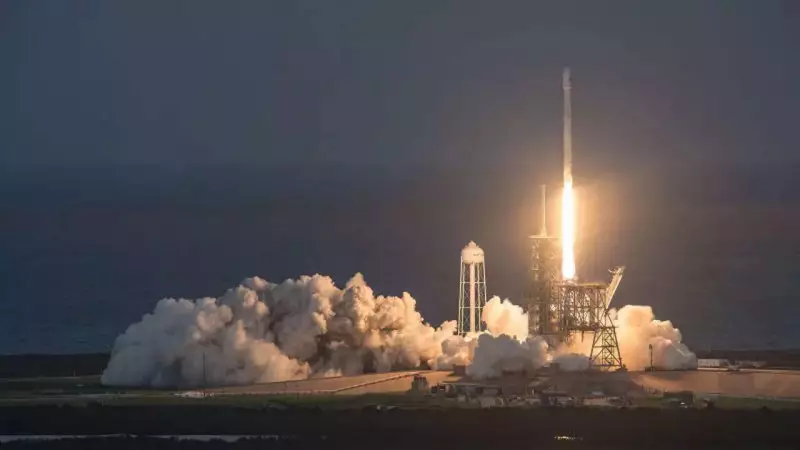
This regulatory shift is a direct response to the overwhelming lead held by SpaceX in the realm of reusable launch systems. SpaceX's Falcon 9 rocket is currently the only regularly launched reusable vehicle for orbital missions, a capability that has drastically reduced launch costs and cemented the company's position as a global leader.
Beijing has repeatedly framed SpaceX's expanding constellation in low-Earth orbit as a potential national security concern. This has galvanized China's efforts to develop its own satellite networks, with plans to deploy tens of thousands of satellites in the coming decades. A cost-effective, domestic reusable launch capability is seen as essential for this strategic goal.
The urgency is reflected in the immediate implementation of the new Shanghai exchange guidelines. Furthermore, the rules state that rocket companies involved in national missions or major state-led space projects will receive priority support, highlighting the close alignment between commercial activity and national strategy.
LandSpace Leads the Charge, But Challenges Remain
The push is already yielding action. Earlier this month, Chinese private firm LandSpace conducted a test launch of its new Zhuque-3 rocket model, marking the first full reusable rocket test by a domestic company. While the launch reportedly failed to complete the critical booster recovery step, it signaled a clear intent to compete.
LandSpace has stated it aims to demonstrate a successful rocket recovery by mid-2026, during the second launch of the Zhuque-3. The company has also openly acknowledged the capital-intensive nature of rocket development, emphasizing that access to China's capital markets is vital to fund the innovation needed to rival SpaceX.
With the new IPO pathway now open, Chinese state-owned and private companies working on reusable rockets are expected to aggressively pursue public listings to fuel their research, testing, and launch campaigns. The race to develop a reliable and cost-effective alternative to SpaceX's technology has officially entered a new, financially supercharged phase.






