

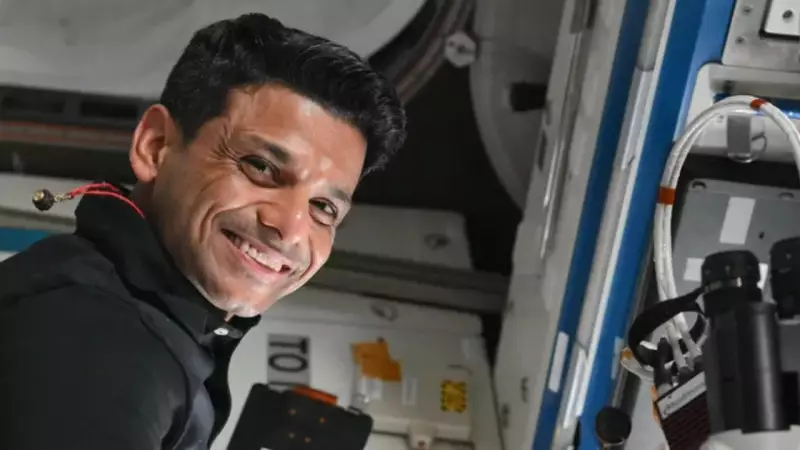
Group Captain Shubhanshu Shukla's landmark 20-day mission to the International Space Station earlier this year has provided India with an unprecedented, first-hand perspective on the daily operations of the world's most complex orbital laboratory. As the nation gears up for a sustained human presence in low-Earth orbit through its ambitious Bharatiya Antariksh Station project, Shukla's reflections offer a critical, ground-level account of the ISS's achievements, its shortcomings, and the strategic path India must chart for its own long-term human spaceflight endeavours.
The ISS Experience: A Global Village in Microgravity
Reflecting on his time aboard the station, Shukla describes the ISS as a dazzling testament to international cooperation, conceived in an era of floppy disks and dial-up internet. Launched in 1998 and completed in 2011, this football-field-sized structure required over 40 Space Shuttle flights and more than 1,000 hours of spacewalks to assemble. For Shukla, the defining moment was experiencing the station as a true global village. His crew of 11 represented six nationalities, working together to conduct more than 60 scientific experiments in biology, materials science, and human physiology over their 20-day stay.
"The station does not just orbit Earth; it orbits the idea that cooperation, curiosity, and courage can build something remarkable," Shukla remarked. He highlighted the STEM demonstrations that connected the crew with students worldwide, a core part of the ISS's mission to inspire future generations. The fact that a platform designed with 1990s technology remains a vital hub for science and collaboration is, in his view, extraordinary.

International Collaboration: The Non-Negotiable Engine of Space Exploration
Working with an international crew fundamentally reinforced a key principle for Shukla: space exploration is an inherently collaborative human endeavour. "Space does not care about passports, accents, or geopolitical boundaries," he observed. His training took him across continents, working with engineers from Japan, Europe, the United States, and India. This experience was akin to a global orchestra where every instrument was essential for the symphony of a successful mission.
He gained a deep appreciation for the astonishing complexity behind a single crewed flight—thousands of hours of planning, cross-time-zone coordination, and the implicit trust among teams who may never meet. This collaboration, Shukla asserts, builds indispensable relationships and camaraderie. For India's burgeoning human-spaceflight capability, prioritizing and embedding this spirit of international partnership is not optional; it is the engine for progress. "The only way humanity will reach farther into the cosmos is by going there together," he stated.
Design Triumphs and Shortfalls: A Blueprint for the Future
From an astronaut's perspective, Shukla pinpointed the ISS's major design successes and areas for improvement. The modular architecture stands out as a visionary triumph, allowing new labs, power systems, and modules to be added or upgraded years after the initial launch. Equally critical was the strict standardization of interfaces among the five partner agencies—NASA, Roscosmos, ESA, JAXA, and CSA—ensuring seamless integration.
The station's flexibility for on-orbit maintenance proved vital, with astronauts routinely acting as builders, plumbers, and electricians. However, Shukla notes the station was not fully future-proof. After over two decades, its interiors can resemble "high-functioning chaos," with cables and technology that sometimes reflect their 1990s origins. The key lesson for India is clear: design for adaptability. "Whatever we design today must be able to absorb the technology of tomorrow," he advised.
Passing the Torch: Key Principles for India's Orbital Future
As the ISS nears its planned retirement, Shukla emphasizes that its legacy offers a treasure trove of lessons for India. The foremost question must be: What is our space station for? Its purpose—be it a research lab, technology testbed, or lunar stepping stone—will shape every design decision.

For the Bharatiya Antariksh Station, Shukla recommends embracing the proven philosophy of modularity and operational flexibility. He stresses that a station is more than hardware; it is an entire ecosystem encompassing mission control, simulators, and logistics chains on Earth. Drawing from the ISS's experience of mismatched priorities and slow tech adaptation, India has the unique opportunity to design a next-generation station informed by a quarter-century of real orbital experience.
"The ISS is not merely retiring; it is passing the torch," Shukla concluded. The insights embedded in its cables and maintenance logs—what to do, what to avoid, and what to improve—are now guiding India's approach as it prepares to write its own chapter in the story of human presence in space.





