

Hyderabad Startups Reel from PSLV C62 Mission Failure
Monday's failed PSLV C62 mission delivered a crushing blow to the Indian Space Research Organisation. The rocket failure resulted in the loss of sixteen satellites. This setback extends far beyond ISRO itself. Three ambitious Hyderabad-based startups saw their space dreams literally go up in smoke.
Dhruva Space, TakeMe2Space, and Eon Space Labs had pinned high hopes on this launch. They planned to demonstrate groundbreaking space technologies. Now, they must pick up the pieces and chart a rapid recovery path.
What the Startups Lost
Dhruva Space alone had five deployers aboard ISRO's reliable PSLV rocket. These carried approximately half a dozen satellites. The payload included Dhruva's own P-Dot cubesat called Thybolt-3. Other lost satellites were CGUSAT-1, DSAT-1, Lachit-1, the Munal Satellite of Nepal, and Sanskar Sat.

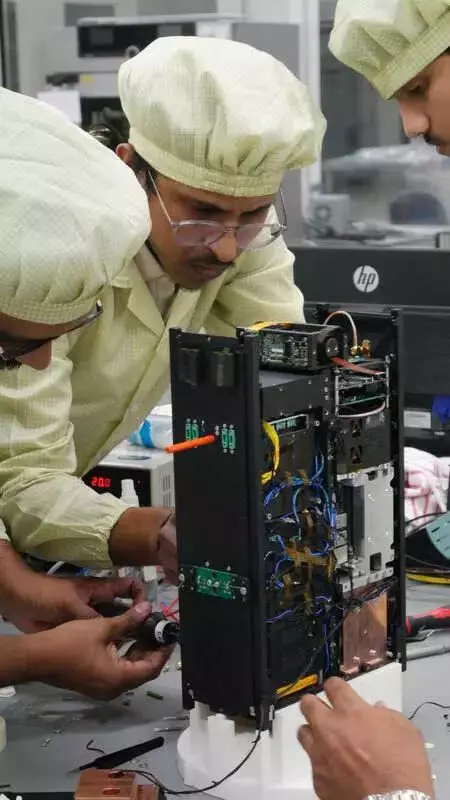
TakeMe2Space's MOI-1 satellite was also on that doomed flight. This satellite carried a special payload from Eon Space Labs. It was an advanced miniaturized space telescope named MIRA.
Ambitious Projects Grounded
TakeMe2Space envisioned MOI-1 as a world-first. The company planned to create the planet's first cybercafe or data center in space. It would also function as an orbital AI image laboratory.
The concept allowed users to rent onboard processing time. This innovative project aimed to outpace tech giant Google's own ambitious venture. Google is developing solar-powered AI data centers in space under Project Sun Catcher. The goal is to reduce the massive energy demands of Earth-based AI systems.
MOI-1 was a fourteen-kilogram satellite. It drew one hundred twenty watts of power. An Nvidia GPU enabled on-orbit data processing. The service was priced at two dollars per minute.
Ronak Kumar Samantray leads TakeMe2Space as founder and CEO. He expressed deep disappointment over the lost opportunity. "The loss is not in terms of money," Samantray told TOI. "We can rebuild MOI-1 in just two months. The real loss is the missed chance. Our key challenge now is securing another launch quickly. Google's Project Sun Catcher is our direct competitor. They plan to reach orbit by 2027. We want to be the first globally to establish a data center in space. We want to launch from India. This failure is our only derailer."
Startups Vow a Quick Comeback
Sanjay Nekkanti co-founded Dhruva Space and serves as its CEO. He acknowledged the setback but focused on recovery. "The bigger question is how fast we can rebound," Nekkanti stated. "We need to get our satellites back into orbit. As startups, we are very agile. We should be able to rebuild very fast, in about a couple of months. The main issue is finding a launch vehicle. We chose PSLV because it is ISRO's workhorse."
Eon Space Labs also suffered a significant blow. The company lost its advanced multispectral Earth-imaging telescope. Co-founder Sanjay Kumar called MIRA India's lightest and smallest space telescope. It weighs only about five hundred grams.
"It was really important for us to get it right the first time," Kumar explained. "Fortunately, we performed so well that we qualified for the PSLV C62 mission. This failure sets our timeline back by at least two to three months. That's how long it took to prepare our payload. The good news is we developed the capability to rebuild quickly."
Industry Expert Analyzes the Failure
Dr. Subba Rao Pavuluri leads the SatCom Industry Association (SIA-India). He also serves as Chairman and Managing Director of Ananth Technologies. His company supplied avionics and systems for some of the lost satellites.
"All our systems and avionics in the launch vehicle and satellites worked well," Dr. Subba Rao confirmed. "Something seems to have gone wrong on the propulsion side. This is a big setback because PSLV is ISRO's workhorse. The failure of this second mission could impact credibility and confidence levels. It may take about nine months to one year to rebuild some of the larger satellites for relaunch."

The PSLV C62 failure represents more than a technical malfunction. It underscores the high stakes and fierce competition in the new space economy. Hyderabad's startups now face a critical race against time and well-funded global rivals to reclaim their place in orbit.





