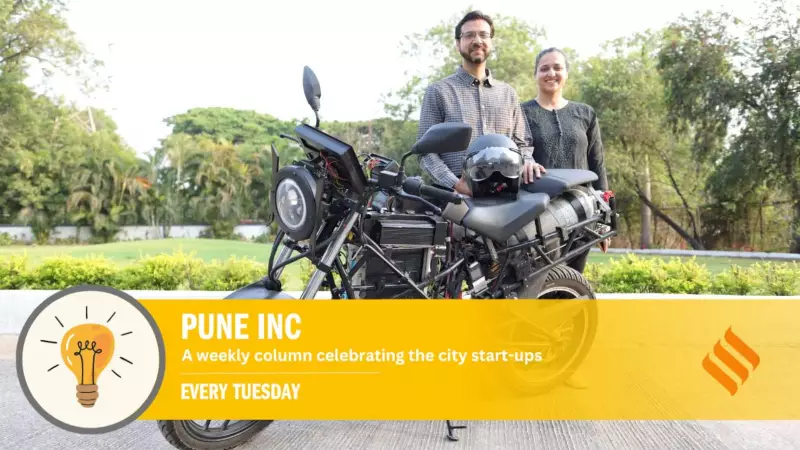
In the heart of Pune's thriving research and startup landscape, a clean energy venture is pioneering a technology that promises to reshape urban transportation and power generation in India. Hydrovert Energy, a company incubated at the Venture Centre on the National Chemical Laboratory (NCL) campus, is developing hydrogen fuel cell powertrains designed as direct, zero-emission replacements for polluting diesel and compressed natural gas (CNG) engines.
From Academic Lab to Pune Startup
The genesis of Hydrovert Energy is deeply rooted in academic research. The company's co-founder, chief executive, and chief technology officer, 40-year-old scientist-entrepreneur Satyajit Phadke, was first exposed to hydrogen fuel cell technology during his PhD at the University of Florida, which he completed in 2010. His doctoral work focused on developing a critical membrane for the technology, knowledge he later expanded through research stints at the Massachusetts Institute of Technology and Princeton University.
"Due to my education, I always had the desire to develop and manufacture products powered by hydrogen," Phadke stated. This ambition materialized after he returned to India in 2019. He teamed up with co-founder Supriya Patwardhan, who holds an MBA from Germany's Mannheim Business School and brings over a decade of experience in sales, operations, and strategy across India and Europe. After two years of intensive research and planning, they formally incorporated Hydrovert Energy Private Limited in 2021.

Targeting Tough-to-Electrify Sectors
Hydrovert's core innovation addresses a critical gap in India's clean energy transition. While electrification gains ground in passenger vehicles, certain segments remain challenging. The startup is focusing its initial efforts on the cargo mobility sector, a market heavily reliant on diesel and CNG engines for last-mile deliveries.
The company has developed a 10-kilowatt hydrogen powertrain deployed on a cargo three-wheeler prototype. This vehicle is currently undergoing testing and certification. "This market is heavily served by diesel and CNG engines, which are a major source of urban pollution, and our hydrogen powertrain is a zero-emission replacement," Phadke explained. The only emission from their system is pure water vapor, with no tailpipe release of CO₂ or particulate matter.
In parallel, Hydrovert has engineered a hydrogen-powered generator set to replace noisy, polluting diesel gensets, which face increasing restrictions in urban areas. This genset operates with minimal noise, low heat output, and zero harmful emissions. It is presently being tested at the NCL Innovation Park in Pune, where the startup maintains its workshop and office.
Institutional Backing and Future Roadmap
Hydrovert's journey is bolstered by significant institutional support. The company operates under a programme sponsored by the Maharashtra Energy Development Agency (MEDA), with NCL and the Central Institute of Road Transport (CIRT) as key partners. A crucial outcome of this collaboration is that CIRT is developing certification standards for hydrogen-powered cargo three-wheelers, a vital step for their commercial deployment on Indian roads.
MEDA is also exploring pilot deployments for practical applications, such as using these vehicles for municipal garbage collection in Maharashtra. "Garbage and air pollution are two major concerns for Indian cities. Using hydrogen-powered three-wheelers for waste collection can address both, while also creating public awareness about clean technologies," Phadke noted.
Like many deep-tech startups, Hydrovert initially faced scepticism, particularly from investors wary of new technologies. Early-stage development was funded through grants from agencies including the Department of Science and Technology, the Department for Promotion of Industry and Internal Trade, and the United Nations Industrial Development Organization (UNIDO), along with corporate social responsibility funding. As prototypes moved into trial phases, private investor interest has begun to grow.

Looking ahead, Hydrovert Energy plans to scale its technology for light and medium commercial vehicles in the coming years. Operating from within the NCL campus has also enabled community engagement, with the startup regularly demonstrating its working prototypes to students and young visitors, showcasing the tangible potential of next-generation clean technology for India's urban future.