

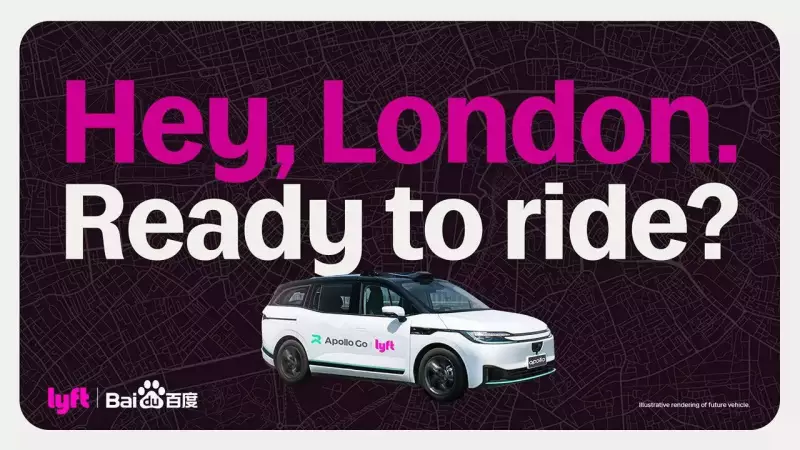
In a major move that sets the stage for a fierce battle on London's streets, global ride-hailing giants Uber and Lyft have forged separate alliances with Chinese technology leader Baidu. The goal is to launch commercial robotaxi services in the British capital, with testing slated to begin in the first half of 2026.
The Race for London's Autonomous Future Heats Up
This strategic partnership is a direct challenge to Google-owned Waymo, which had earlier announced its intention to join the UK government's trials for self-driving vehicles. The United Kingdom has rapidly emerged as a critical testing ground for autonomous taxi services globally, especially after authorities accelerated their pilot programme timeline by a full year. This has attracted intense interest from international tech and mobility firms.
Both Uber and Baidu confirmed their collaboration through announcements on social media platform X. This marks a significant step for Baidu's Apollo Go self-driving platform, representing its most substantial expansion outside China to date. Uber expressed its enthusiasm, stating the partnership aims to "accelerate Britain's leadership in the future of mobility" and bring a new "safe and reliable travel option to Londoners."

What the Robotaxi Services Will Look Like
Lyft's CEO, David Risher, provided more concrete details about their planned rollout with Baidu. Pending regulatory approval, Lyft expects to start testing with an initial fleet of dozens of vehicles in 2026, scaling up to hundreds subsequently. The service will operate through the Lyft and Freenow app ecosystems.
The companies highlighted Baidu's formidable credentials in the autonomous vehicle space:
- It is the world's largest AV operator with over 17 million cumulative rides.
- Its vehicles have logged more than 240 million kilometres of autonomous driving globally.
- The service in London will use fully-electric RT6 vehicles, specifically designed for ride-sharing.
Lyft emphasised a "hybrid network" model where autonomous vehicles and human drivers will work together to serve all of London's transportation needs. The company confirmed it is working closely with Transport for London regulators and local communities.
A Multi-Pronged Strategy and Global Ambitions
Uber is not putting all its eggs in one basket. In a parallel strategy to dominate the future of transport, Uber is also partnering with Wayve, a UK-based startup that uses advanced artificial intelligence for autonomous navigation. This dual approach underscores the competitive intensity of the sector.
Meanwhile, Waymo is not sitting idle. The Alphabet subsidiary has already commenced testing its own fleet of specially modified Jaguar vehicles on London's public roads, setting the scene for a three-way contest between the Baidu-backed alliances and Waymo.
The groundwork for Baidu's European foray was laid earlier in August 2025, when Lyft first announced its partnership with the Chinese tech giant to deploy robotaxis in Europe, starting with Germany and the UK. Baidu's co-founder, Robin Li, had called it a "significant milestone" in their global journey, aiming to deliver "safer, greener, and more efficient mobility solutions" worldwide by combining Baidu's technology with Lyft's local platform expertise.
The arrival of these robotaxi services promises to transform urban mobility in one of the world's greatest cities, while also positioning the UK as a central arena in the global race to perfect and commercialise self-driving technology.






