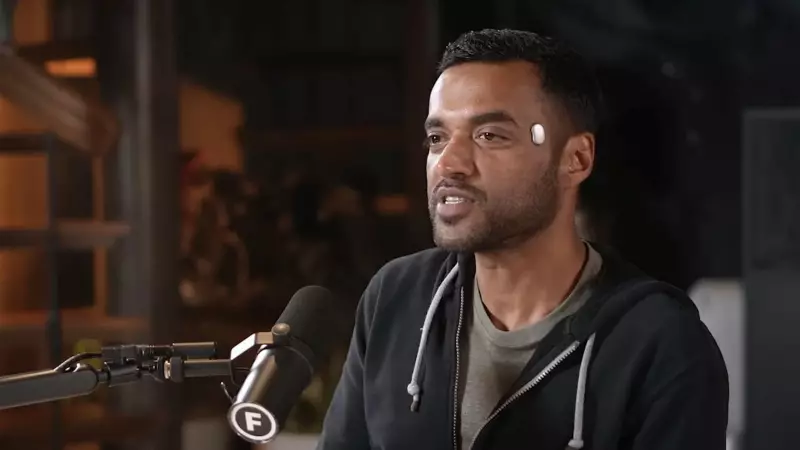
The founder and CEO of Zomato, Deepinder Goyal, has sparked widespread curiosity and debate in tech and health circles after being spotted wearing a mysterious, small device on his temple during a recent podcast appearance. This gadget, aptly named 'Temple,' is not a new consumer product but an experimental wearable born from Goyal's personal, multi-million dollar research initiative into aging and brain health.
The $25 Million Personal Mission Behind Temple
According to multiple reports, Temple is the flagship project of Deepinder Goyal's privately funded research arm, called Continue Research. In a significant personal investment, Goyal has reportedly committed around $25 million (approximately Rs 225 crore) of his own capital to this long-term, non-commercial endeavor. The goal is to fund foundational research on aging, with the Temple wearable serving as one key experimental tool to gather data.
The device derives its name from its placement on the temple region of the head. It is designed to be a non-invasive sensor that continuously measures blood flow and oxygenation levels in the brain. The core research focuses on how circulation changes when a person is upright, moving, or seated for prolonged periods.

The Science and Skepticism: What Does Temple Actually Do?
The technology is built around what Goyal has termed the 'Gravity Ageing Hypothesis.' This theory suggests that the relentless pull of gravity over a lifetime may gradually reduce efficient blood flow to the brain, potentially influencing cognitive decline, neurological health, and the overall aging process. Temple aims to track minute, real-time fluctuations in cerebral circulation, providing data to study the impact of posture, activity, and lifestyle on brain health over time. Goyal himself has been testing the prototype, wearing it for nearly a year.
However, the health claims associated with Temple remain strictly unverified. Medical professionals and neuroscientists cited in reports have provided a crucial reality check. They note that Temple is not a certified medical device and lacks regulatory approval for diagnosing, preventing, or treating any disease.
Experts caution that a comprehensive assessment of brain health cannot be achieved by measuring blood flow from a single point on the temple alone. They emphasize that such wearable sensors cannot replace advanced clinical imaging techniques like MRI or PET scans, which are the gold standard for accurate cerebral blood flow measurement. Currently, there is no published scientific evidence that data from Temple can prevent neurological disorders, enhance cognition, or predict aging.
A Research Prototype, Not a Consumer Product
Critics argue that without peer-reviewed clinical trials or published studies, Temple remains a high-profile personal experiment rather than a validated health solution. Simultaneously, supporters view it as part of a growing trend where tech founders are personally investing in longevity research and self-quantification, leveraging increasingly sophisticated wearable technology.
For now, Temple is not available for sale, and Goyal has not announced any commercial launch timeline. Indications suggest it will stay a closed research project, with the collected data used to test its underlying scientific hypotheses rather than to offer immediate consumer-facing features. The journey of Temple highlights the intriguing, yet complex, intersection of personal wealth, ambitious health hypotheses, and the rigorous scientific validation required in the wearable tech space.