

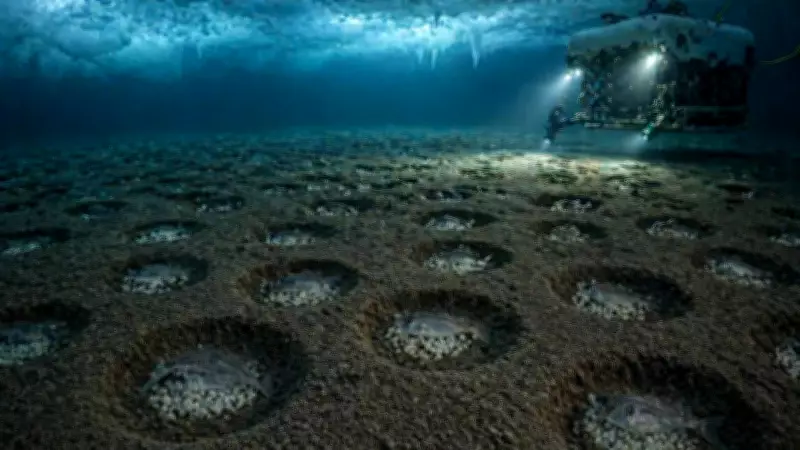
During a routine exploration beneath the Antarctic ice, researchers were astonished to find patterned formations on the seabed—distinct, evenly spaced circular designs—instead of the barren seafloor they had expected. The expedition, originally linked to the search for the wreck of the Endurance, was monitoring the Weddell Sea when the camera system revealed these unexpected structures.
Discovery of a Vast Breeding Ground
The formations were circular holes evenly distributed across the seafloor, forming an organized pattern rather than random clusters. Further research revealed that these were nests of the Antarctic icefish, creating what is now recognized as the largest known breeding colony for these creatures. According to the study published in Current Biology, titled "A vast icefish breeding colony discovered in the Antarctic," the colony spans approximately 240 square kilometers and contains over 60 million active nests. Each nest houses an adult fish with around 1,700 eggs.
An Unexpected Find
This discovery was never part of the expedition's original objectives. As scientists used a camera system to study the ocean floor, they began noticing recurring circular patterns. Upon closer inspection, they identified them as fish nests, proving that great discoveries can emerge from routine missions. The same expedition also contributed to locating the long-lost Endurance wreck, highlighting how exploration can uncover both historical and ecological findings simultaneously.

Cameras played a crucial role in this discovery, enabling researchers to observe and document the seabed in detail.
Importance for Marine Ecosystems
The nesting colony exemplifies a highly organized breeding community, where a vast number of Antarctic icefish reproduce. Such colonies provide breeding sites for various predator species and nursery areas for other marine organisms, thereby boosting biodiversity. The high biomass within the colony underscores its significance in the Antarctic food chain, supporting successful breeding for many predators.
Scientific Implications
Previously, scientists believed that areas beneath the Antarctic ice were largely unproductive, lacking dense populations or complex ecosystems. This discovery challenges that notion, showing that thriving biodiversity can exist under extreme environmental conditions. Identifying such areas highlights the need for conservation, as these ecosystems may be landlocked and vulnerable to climate change and human exploitation. Additionally, the discovery suggests that many unknown ecosystems may still lie hidden in unexplored portions of the Antarctic seafloor.






