

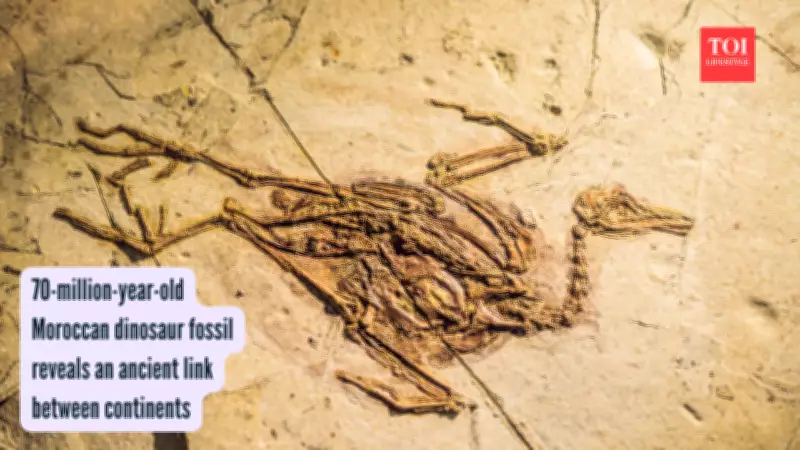
Fossils offer a unique window into Earth's distant past, revealing secrets from times before humans existed. The discovery of a new titanosaur species in Morocco provides fresh insights into dinosaur evolution and continental connections during the Late Cretaceous period, approximately 70 million years ago.
Discovery in the Oulad Abdoun Basin
According to a study published in the journal Diversity, the new species, named Phosphatotitan khouribgaensis, was found in the phosphate-rich Oulad Abdoun Basin in Morocco’s Khouribga region. Paleontologists uncovered vertebrae, pelvic fragments, and sacral bones, which provided enough evidence to classify it as a distinct species. The fossils were preserved in phosphatic sandstones, marls, and limestones deposited in a warm, shallow epicontinental sea. This geological setting suggests the region acted as a critical interface between land and sea, influencing the evolution of species living there.
A Surprising Evolutionary Bridge
The discovery is particularly significant because Phosphatotitan shares physical traits with the Lognkosauria group, a type of titanosaur previously thought to exist only in South America. This connection indicates that dinosaur populations in Africa and South America were more closely linked than previously assumed. Dr. Nick Longrich, a researcher involved in the study, and his colleagues noted that this period, just before the mass extinction event, was a time of major dinosaur evolution. The fossil helps fill a gap in understanding African wildlife and shows that massive dinosaurs may have traveled across vast distances or shared ancestors despite major ocean barriers.

Characteristics of Phosphatotitan khouribgaensis
Unlike its massive South American relatives, Phosphatotitan was relatively small, weighing approximately 3.5 to 4 tons. The authors of the study mentioned that the species provides a rare glimpse into a complex ecosystem that was far more interconnected than previously believed. The fossils offer a clear perspective on dinosaur evolution and the connections between continents during the Late Cretaceous.
This discovery underscores the importance of fossil records from regions like Morocco, which are often underrepresented in paleontological studies. The findings not only expand our knowledge of titanosaur diversity but also highlight the dynamic nature of dinosaur evolution and migration patterns.

