At 94, Rafael Viegas still remembers June 18, 1946 — the afternoon that helped change Goa's history. “I was there,” he says.
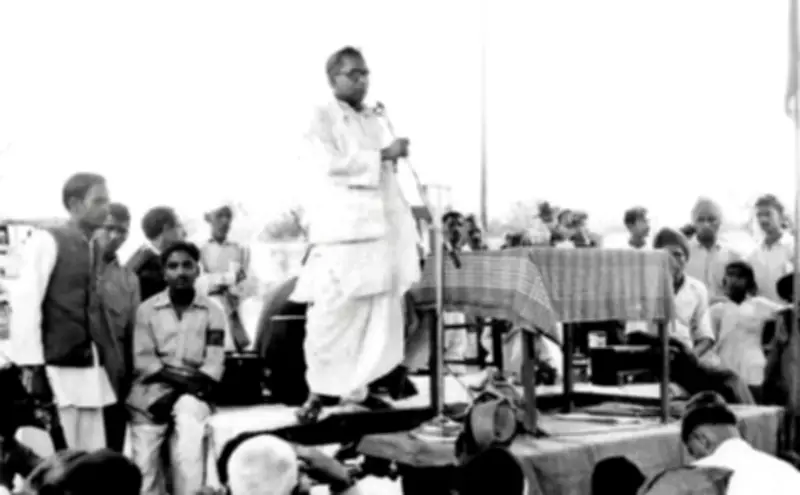
Eighty years later, Viegas can still picture the scene in Margao. He was 14, just months away from turning 15, when thousands gathered to hear Ram Manohar Lohia challenge Portuguese rule in Goa. “The monsoon had just arrived, so it was drizzling,” he recalls.
“The municipal square had only recently been developed. Around Grace Church there were open grounds. People poured in from surrounding villages, gathering for a public meeting that the Portuguese authorities had forbidden.”

Goa had then been under Portuguese rule for more than four centuries. Public meetings were tightly controlled, civil liberties curtailed and dissent routinely suppressed. Yet word spread quickly that Lohia, who was staying with physician and nationalist Dr Juliao Menezes in Assolna, would address a gathering in Margao.
Viegas remembers Lohia arriving in a Victoria, the horse-drawn carriage common in those days. The memory is also tied to Viegas' family history. His father, Alvaro, a librarian by profession, had earlier been associated with the newspaper ‘O Ultramar’.
“Newspapers then operated under censorship and restrictions. Many records from those years are now scattered across libraries, private collections and old publications. Though my father was no longer in journalism, the journalist in him remained alive. He took us there to witness the meeting,” Viegas says.
But before Lohia could address the gathering, the Portuguese authorities stepped in. “The administrator of Salcete, Captain Fortunato Miranda, and police officers moved to stop the meeting. I heard that a gun was drawn to intimidate the crowd. It worked. The gathering suddenly dispersed,” he says.
Historians regard June 18, 1946, as a watershed in Goa's freedom struggle. Opposition to Portuguese rule existed long before Lohia's visit, but the events of that day became a powerful symbol of civil resistance and political awakening.
For Viegas, then a schoolboy living near Margao's old hospital area, the gathering remains one of the defining moments on Goa's road to liberation.
“The impact was such that after Liberation, freedom fighters decided to honour the date by naming a road in Panaji after 18 June,” he says.
With that simple recollection, eight decades of history suddenly feel close. “When I stood in that crowd in June 1946, I was just a teenager watching history unfold without fully realising it. The buildings may have changed. The open grounds may have disappeared. The horse-drawn Victorias are long gone. But that drizzling afternoon of June 18 remains as vivid as ever.”