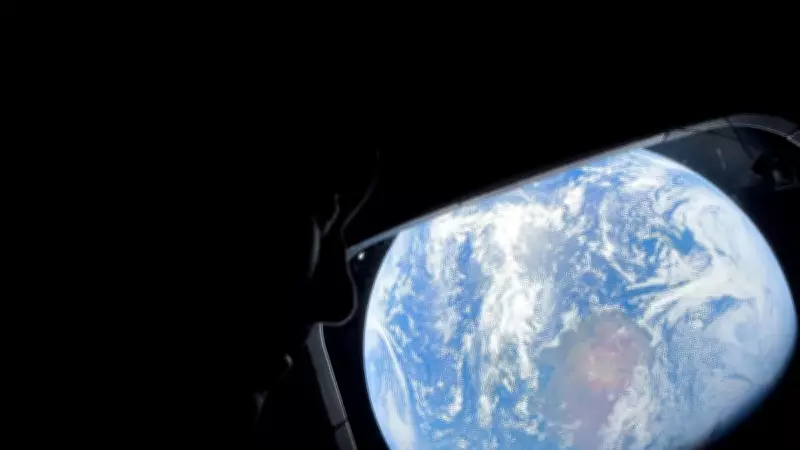
Artemis II Mission Crew Approaches Lunar Far Side, Targets Historic Distance Milestone
The Artemis II crew, currently aboard the Orion capsule after launching from Florida last week, is on a trajectory that will take them to the far side of the Moon. This mission marks a significant step in NASA's efforts to return humans to lunar exploration and beyond.
Gravitational Pull Guides Crew Toward Unprecedented Journey
The Moon's gravity is actively pulling the Orion capsule toward its far side, a region not directly visible from Earth. This gravitational assistance is crucial for the mission's success, enabling the crew to achieve a record-breaking distance from our planet.
The crew is scheduled to awake around 10:50 am, as reported by Reuters, to monitor this critical phase of the journey. This timing aligns with key maneuvers required for the capsule's approach and eventual orbit around the Moon.

Historic Distance Record Within Reach
If successful, the Artemis II mission will set a new benchmark for the farthest distance humans have ever traveled from Earth. This achievement surpasses previous records set during the Apollo missions, highlighting advancements in space technology and human endurance.
The mission's progress is being closely watched by space agencies and enthusiasts worldwide, as it paves the way for future lunar landings and potential Mars expeditions.
Mission Details and Timeline
Launched from Florida, the Orion capsule has been in space for over a week, with the crew conducting various experiments and systems checks. Key aspects of the mission include:
- Utilizing the Moon's gravity for trajectory adjustments
- Testing life support and communication systems in deep space
- Preparing for future Artemis missions aimed at lunar surface exploration
NASA has emphasized that this mission is a critical test of the Orion spacecraft's capabilities, ensuring it can safely carry astronauts to the Moon and back.
Global Implications and Future Prospects
The Artemis II mission represents a collaborative effort in space exploration, with potential implications for scientific research and international partnerships. As the crew nears the lunar far side, data collected will inform plans for establishing a sustainable human presence on the Moon.
This endeavor not only aims to break distance records but also to inspire a new generation of explorers and innovators in the field of space science.