

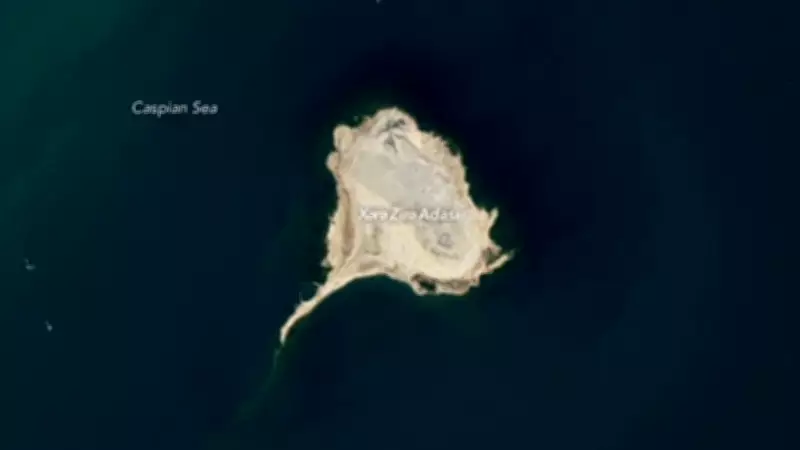
Near the shore of the Caspian Sea lies a remarkable geological phenomenon known as mud volcano islands. Recently featured in NASA's Earth Observatory blog, these formations appear otherworldly from space, shaped by explosive events and ocean waves. Geologists study them for valuable insights into hydrocarbons, plate tectonics, and environmental processes.
Azerbaijan Mud Volcano Islands: A Geological Marvel
Azerbaijan, often called the "Land of Fire" due to its natural gas seepages, hosts an extraordinary number of mud volcanoes. According to NASA's Earth Observatory, the country contains at least 220 mud volcanoes, with estimates reaching up to 350. Unlike traditional volcanoes that erupt lava, mud volcanoes eject a mixture of mud, water, and methane gas from sedimentary basins where pressure creates hydrocarbon deposits. Over time, accumulated pressure forces the slurry to the surface through fractures in the Earth's crust.
What makes these islands unique is their shape. Satellite imagery reveals elongated forms with tails resembling tadpoles. Geologist Mark Tingay explains that these tail-shaped structures result from wave erosion, with mud depositing in areas where wave power is minimal.

How Mud Volcanoes Shape the Caspian Landscape
Most of these volcanoes are concentrated around the Absheron Peninsula and beneath the Caspian Sea. Notably, over 140 mud volcanoes have emerged under the sea, forming islands. For instance, Xərə Zirə Adası was created by eruptions, including major events in 1961 and 1995. Other nearby islands have experienced spectacular eruptions so intense that they formed new land in minutes, though the sea gradually eroded it away.
A recent discovery by NASA includes a ghost island formed after a 2023 eruption in the Caspian Sea, which disappeared by 2024.
Scientific Importance and Environmental Insights
Mud volcano islands are not just scientifically significant for their uniqueness. Geologically linked to underground oil and gas deposits, they provide clues about the genesis and migration of hydrocarbons. However, they also pose dangers. According to Tingay, mud volcanoes can generate "short but extremely violent eruptions," sometimes producing huge fireballs from ignited gases. This activity makes them both fascinating and hazardous.
Moreover, studying mud volcanoes connects to planetology. Similar volcanoes may exist on other planets, making Azerbaijan's mud volcanoes Earth analogues for extraterrestrial terrains.
In summary, the mud volcano islands of Azerbaijan are indicators of the planet's geological activity. Shaped by deep-Earth processes, they remain a source of mystery and scientific inquiry.

