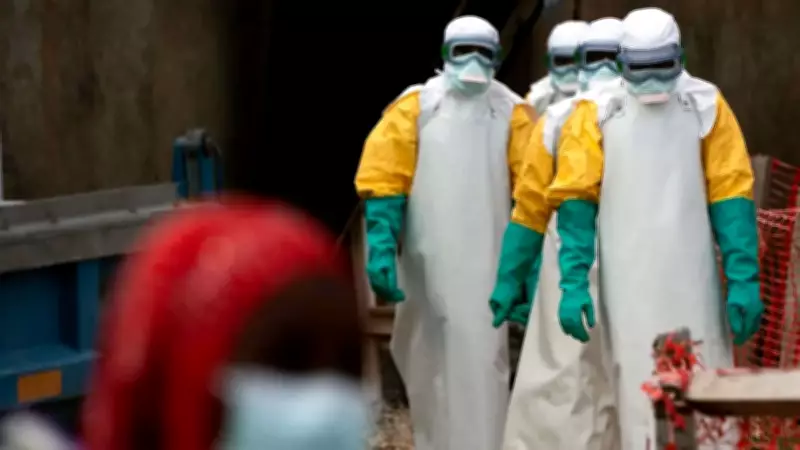
There is a new Ebola outbreak in the Democratic Republic of Congo (DRC), raising concerns across Africa and drawing global attention. Health officials have confirmed 65 deaths and hundreds of suspected cases in the eastern Ituri province, with fears that the virus could spread to neighboring countries.
Ebola Outbreak in Congo: What Is Happening?
According to Reuters, the outbreak has been officially recognized by the Africa Centers for Disease Control and Prevention (Africa CDC) and is among the most severe Ebola emergencies in recent years. Over 246 suspected cases have emerged, primarily in the mining regions of Mongwalu and Rwampara, with laboratory tests confirming active infections.
What has particularly unsettled scientists is early evidence pointing to a rare Bundibugyo strain, rather than the typical Zaire strain that current vaccines target. In response, the DRC, Uganda, and South Sudan are urgently ramping up border checks, isolation protocols, and emergency treatments. The World Health Organization (WHO) has deployed teams and funds to help contain the outbreak.

What Is Ebola?
Ebola is a severe and often fatal disease, causing Ebola virus disease (EVD), which attacks multiple body systems. The virus damages blood vessels, organs, and the immune system, leading to widespread inflammation, internal bleeding, organ failure, and shock. Mortality rates can reach as high as 90%, depending on the strain, healthcare quality, and speed of treatment.
According to PBS, Ebola first appeared in 1976 near the Ebola River in what is now the DRC. The country has experienced 17 outbreaks since then, more than any other nation. Scientists believe the virus jumps from animals to humans, likely through infected fruit bats, which carry it naturally. People can also contract Ebola from bodily fluids of infected wild animals, such as monkeys or antelopes. Once the virus enters humans, it spreads through direct contact with blood, vomit, saliva, sweat, urine, semen, or contaminated surfaces.
It is important to note that Ebola is not airborne, unlike COVID-19 or measles, so casual breathing does not transmit it. However, close contact—especially in homes, hospitals, or during funerals—makes it extremely dangerous. This is why Ebola can escalate in areas with overcrowded clinics and limited protective equipment.
Authorities report that this outbreak is unfolding in remote Ituri, a region plagued by armed militias, mining activities, and constant population movement. These factors make containment much harder: infected individuals may travel before showing severe symptoms, and health teams face challenges reaching affected areas safely. Uganda has already reported one Ebola death linked to a Congolese traveler who crossed the border while infected.
What Are the Symptoms of Ebola?
Ebola symptoms typically appear between two and 21 days after exposure. Initially, the illness resembles flu or malaria, with sudden fever, extreme exhaustion, headaches, muscle pain, and sore throat. As the disease progresses, symptoms include vomiting, diarrhea, abdominal pain, and rashes. Severe cases may involve internal and external bleeding, sometimes from the gums, nose, or intestines. Rapid organ failure and septic shock follow if left untreated.
According to the Associated Press, doctors emphasize that Ebola is lethal because it rapidly destroys the immune system and blood vessels. Many patients become severely dehydrated and unstable within days. The fear surrounding the disease further complicates response efforts. In past outbreaks, misinformation and mistrust of authorities led some people to hide symptoms or avoid hospitals. Funerals are particularly risky because bodies remain highly infectious.
What Comes Next?
The West Africa epidemic (2014–2016) demonstrated how quickly the virus can spiral out of control, resulting in over 11,000 deaths in Guinea, Liberia, and Sierra Leone—the deadliest Ebola outbreak to date. However, today's response teams are far better prepared: rapid isolation, improved protective gear, contact tracing, and experimental treatments have boosted survival rates. The DRC has developed skilled teams specifically for outbreak response over the years.

Nevertheless, this outbreak presents unique challenges because it may involve a non-Zaire strain. The widely used Ervebo vaccine was primarily developed for the Zaire strain, so scientists are working urgently to determine whether current options will be effective this time.
Should You Panic?
Experts say the overall risk to the global public remains low. As a rule, Ebola outbreaks do not become global pandemics; containment and local health measures typically prevent broader spread. However, in affected areas, caution is necessary. Avoid direct contact with bodily fluids, wash hands frequently, seek medical help if symptoms appear after exposure, and do not handle dead animals or attend unsafe burials. Healthcare workers must use full protective gear when dealing with suspected cases. Authorities are currently focused on containing the outbreak before it crosses borders.
About the Author
The TOI Lifestyle Desk is a dynamic team of dedicated journalists who, with unwavering passion and commitment, sift through the pulse of the nation to curate a vibrant tapestry of lifestyle news for The Times of India readers. At the TOI Lifestyle Desk, we go beyond the obvious, delving into the extraordinary. Consider us your lifestyle companion, providing a daily dose of inspiration and information. Whether you are seeking the latest fashion trends, travel escapades, culinary delights, or wellness tips, the TOI Lifestyle Desk is your one-stop destination for an enriching lifestyle experience.