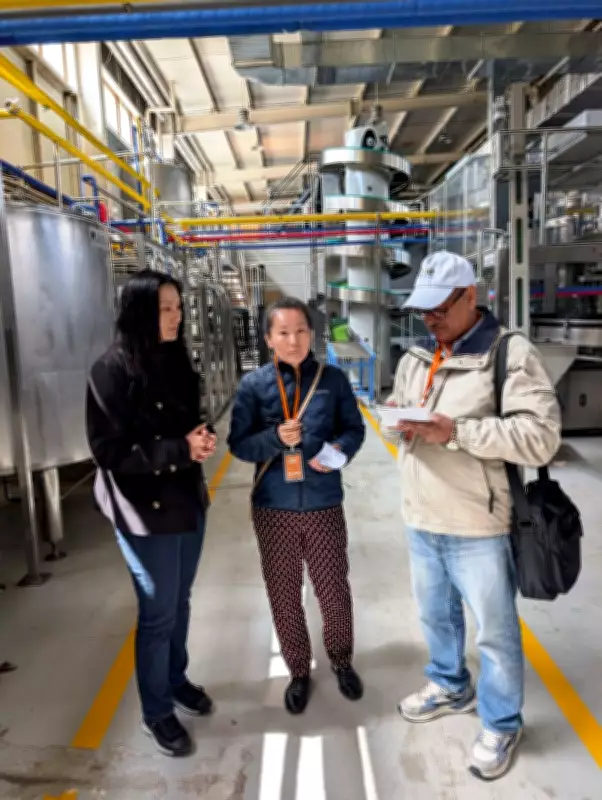
Dr Virendra Singh, president of the Sea Buckthorn Association of India (SAI) and former scientist at Chaudhary Sarwan Kumar Himachal Pradesh Krishi Vishvavidyalaya (CSKHPKV), has called on Himalayan states to replicate Mongolia's successful large-scale sea buckthorn cultivation model. He argues that this approach can enhance rural livelihoods, strengthen environmental conservation, and meet the rapidly growing demand for sea buckthorn-based products in India.
Mongolia's Sea Buckthorn Success
Dr Singh recently visited Mongolia at the invitation of the Fruits and Berry Association of Mongolia. During his tour, he inspected extensive sea buckthorn plantations and engaged with farmers, researchers, and industry representatives. He observed that Mongolia has been cultivating Russian sea buckthorn varieties for over four decades on more than 7,000 hectares of land. The country now supplies sea buckthorn fruits and leaves to over 20 major processing industries equipped with advanced machinery imported from Germany and China.
According to Dr Singh, Mongolian industries manufacture over 50 sea buckthorn-based products, including juices, cosmetics, and oils, which enjoy strong domestic demand and are exported to Europe, Japan, and South Korea. Universities and research institutions in Mongolia have expressed willingness to share improved sea buckthorn varieties and provide training in modern cultivation techniques to Indian scientists.

Diplomatic and Policy Support
During his visit, Dr Singh met Atul Malhari Gotsurve, Ambassador of India to Mongolia. The ambassador assured support in facilitating the transfer of Russian sea buckthorn varieties and cultivation technologies suitable for the cold desert regions of the Indian Himalayas, which share climatic and geographical similarities with Mongolia.
Dr Singh plans to submit a detailed report on his study tour to the Government of India, the governments of four Himalayan states, and the Union Territory of Ladakh. He intends to engage with policymakers to accelerate sea buckthorn cultivation programmes across these regions.
Current Status and Demand in India
Sea buckthorn (Hippophae), a nitrogen-fixing shrub naturally found in high-altitude regions of Himachal Pradesh, Ladakh, Uttarakhand, Sikkim, and Arunachal Pradesh, is rich in vitamin C, antioxidants, and omega fatty acids. Its fruits and leaves are used in the production of more than 150 food products, beverages, cosmetics, and medicinal oil capsules by Indian companies.
At present, around 700–800 tonnes of sea buckthorn fruit are harvested annually from wild stands across the Himalayan region. However, rising consumer awareness and increasing industrial demand have pushed requirements to nearly 2,000 tonnes annually. Demand is projected to reach 5,000 tonnes within the next three to five years.
Need for Policy Support
Although researchers at CSKHPKV have standardised cultivation technologies and introduced 12 high-yielding, mildly thorny Russian varieties, large-scale commercial cultivation has yet to receive substantial policy support. Dr Singh emphasised that forest and horticulture departments should promote extensive plantations on marginal and private lands under programmes such as the Compensatory Afforestation Fund Management and Planning Authority (CAMPA) and the Japan International Cooperation Agency (JICA)-supported schemes.
He noted that large-scale sea buckthorn cultivation would not only ensure a sustainable supply of raw material for Indian industries but also help combat climate change, reduce soil erosion, support livestock systems, and mitigate glacier degradation in the fragile trans-Himalayan ecosystem.
Economic and Environmental Benefits
With sea buckthorn pulp prices nearly doubling over the past year, Dr Singh said, “The crop is emerging as a highly profitable alternative that could rival traditional horticultural crops such as apples while offering significant environmental benefits.”