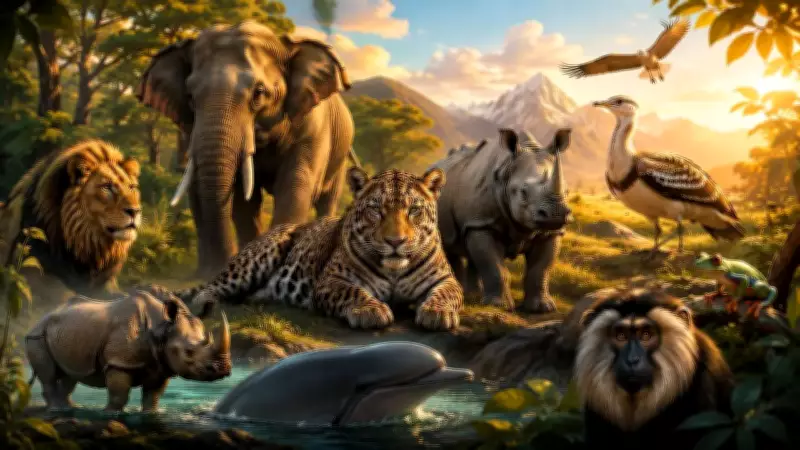
What happens when a species disappears from the wild and we realise its importance only after it is gone? In 2026, India stands at a striking crossroads in its wildlife story. On one side are remarkable conservation success stories showing rising numbers of tigers, the return of Asiatic lions in Gujarat’s Gir, and renewed efforts to protect species such as the snow leopard and Asian elephant. On the other side, dozens of species continue to slip quietly toward extinction. The crisis is not sudden; it is slow, layered, and deeply tied to how humans share space with nature.
India’s Legal Framework for Wildlife Protection
Over the past five decades, India has built one of the most structured wildlife protection systems in the world. The Wildlife (Protection) Act, 1972 created a legal framework that restricts hunting, regulates wildlife trade, and establishes protected areas. However, despite this legal architecture, pressure on wildlife continues to grow. Rapid urban expansion, shrinking forests, infrastructure development, pollution, and climate stress are steadily eroding habitats. As the nation observes National Endangered Species Day, these laws reflect strong intent but raise a difficult question: Can legal protection alone keep pace with the speed at which nature is changing?
National Endangered Species Day: A Global Reminder
National Endangered Species Day is observed every year on the third Friday of May as a global reminder of the accelerating loss of biodiversity and the growing number of species pushed towards extinction. The day emerged in 2006, initiated by conservation voices in the United States. The aim behind celebrating this day is to make people understand that endangered species are not just scientific classifications but living indicators of ecosystem health. Their decline often signals deeper environmental stress, including habitat destruction, overexploitation, pollution, and climate change. Over time, global conservation bodies such as the IUCN have documented a sharp rise in species under threat, with thousands now listed as vulnerable, endangered, or critically endangered.

Human-Wildlife Conflict: A Growing Concern
Advocate Rupali Jain has raised concern over the growing human–wildlife conflict in India, saying that rapid infrastructure growth and shrinking forest habitats are forcing wild animals into unsafe encounters with humans on roads and in populated areas. "As a deeply concerned citizen who cherishes India’s wildlife, my heart aches seeing wild animals frequently stepping onto busy roads, confused and vulnerable. This heartbreaking sight reflects our failure to balance development with conservation. Habitats that once belonged to tigers, elephants, leopards, and countless species are being relentlessly destroyed, leaving no space for their homes. Understaffed forest departments, weak enforcement, and unchecked infrastructure projects push animals into human territories, triggering fatal accidents and rising conflicts. We have forgotten that forests are their rightful home, not ours to claim entirely. Without urgent action and genuine sustainable development, we risk losing our precious wildlife forever," she told TOI.
India’s Rising Extinction Crisis: Key Species at Risk
India’s extinction crisis is increasingly reflected in the steady rise of species classified as threatened on the IUCN Red List. The Royal Bengal tiger remains one of the most closely monitored species, listed as Endangered on the IUCN Red List, even as India records conservation gains through protected reserves. In contrast, the Ganges river dolphin, India’s national aquatic animal, is classified as Endangered and continues to decline due to river pollution, dam construction, and reduced water flow in major river systems. The Asian elephant, also listed as Endangered, faces severe habitat fragmentation as forests are broken up by highways, rail projects, and expanding human settlements, increasing human–wildlife conflict. In high-altitude regions, the snow leopard is categorised as Vulnerable, with threats linked to habitat degradation, prey depletion, and climate-driven shifts in Himalayan ecosystems.

Among the most critical cases is the Great Indian Bustard, listed as Critically Endangered on the IUCN Red List, with power line collisions and habitat loss in grassland ecosystems pushing the species closer to extinction. Across these species, the underlying drivers remain consistent: large-scale habitat loss, driven by rapid urbanisation and infrastructure expansion, combined with poaching, illegal wildlife trade, and climate change impacts that are altering ecosystems faster than they can adapt.
The Wildlife (Protection) Act, 1972: India’s Core Conservation Law
The Wildlife (Protection) Act, 1972 was brought in response to a sharp decline in India’s wildlife populations, driven by uncontrolled hunting and shrinking habitats. One of the most alarming indicators was the Bengal tiger, whose population had dropped to around 1,827 in the early 1970s. Several other species were also under pressure due to poaching and lack of a unified legal system. Before this Act, wildlife protection existed in fragmented forms and was not strong enough to prevent large-scale loss. The 1972 law became a turning point by creating a single national framework for conservation and marking the beginning of structured wildlife protection in India.
The Act establishes a strict ban on hunting of protected species and regulates wildlife trade across the country. It created a network of protected areas, including wildlife sanctuaries, national parks, conservation reserves, community reserves, and tiger reserves, each with different levels of protection and permitted human activity. It also prohibits trade in high-value wildlife products such as ivory, animal skins, and bones, aiming to curb poaching-driven markets. Enforcement powers are given to forest officers, wildlife wardens, and agencies like the Wildlife Crime Control Bureau (WCCB), enabling search, seizure, and prosecution of wildlife offences.
Critique of the 2022 Amendment
Advocate Rupali Jain on the 2022 amendment to the Wildlife Protection Act said: "While the 2022 Amendment brings some hope by aligning with CITES and increasing penalties, I remain deeply worried about its real impact on India’s wildlife. The vague clause allowing captive elephants to be transferred for 'any other purpose' feels like an open door to exploitation, which pains every animal lover. Over-broad scheduling without scientific focus has complicated protection rather than strengthening it." Advocate Vidur Kamra has said that while the act attempts to strengthen India’s wildlife protection framework, concerns remain over certain provisions and their implementation. "The Wild Life (Protection) Amendment Act, 2022 aligns Indian law with the Convention on International Trade in Endangered Species (CITES) and streamlines enforcement by reducing schedules from six to four. The amendment also strengthens penalties and regulatory mechanisms against illegal wildlife trade. However, serious concerns have been raised regarding Section 43, which permits transfer of captive elephants for 'religious or any other purposes,' potentially enabling misuse and illegal trafficking. Further, several species earlier enjoying the highest degree of protection have allegedly been shifted to lower schedules, increasing vulnerability to hunting," he told TOI.
Schedules Under the Wildlife (Protection) Act, 1972
The Act classifies species into six schedules based on their conservation priority and legal protection. Schedule I provides the highest protection for endangered species such as the Bengal tiger, Asian elephant, snow leopard, lion, and Great Indian Bustard; hunting, poaching, and trade are completely prohibited, attracting the highest penalties. Schedule II covers high-protection species like the Indian cobra and Himalayan black bear, with strong protection and serious penalties. Schedule III includes protected but relatively less threatened species such as blackbuck, chital, hyena, and sambhar, where hunting is prohibited but penalties are lower. Schedule IV offers lesser protection to species like peacock, hare, falcon, and kingfisher, with hunting restricted and regulated. Schedule V lists vermin species such as crows, rats, mice, and fruit bats, where hunting is legally permitted under regulation. Schedule VI covers protected plants like pitcher plant, blue vanda, red vanda, kuth, and slipper orchids, restricting cultivation, trade, and transport.
Prevention of Cruelty to Animals Act, 1960
India’s animal protection framework is not limited to wildlife alone. The Prevention of Cruelty to Animals Act, 1960 (PCA) extends legal safeguards to domesticated and captive animals, focusing on preventing unnecessary pain and suffering in human-controlled environments. The Act addresses a wide range of issues, including physical abuse such as beating, kicking, or mutilation, as well as neglect in providing food, water, and basic care. It also regulates the transport of animals, laying down standards to reduce overcrowding, injury, and stress during movement. In addition, the law governs the use of animals in scientific experiments, allowing research only under regulated and ethical conditions, with an emphasis on minimising harm. At its core, the PCA promotes welfare standards that require animals to be treated with basic dignity, even when they are under human ownership or use.
Enforcement Challenges
Kamra also highlighted enforcement challenges in wildlife protection in India. "The Wild Life (Protection) Act continues to face significant implementation gaps despite strong provisions on paper. Rapid urbanisation, deforestation, and infrastructure expansion have intensified human–wildlife conflict. Shortage of forest personnel, weak enforcement, and inadequate surveillance continue to facilitate poaching and illegal wildlife trade," he said.
Conservation Missions: Project Tiger and Project Elephant
India’s conservation strategy extends beyond laws into targeted national programmes designed to protect flagship species and restore declining populations. One of the earliest and most significant of these is Project Tiger, launched in 1973, which was created in response to a steep decline in tiger numbers and the growing threat of extinction. The programme focuses on strengthening tiger reserves, improving habitat quality, and reducing poaching pressure. It is widely credited with stabilising and later improving tiger populations in several regions. Building on this model, Project Elephant was launched in 1992 to protect Asian elephants, addressing challenges such as habitat fragmentation, human–wildlife conflict, and illegal capture. The initiative focuses on securing migration corridors and reducing conflict in densely populated landscapes where elephants often move through human settlements.
In recent years, India’s conservation story has also moved beyond the protection of existing wildlife to the active restoration of species that had disappeared from its landscapes. One of the major examples is the cheetah reintroduction programme at Kuno National Park in Madhya Pradesh. It marks a huge step in restoring ecological balance in grassland ecosystems. At the policy level, recent announcements made during the National Board for Wildlife meeting at Gir highlight a renewed push for science-driven conservation. These include the release of India’s first riverine dolphin estimation report, recording over 6,000 dolphins across major rivers, and a national action plan for the critically endangered Great Indian Bustard, aimed at reducing threats from habitat loss and power line collisions.
Gaps Between Law and Enforcement
India is often regarded as having one of the most comprehensive wildlife protection frameworks, built around the Wildlife (Protection) Act, 1972 and the Prevention of Cruelty to Animals Act, 1960. However, despite this strong legal structure, conservation experts and field reports continue to point out gaps between law and ground-level enforcement. One of the most persistent challenges is human–wildlife conflict. As forests shrink and infrastructure expands, animals such as elephants, leopards, and tigers increasingly move into human-dominated landscapes, leading to crop damage, livestock loss, and occasional human casualties. This creates pressure for retaliatory action, making coexistence difficult even in legally protected zones.
Another major concern is weak enforcement and the continued existence of illegal wildlife trade. Despite strict penalties and agencies like the Wildlife Crime Control Bureau, trafficking networks for skins, bones, ivory, and exotic species still operate, often across borders and through organised channels, indicating gaps in surveillance and prosecution. Community reserves, introduced as a conservation model to involve local participation, have also faced criticism in some regions for restricting traditional access to forest resources, creating friction between conservation goals and livelihood needs. At the same time, debates around the 2022 amendment to the Wildlife Act, which allowed regulated use of elephants for certain purposes, have raised ethical questions about animal welfare versus cultural and religious practices.
The Urgency: Can India Save Its Wildlife?
The urgency of India’s wildlife crisis cannot be seen in isolation. The WWF Living Planet Report highlights a sharp global decline in monitored wildlife populations, with an average drop of nearly 73% over the last five decades. Freshwater species have seen the steepest fall, followed by terrestrial and marine populations. The Amazon rainforest is approaching a critical tipping point where large-scale deforestation and climate change could permanently alter its ecosystem. Coral reefs across the world are experiencing repeated bleaching events due to rising ocean temperatures, threatening marine biodiversity and coastal protection. Freshwater systems are under severe pressure from pollution, overuse, and habitat fragmentation, mirroring concerns seen in India’s river ecosystems.
India’s wildlife conservation challenge is under strain. While strong legal frameworks like the Wildlife (Protection) Act, 1972 and targeted conservation programmes exist, experts stress that laws alone are not enough without effective implementation and public participation. The path forward requires a combination of stronger enforcement, wider awareness, protection of habitats, and sustainable development planning that reduces pressure on ecosystems. Local community involvement is equally important, as long-term conservation depends on coexistence between people and wildlife rather than separation alone.