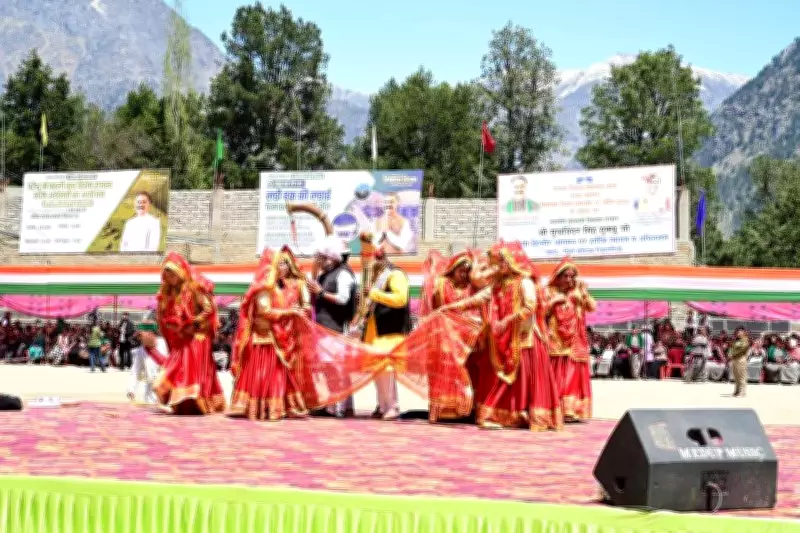
Jhamakda, a vibrant folk dance from Kangra district in Himachal Pradesh, has evolved from spontaneous laughter of women left behind during wedding processions into one of the region's richest folk traditions, blending music, mythology, and ritual while preserving its authentic soul. Born as an informal celebration called Chamakda at the groom's home after the wedding party departed, women transformed quiet courtyards into spaces of joy, singing witty songs and dancing freely until the baraat returned. Over time, this unstructured gathering became the structured folk performance known as Jhamakda, retaining its warmth and intimacy.
Rituals and the Legend of Nanu
Today, Jhamakda remains integral to wedding ceremonies in Kangra, traditionally performed after the ceremonial bath of the bride or groom to ward off evil influences. Women from the paternal side prepare a small flour effigy called Nanu while singing, "Nanu Gohre Aaya Vo, Jhamakdeya Jhamakdeya..." The verses describe Nanu's enormous moustache touching the earth and his beard stretching to the sky. Women from the maternal side attempt to snatch the effigy, sparking playful banter and energetic dancing. According to folklorist Dr Gautam Sharma 'Vyathit', the ritual recalls a legend where Nanu was a fearsome demon who terrorized villages. A poor widow prepared an elaborate meal instead of surrendering her son; captivated, the demon renounced violence and granted a boon, asking only to be remembered during weddings. The flour effigy and songs keep this promise alive.
From Village to Global Stage
The tradition's journey onto formal stages began in Nerti village, Kangra. During 1965-67, Dr Gautam Sharma 'Vyathit' documented and researched Jhamakda in a structured performance format, giving it wider cultural identity. In 1974, students presented Jhamakda at the first annual function of Kangra Lok Sahitya Parishad in Rait. Three years later, the dance reached the Gaiety Theatre in Shimla and then traveled to festivals across India. It crossed national boundaries when students of Government College, Dharamsala, and Himachali folk artistes introduced it to audiences in Germany and England, making it a recognized symbol of Kangra's cultural heritage internationally.

Preserving the Soul Amid Modernization
Renowned Pahari folk singer Karnail Rana notes that Jhamakda's original soul lies in its simplicity, emerging naturally from shared happiness. "It had no fixed beginning or ending. It was simply an uninterrupted celebration of joy," he says. Today, groups led by artistes like Reena and Happy perform Jhamakda in traditional attire with authentic instruments. However, Rana warns that modern weddings have become shorter and more commercialized, with DJs replacing live traditions. Jhamakda is gradually becoming symbolic rather than central. Cultural experts fear its original community-centered spirit is fading. Preserving Jhamakda means safeguarding songs, stories, rituals, and collective memories that have defined Kangra's social life for centuries, reminding that culture survives through communities that celebrate together.