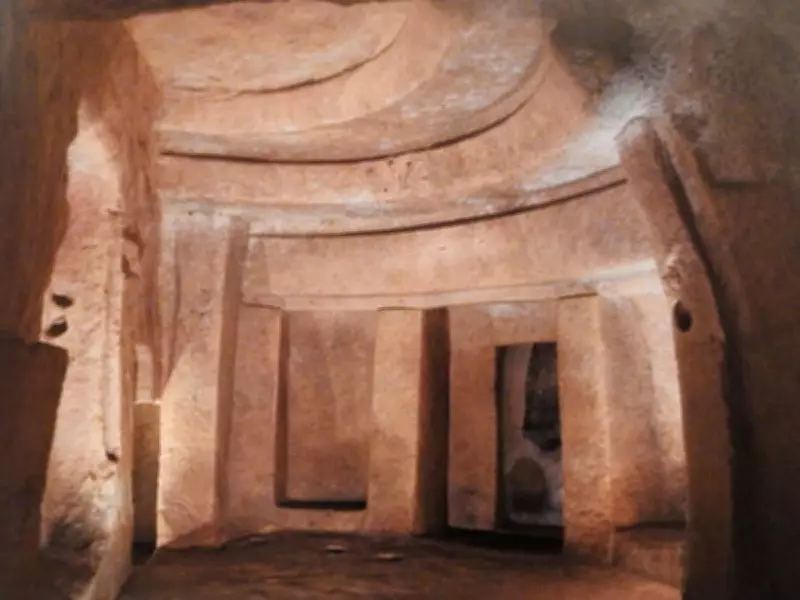
Recent research on the Ħal Saflieni Hypogeum has prompted historians and archaeologists to reassess the building skills of prehistoric builders. Contrary to the popular perception of it as a simple cave burial ground, this underground complex, consisting of multiple layers dug directly into living rock, demonstrates a high level of architectural design from that period. According to a publication from the Institute for the Study of the Ancient World, numerous carvings within the Hypogeum resemble megalithic constructions found elsewhere on the island of Malta.
Reevaluating Prehistoric Tombs
Researchers are now looking beyond the idea of these structures as mere prehistoric tombs. They are examining how the physical characteristics of the Hypogeum affected the people inside it. Narrow passages, multiple chambers, and stairs leading deeper underground create a path deliberately designed by its creators. Because the underground complex is carefully controlled architecturally, the movement of people becomes an integral part of the ceremonies that took place there.
Sound in Ancient Engineering
Aside from its eye-catching construction, the Hypogeum has become known for its exceptional acoustics. It has served as a focal point for archaeoacoustic research, which examines sound at archaeological sites. According to a research paper, testing the monument's acoustics reveals a strong link between architecture and human sensory experience. The site's acoustics are shaped by narrow passageways and low ceilings, which affect how voices resonate and enhance the psychological experience.

Analyzing the Hypogeum's soundscape requires careful attention to scientific evidence. According to an article indexed by PubMed, modifications made over the years have changed the natural acoustics at the monument. As a result, it is not possible to recreate exactly the sounds heard by prehistoric people because the site has changed over time. Nonetheless, the article states that the Hypogeum continues to hold relevance in psychoarchaeoacoustics research. The paper highlights the importance of examining the soundscape through the lens of ancient engineering rather than mystical explanations.
Design for Human Senses
The Hypogeum engages several senses at once, not only through its acoustics. The monument was designed to shape sound, restrict movement, and create a sense of confinement. The staged movement through the chamber complex naturally creates a sense of anticipation, slowing a visitor's pace and limiting vision. Seeing the site as a multisensory design helps move beyond a superficial analysis. The Hypogeum is, first and foremost, a burial ground, but it is also a striking example of how prehistoric Maltese builders understood the effects of enclosed spaces on human psychology.