Ahmedabad: Can a bird sanctuary protect wildlife by never letting it rest in darkness? The Gujarat forest department has begun installing high-powered solar floodlights inside Nalsarovar Bird Sanctuary to curb poaching, a move that has alarmed conservationists and ornithologists who fear the artificial illumination could disrupt bird behaviour and drive away migratory species.
Concerns Raised by Environmentalists
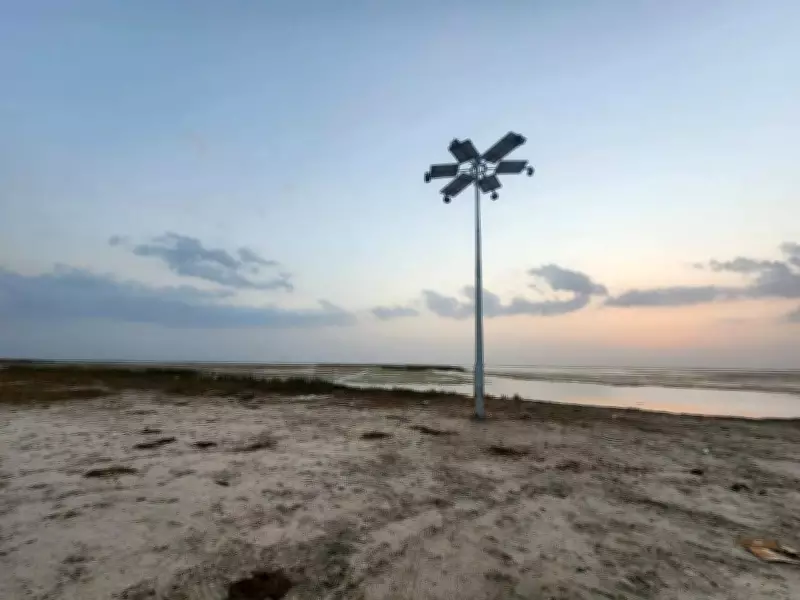
Environmentalists and bird guides working in the sanctuary say they have already noticed changes in bird activity and worry that the lights could affect species that depend on Nalsarovar during winter. According to a local bird guide who requested anonymity, three large solar-powered lighting towers have already been erected and around 10 more are planned. Each pole reportedly carries six 200-watt LED lights designed to illuminate large stretches of the wetland throughout the night.
Forest Department's Justification
Jaipal Singh, principal chief conservator of forests, said the lights, along with CCTV surveillance, are intended to strengthen anti-poaching measures and improve monitoring in areas where patrolling is difficult. However, birdwatchers and researchers have questioned the move. One researcher associated with forest department projects pointed out that water levels often reach five to six feet during winter, making movement difficult after sunset. “Forest officials believe the lights will help monitor illegal activities, but their reflection on the water will disturb birds. Many species may abandon the sanctuary and never return. Instead of lighting up the wetland, authorities should strengthen staffing and night patrolling,” he said.

Impact on Migratory Birds
An ornithologist who has studied Nalsarovar for years warned that artificial light at night can severely affect birdlife. “Artificial light disorients migrating birds, disrupts navigation and can even lead to fatal collisions. Thousands of birds travel across continents every winter to reach Nalsarovar, while resident species rely on the wetland for feeding, roosting, resting and breeding,” he said. He also criticised the project for overlooking international guidelines. “The Gujarat government appears to have ignored recommendations framed during the Convention on the Conservation of Migratory Species (CMS COP-13) held in Gandhinagar in 2020 and formally endorsed in 2024. These guidelines should have been considered before taking such a major decision.”
Scientific Evidence Against Artificial Light
Conservationists note that studies worldwide have documented the adverse effects of artificial light at night (ALAN), including disrupted feeding and resting patterns, increased stress, navigation problems and habitat degradation. “Nalsarovar was created to protect birds, not to turn their habitat into a floodlit landscape,” said another bird guide. “Conservation cannot come at the cost of the species it is meant to protect.”
Previous Experiments and Ecological Concerns
A senior forest officer acknowledged that lighting could affect bird populations. He recalled an earlier experiment in which nearly 30 personnel conducted intensive night patrols using powerful torches. “The exercise disturbed birds resting in the wetland and affected species that feed after dark. Observers reported noticeable changes in bird activity and habitat use,” he said, adding that permanent lighting towers could cause an even greater and more persistent disturbance. The controversy comes amid other ecological concerns at Nalsarovar. Environmentalists have previously objected to the pumping of Narmada water into the wetland, arguing that it alters the lake’s natural hydrology.
Call for Ecological Impact Assessment
Another senior officer said the department should have conducted a detailed ecological impact assessment and consulted ornithologists, wetland ecologists and wildlife researchers before launching the project. “Long-range night-vision cameras can effectively monitor poaching without compromising the sanctuary’s ecological integrity,” he said.