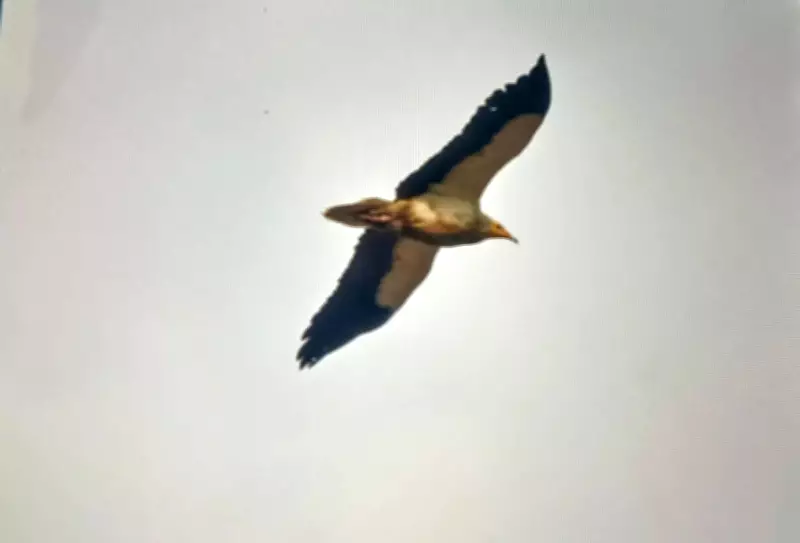
Indore: As a scorching summer in Madhya Pradesh raises concerns over the safe-keeping of local wildlife and fauna, an ongoing vulture census has revealed a steep decline in sightings of the scavenger bird species within the Indore Forest Division. Data collected up to Saturday, the second day of the three-day census, highlighted a complete absence of vultures in the Mhow and Ralamandal sectors, sparking larger concerns over their safety.
Reasons Behind the Decline
Forest officials attributed the trend to severe summer heat, drying forest water bodies, and a shrinking habitat. The census, conducted across 33 designated locations spanning four forest ranges, indicated that all recorded vultures belong to the Egyptian vulture species. A comparative analysis shows a significant drop in numbers compared to the winter census conducted in February 2026.
Localized Migration and Food Scarcity
Speaking to TOI, Divisional Forest Officer (DFO) Lal Sudhakar Singh stated that the drop in summer counts stems from localized migration. As natural water bodies dry up inside core forest zones, the birds relocate to distant areas with perennial water sources. Additionally, modern sanitation protocols mean livestock carcasses are rarely discarded in the open, cutting off the vultures’ primary food supply. This change is starkly visible in Indore’s Devguradia area—formerly a major vulture nesting site due to a nearby trenching ground—where only a single vulture was spotted.

Historical and Emerging Threats
Former forest official PC Dubey highlighted deeper, systemic challenges threatening the local vulture population. Historically, the widespread veterinary use of the painkiller Diclofenac caused fatal kidney failure in vultures feeding on treated livestock carcasses. While the chemical threat has been legally curtailed, newer challenges have emerged. Urbanisation, along with rapid road and railway development, has drastically reduced the dense forest canopy, removing the tall trees and high rocky cliffs vultures require for nesting and breeding, experts pointed out.
Census Data Highlights
- Winter census (Day 2, Feb 21): Indore 15, Choral 127, Manpur 5, Mhow 4, Ralamandal 0.
- Summer census (Day 1, May 22): Indore 10, Choral 14, Manpur 2, Mhow 4, Ralamandal 0.
- Summer census (Day 2, May 23): Indore 12, Choral 46, Manpur 4, Mhow 0, Ralamandal 0.
Forest teams will conclude the synchronised census on Sunday to finalise the statewide population assessment.